
Best Aftermarket HID Kits on Amazon Under $60 Tested
A cleaned-up version of the original budget HID kit review, comparing popular Amazon HID conversion kits against a stock halogen projector and explaining where DDM Tuning, XtremeVision, Lumenon, DeAutoLED, and Morimoto fit.
- Review format
- 2018 Amazon video
- Kits tested
- 8 budget HID kits
- Price target
- Under $60 at review
- Headlight type
- Projector housings
What the under-$60 HID test found
Review scope
This was an Amazon-focused HID kit roundup built around 8 popular budget kits, with stock halogen used as the projector-headlight baseline. The review looked at brightness, projector beam spread, flicker, color temperature, and value.
Original takeaway
- DDM Tuning Premium/Plus was the strongest budget-output pick in the original test.
- XtremeVision was the cheap value option, especially because it did not flicker during burn-in and testing.
- DeAutoLED and Morimoto were called out as higher-quality choices for shoppers willing to spend more.
A historical projector comparison, not a universal conversion guide
If you are looking to upgrade from halogen to HID, this review compares stock halogen to HID kits that performed best in BulbFacts testing, with recommendations for upgrading stock projector headlights.
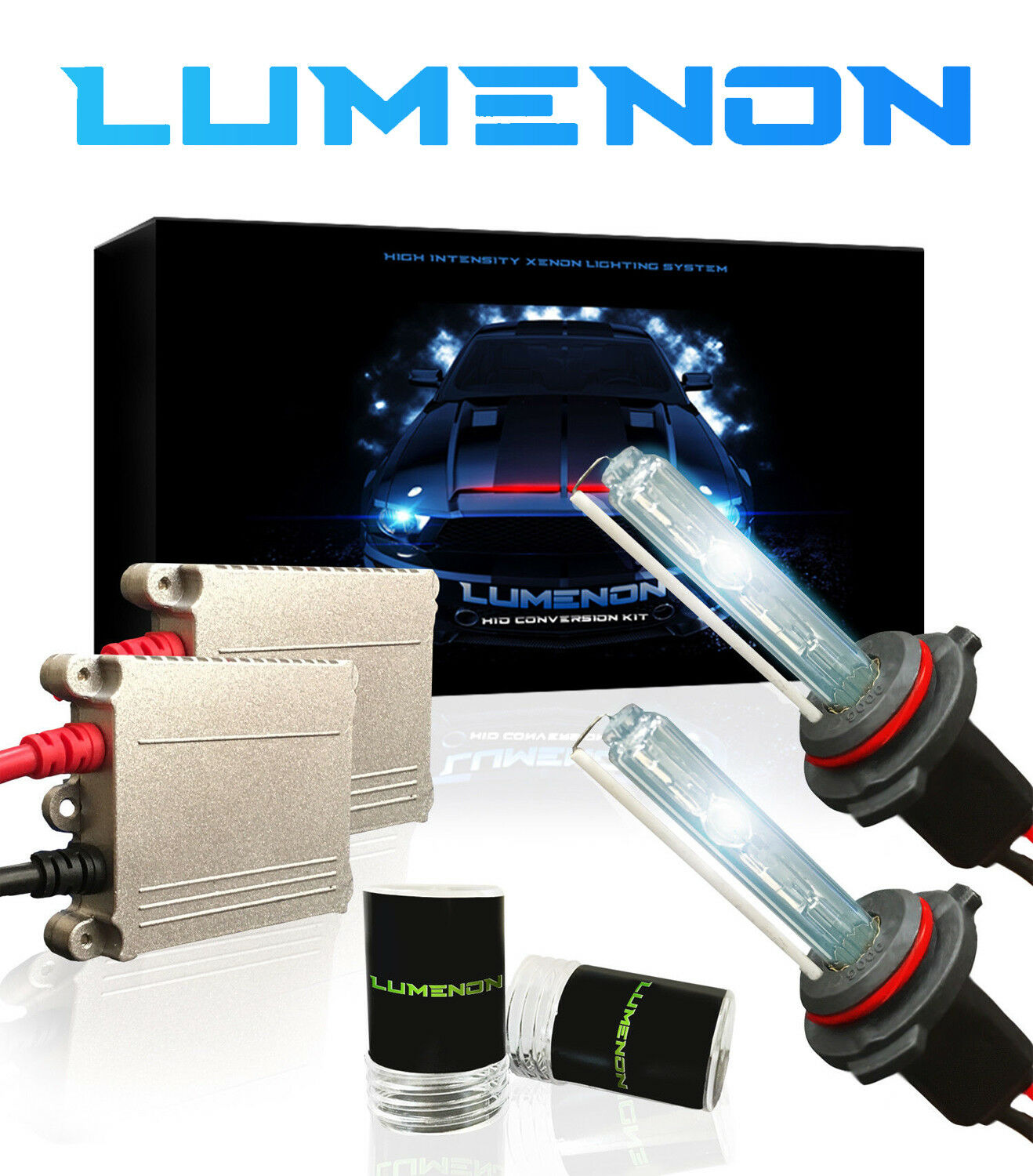
We purchased and tested 8 of the most popular and top rated HID kits on Amazon, then compared them against the halogen baseline for projector brightness, beam spread, color, and flicker behavior.
Starting with a stock halogen bulb, the output was decent, the color was yellowish, and the beam pattern was acceptable in the projector. Every HID kit in this budget group was brighter than stock halogen, but the spread between kits was large enough that the brand and ballast choice mattered.
Some kits may now be discontinued, renamed, revised, or sold by different sellers. The measurements below remain tied to this original 2018 comparison and should not be mixed into the current chart as though the test records were identical.
The three buying paths from the original test
DDM Tuning supplied the strongest budget output, XtremeVision was the inexpensive stable option, and DeAutoLED represented the higher-quality path.
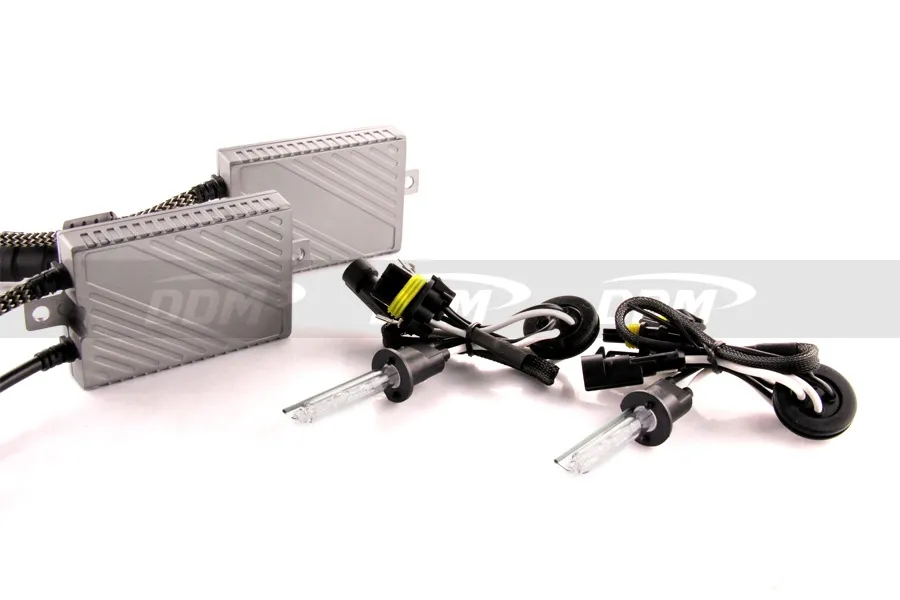
DDM Tuning Premium / Plus
The brightest budget kit in the original 35-watt projector comparison, with a neutral-white measured color.
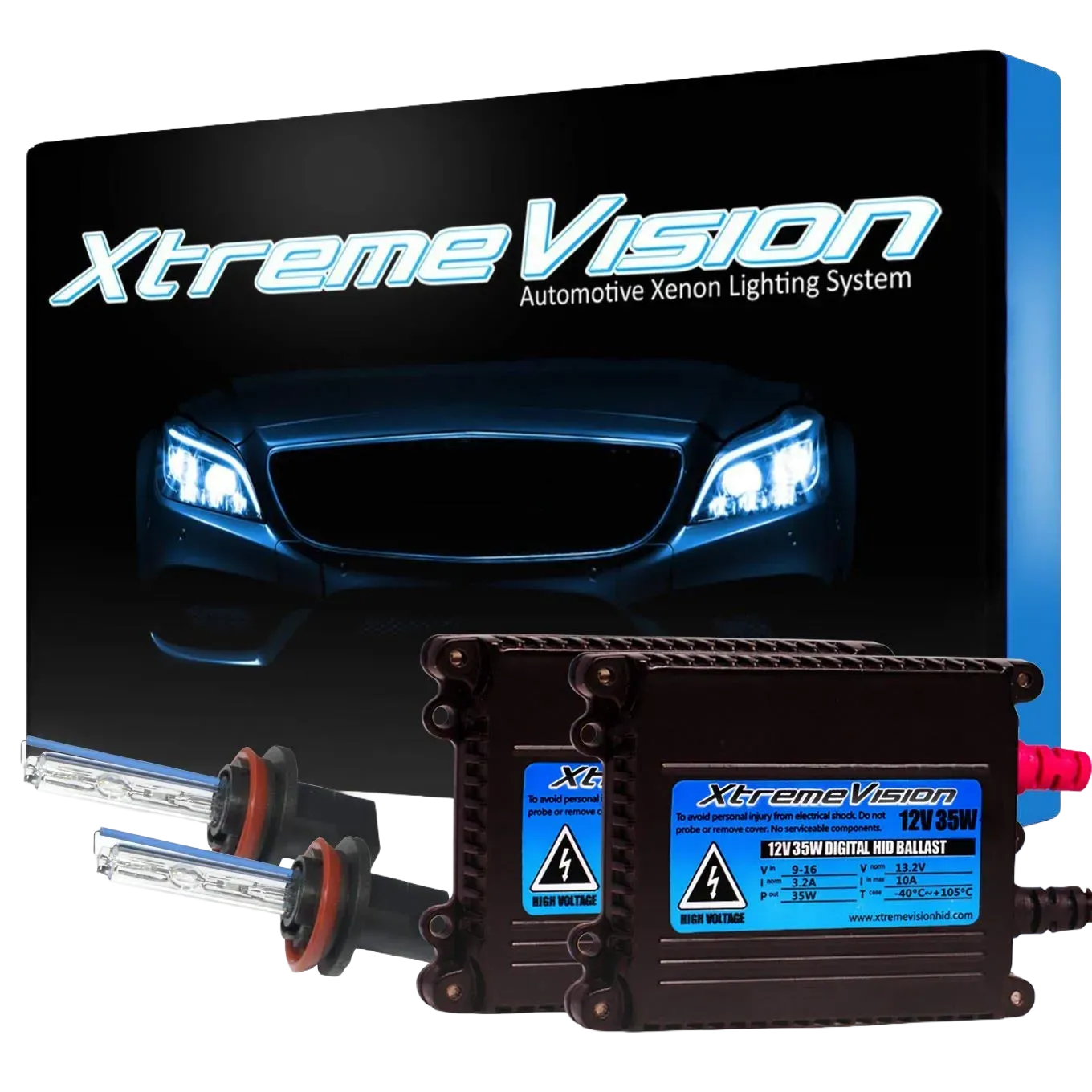
XtremeVision
A lower-output but inexpensive kit that avoided the flicker seen from several competitors during the original test.
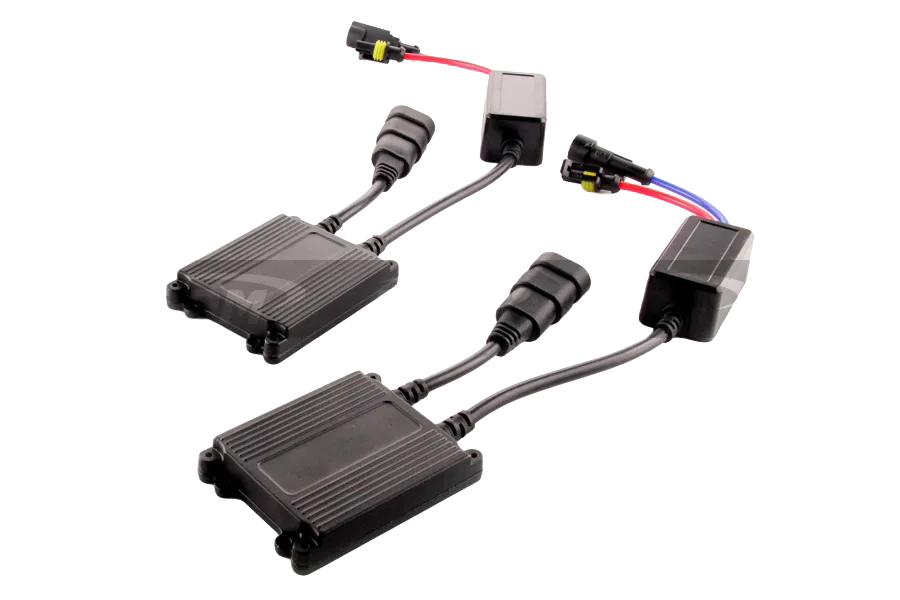
DeAutoLED / Morimoto
The higher-quality alternatives for buyers who valued ballast consistency, warranty support, and long-term ownership over the lowest price.
DDM Tuning Premium / Plus was the brightest budget HID kit
The DDM kit was the original standout for usable projector output under $100.
In terms of brightness, none of the Amazon budget kits tested as bright as the DDM Tuning Premium kit. This was 239% brighter than halogen at 2970 peak lux with the included 35 watt ballast, compared with 876 peak lux for the halogen setup used in that original review.
That was almost 3.5 times better output on the road. The overall light spread in the low-beam projector improved too, so the upgrade was not only about extra distance; it also added ambient brightness side to side.
At around $60 at the time, the DDM kit was the brightest kit in the under-$100 group. The current DDM Tuning Plus / Ultra review covers the updated value-pick chart entry. The original 55 watt test on an Innovited ballast produced less output for some reason, so that result was treated as inconclusive. In general, 55 watts is not usually ideal for bulb longevity or UV exposure inside the headlight housing, so the safer recommendation was to stay with a quality 35 watt setup.
XtremeVision was cheap, bright enough, and stable
The XtremeVision kit did not match the DDM output, but it was inexpensive and avoided one of the bigger problems in the group.
The XtremeVision kit was about 120% brighter than stock halogen with its included 35 watt ballast. That was not as strong as the DDM kit, but at around $30 at the time it was a strong bang-for-the-buck option for someone who wanted something cheap but still brighter than halogen.
It was also one of the only kits that did not flicker during burn-in and testing, along with both DDM Tuning kits and the Lumenon kit. The other kits had noticeable flickering, which is not something I like to see in a headlight upgrade.
The 55 watt test was interesting because XtremeVision became brighter than DDM on that setup, measuring about 3060 lux versus 2640 lux for DDM. Even so, the recommendation stayed with the 35 watt version where possible, especially for vehicles with DRL headlights that keep the lamps on for long stretches.
DeAutoLED and Morimoto were the higher-quality path
If budget was less important, the original article pointed toward better-built kits with stronger support and cleaner execution.
If you want the very best, the original review recommended checking out DeAutoLED or Morimoto. They were more expensive, but also higher quality and even brighter.
The DeAutoLED HID kit was shown because it was what we personally ran in our vehicles at the time. It offered great quality, a lifetime warranty, and a pure white color at about 5700K. In testing, the DeAutoLED kit measured 3580 lux, which was 309% brighter than the halogen baseline.
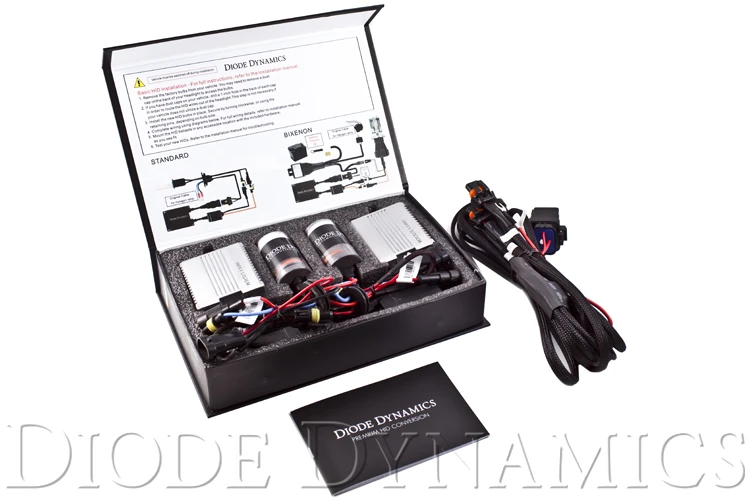
Morimoto was also called out as a quality-first option. The current Morimoto XB Elite 2.0 review and GTR Lighting Ultra HID review cover where those premium kits sit now against XenonDepot and DDM. The broader lesson still applies: if you plan to keep the vehicle or rely on the headlights often, ballast quality, bulb consistency, and warranty support can matter more than saving a few dollars up front.
Kelvin choice affects usable light
Higher Kelvin does not mean brighter. Most drivers are better served by 4500K to 5500K.
You will notice HID kits offer many color temperature, or Kelvin, options. Output varies depending on the Kelvin you choose. If you want the brightest output from the kit, you generally want to stay as close to 4500K as possible.
If you want the closest thing to pure white, look at 5000K or 5500K. If you want a blue tint, 6000K or 6500K will move in that direction, but it is not usually the best choice for real night driving. All of the original tests used the pure-white option because that is what most people buy.
The DDM Tuning Premium kit was closest to pure white at exactly 5150K in the 35 watt kit, even though it was advertised as 5500K. The XtremeVision kit measured around 7150K on the 35 watt ballast, so it had more of an ice-blue look.
Most of the other budget kits were over 6500K, with a few near 5500K. Anything under 6000K will usually look nice and white with only a hint of blue. Once you get into very high Kelvin options like 10000K, people often confuse the color with more brightness, but it is actually dimmer and much more blue or purple. I would not recommend those for actually driving at night.
Use HID kits where the beam can stay controlled
HID conversions need the right optical environment. Extra brightness is only useful if it lands where it belongs.
HID is designed primarily for projector headlights, though some people run HID kits in reflectors. If you do, glare has to be minimal, and the bulb design needs to control the beam. Many reflector conversions throw too much light above the cutoff and can become unsafe for other drivers.
This is why the current HID kit chart is focused on projector results. Compare the products there, then confirm fitment and installation details for your exact vehicle before buying.
Use the original test as context, then check the current chart
Pricing, availability, kit revisions, and seller quality can change substantially on older Amazon HID products.
The 2018 comparison established a useful hierarchy: DDM Tuning led the budget-output group, XtremeVision offered inexpensive stable performance, and DeAutoLED or Morimoto made more sense for buyers prioritizing quality and support.
For a purchase today, compare the current projector lux records and confirm that the exact kit, ballast, bulb, and seller match the version being evaluated. Avoid treating the original under-$60 price ceiling as a current market promise.
Buying through our affiliate links helps fund BulbFacts testing, equipment, and long-term product data at no extra cost when purchases qualify.
Show preserved 2018 measurements and specifications Four groups · original projector record
Full measurements and specifications
These measurements are preserved from the original budget projector comparison and are not directly interchangeable with the current HID chart scale.
Halogen baseline
- Projector peak output
- 876 lux
- Role
- Original stock comparison
- Beam appearance
- Yellowish halogen color
- Current interpretation
- Historical benchmark only
DDM Tuning Premium / Plus
- 35W peak output
- 2970 lux
- Increase over halogen
- 239%
- Tested color
- 5150K
- 55W observation
- 2640 lux; treated as inconclusive
- Original role
- Budget-output winner
XtremeVision
- 35W increase over halogen
- 120%
- 35W tested color
- About 7150K
- 55W peak output
- About 3060 lux
- Flicker during original test
- None noted
- Original role
- Low-price value option
Premium path and test context
- DeAutoLED peak output
- 3580 lux
- DeAutoLED increase over halogen
- 309%
- DeAutoLED tested color
- About 5700K
- Budget kits tested
- 8
- Preferred housing
- Projector headlight
See how we test for current procedures and the HID chart for present-day comparable product records.