
Headlight Help & Upgrade Guide
Use this page to choose the right BulbFacts path: research factory headlights before buying a vehicle, check whether a newer vehicle is better left stock, or compare tested bulb upgrades for the vehicle you already own.
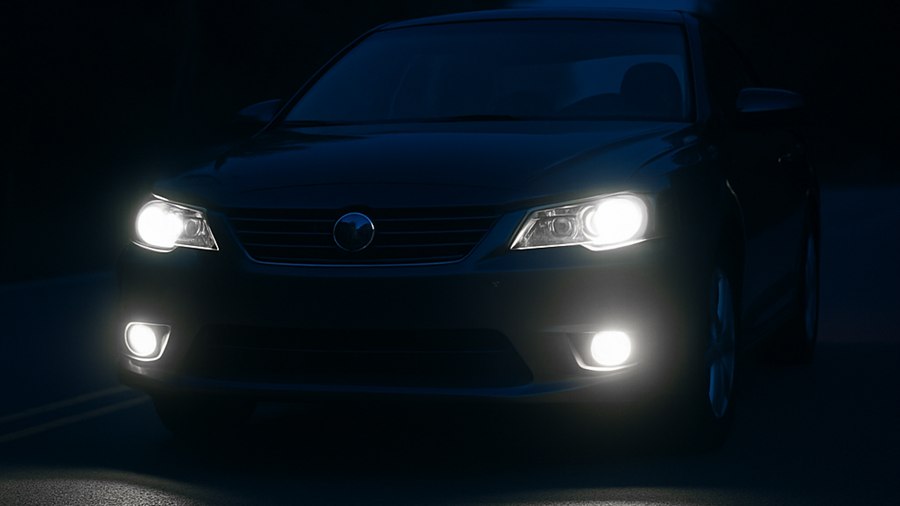
Most people arrive here from one of two directions. Either you are shopping for a new or used vehicle and want to know whether the factory headlights are actually good, or you already own a vehicle and want to improve what it has. Those are related problems, but they need different starting points.
If the vehicle has strong integrated factory headlights, the best advice may be to leave it stock. If it has weak halogen, aging Xenon bulbs, or poor trim-package lighting, BulbFacts product tests can help you compare realistic upgrade paths instead of chasing the brightest marketing claim.
Research factory headlights first
Use Factory Headlights when you want to compare vehicle lighting by model, trim, package, headlight type, assist features, and upgrade advice before you buy.
Start with the headlight system
Use Bulb Tests & Reviews when you know the vehicle and need tested LEDs, halogens, HID kits, or Xenon replacement bulbs that match the housing and goal.
Jump to
Factory Research vs. Upgrading
The first decision is not LED vs. HID vs. halogen. It is whether you are evaluating the vehicle's factory lighting system or replacing bulbs in an existing system.
Start with Factory Headlights. The goal is to understand whether the vehicle has strong OE lighting, which trim or package matters, and whether an upgrade is even worth considering.
Check the factory headlight notes before assuming every trim performs the same. A vehicle can be excellent with one lighting package and merely average with another.
Start with the housing and bulb type below. The right answer may be a fresh halogen bulb, a tested LED kit, a projector-friendly HID kit, or restoring worn lenses before changing bulbs.
If the vehicle has sealed factory LED headlights, there may not be a normal bulb to replace. In that case, compare the factory system first and avoid throwing parts at a design that is already integrated.
Start With These Questions
Before shopping by brand or brightness claim, answer these first. They decide whether you should research the factory system, restore what you have, or compare replacement bulbs.
If you are buying, start with factory headlight research. If you are upgrading, start with the vehicle's current housing and bulb type.
Halogen, Xenon, and factory LED systems have different wiring, heat, optics, and replacement paths.
Reflector and projector headlights shape light differently. The same bulb can be safe in one and messy in the other.
Low beam reach, high beam distance, color, lifespan, price, and wet-weather visibility can point to different products.
Check bulb size, dust cap clearance, polarity, DRL voltage, CANBUS errors, legality, and whether extra parts are required.
For many newer LED or adaptive systems, the better answer is confirming trim/package quality instead of trying to modify the headlight.
BulbFacts test data is most useful after you identify the vehicle situation. A great factory lighting package may not need an upgrade, and a top-ranked bulb in the wrong application can still be the wrong product.
Reflector vs. Projector Headlights
There are two common headlight housing styles: reflector and projector. They both put light on the road, but they control it in very different ways.
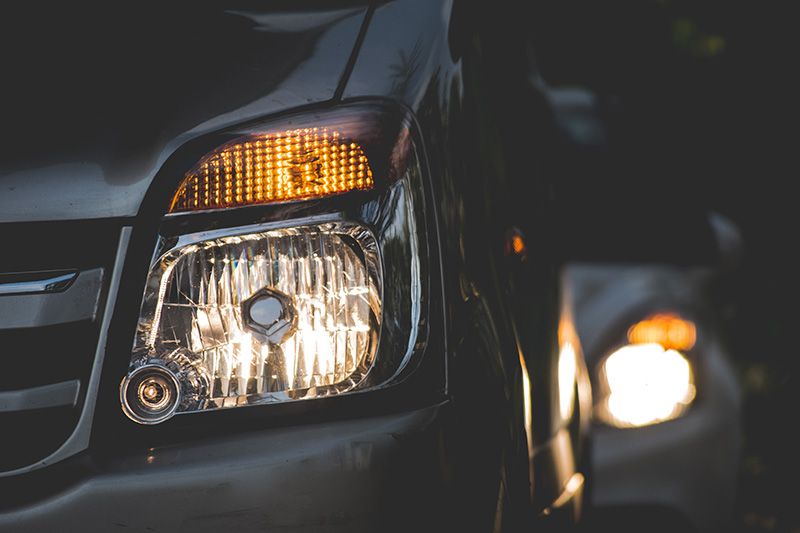
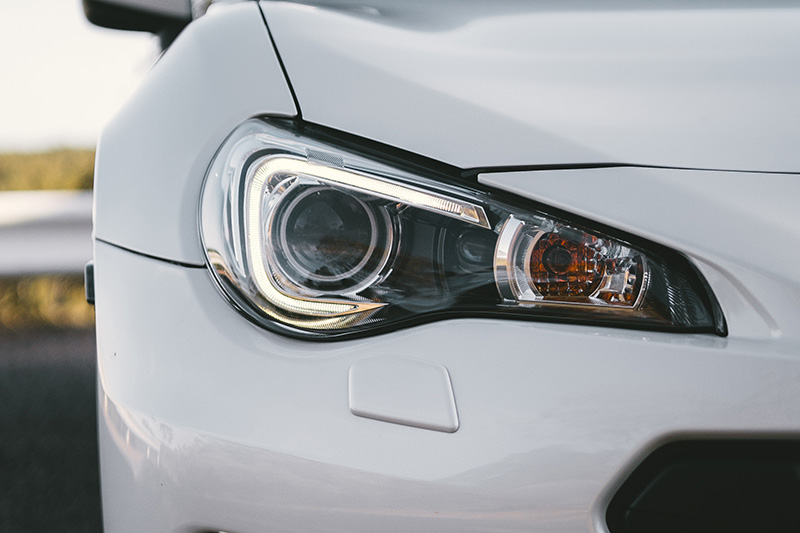
Reflector headlights
A reflector headlight places the bulb inside a reflective bowl. The bowl, bulb position, and lens pattern work together to aim light onto the road. Reflectors are common on older vehicles, base-model vehicles, trucks, and many newer vehicles that still use halogen or simple LED systems.
Reflectors can work very well, but they are sensitive to bulb geometry. If an LED chip or HID arc is not where the original halogen filament was, the reflector may scatter light, create glare, or throw brightness into the wrong part of the beam. That is why reflector performance is one of the most important things to check before buying an LED kit.
Projector headlights
A projector headlight uses a lens and cutoff shield to focus light. Many projector headlights have a sharper cutoff, better distance control, and less uncontrolled glare than basic reflectors. Projectors may come from the factory with halogen, HID/Xenon, LED, or a full sealed LED module depending on the vehicle.
Projectors can often handle more output than reflectors, but they are not magic. A poorly matched bulb can still produce a weak hotspot, wasted light, bad cutoff behavior, or excessive foreground brightness. The test chart matters because some kits that work well in reflectors do not work well in projectors, and the reverse can also happen.
Halogen vs. HID vs. LED vs. Laser
Most vehicle lighting decisions start with four technologies. Each one has strengths, weaknesses, and a different role in the upgrade path.
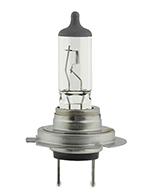
Halogen bulbs
Halogen is the oldest and most common replaceable headlight bulb technology. A filament glows inside a halogen gas-filled glass envelope. It is cheap, simple, and usually a direct replacement.
- Usually found in: base and mid-trim vehicles, many reflector headlights, many halogen projector headlights.
- Pros: low cost, direct fit, predictable beam pattern, fewer electronics issues.
- Cons: shorter life when pushed brighter, more heat at the bulb, lower output ceiling, color options usually reduce brightness.
HID / Xenon
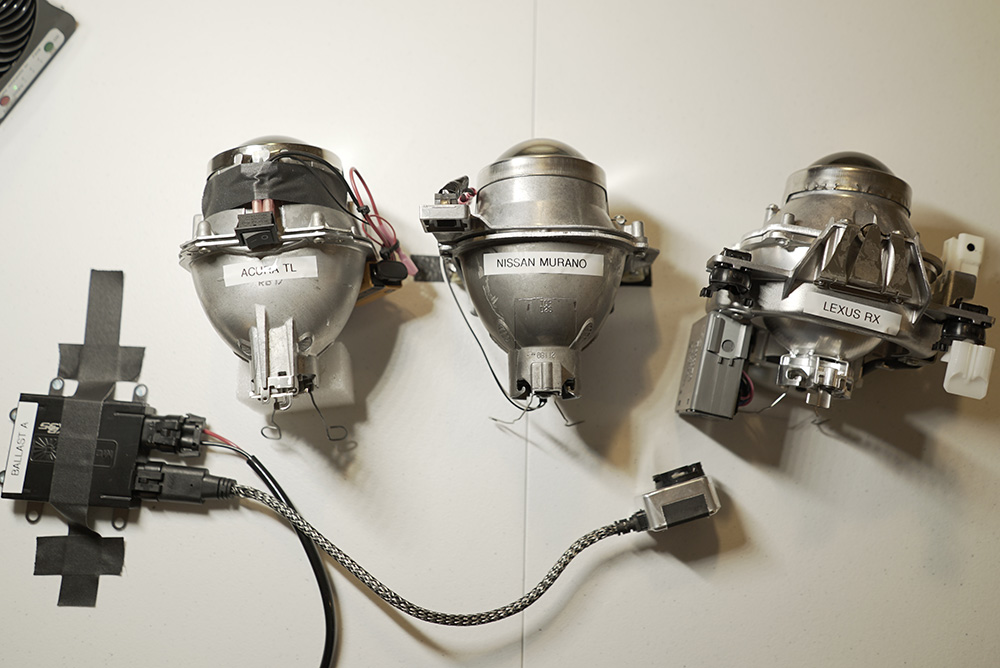
HID stands for High Intensity Discharge. Instead of a glowing filament, an electrical arc lights gas and salts inside the bulb. Factory Xenon systems use HID technology with ballasts, ignitors, and D-series bulbs.
- Usually found in: factory projector systems on many older premium vehicles, aftermarket projector conversions, D1S/D2S/D3S/D4S OE replacements.
- Pros: high output, long useful life, efficient 35W operation, strong projector performance.
- Cons: ballast and ignitor complexity, warm-up time, more install work, poor fit for reflector conversions.
LED kits
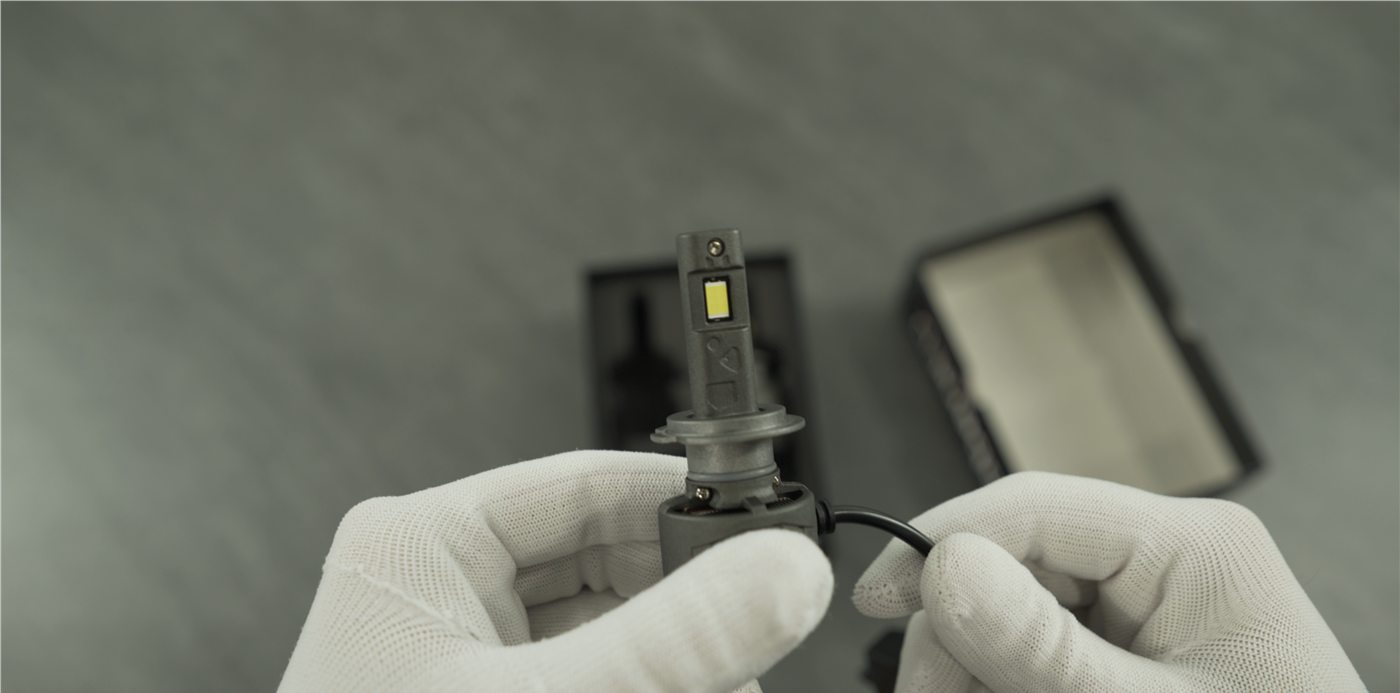
LED headlight kits use light emitting diodes and usually include a driver, heat sink, fan, or passive cooling system. Modern LED kits can be very good, but the design has to mimic the original filament location and keep heat under control.
- Usually found in: aftermarket halogen replacement kits, newer factory headlight systems, some sealed LED assemblies.
- Pros: strong output potential, quick startup, low power draw, clean white color, long claimed life.
- Cons: beam pattern varies wildly, DRL/CANBUS issues are possible, most are 5500K-6500K, cooling and fitment can be tricky.
Laser headlights
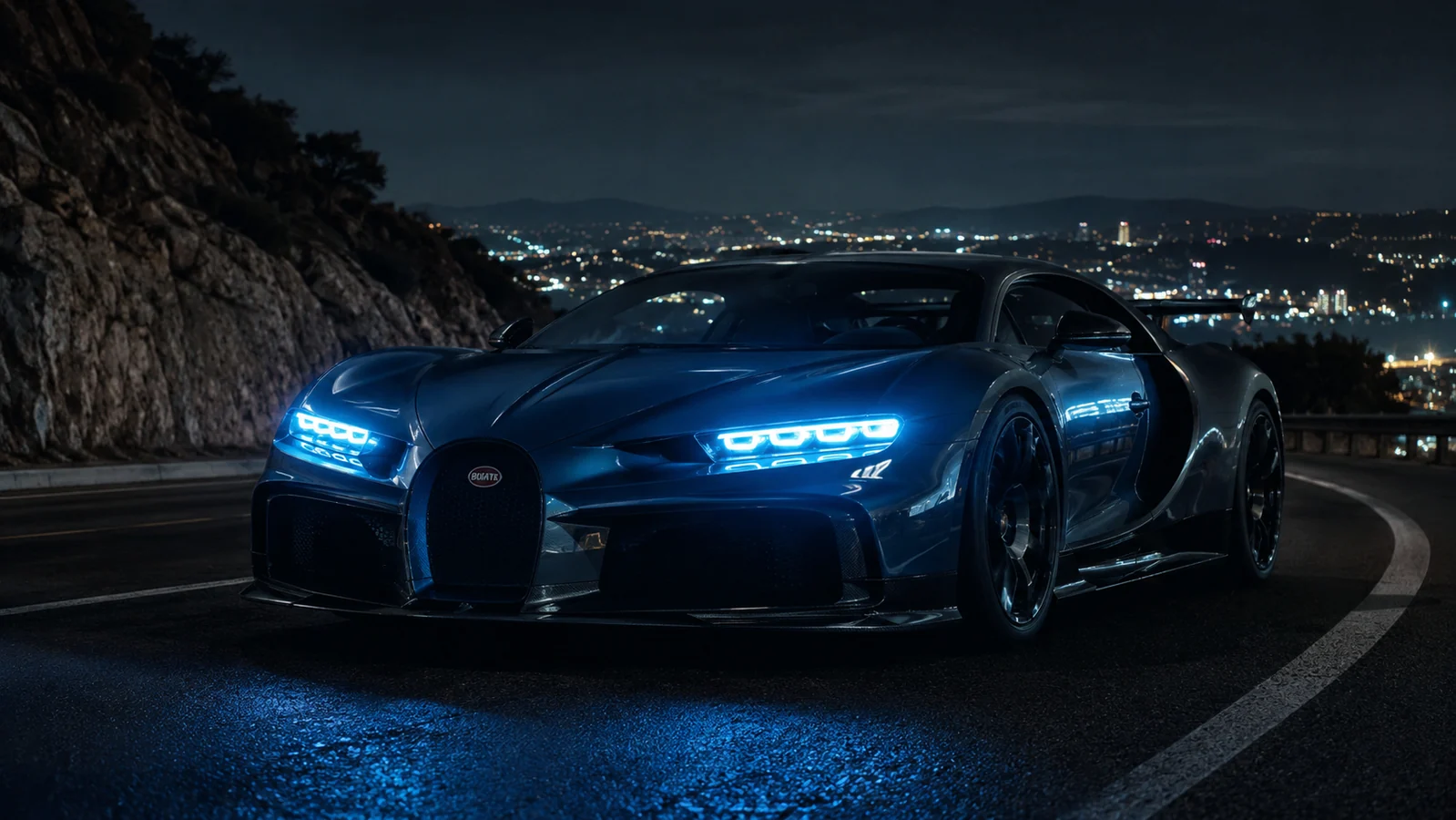
Laser lighting exists mostly in high-end factory systems. It is not a normal bulb-swap upgrade and is usually integrated into the headlight assembly.
- Usually found in: select premium vehicles and advanced factory lighting packages.
- Pros: extremely long-range potential, efficient light generation, very focused output.
- Cons: expensive, not generally serviceable as a simple bulb replacement, not a typical aftermarket path.
Best Upgrade Paths by Vehicle Setup
This is the practical part. Find the factory setup closest to your vehicle, then use the chart and review pages to narrow the product.
Halogen Bulbs in Reflector Headlights
This is one of the most common setups. It can be improved, but it is also the easiest place to create glare if the wrong product is installed.
- Fresh OE or long-life halogen: best when your bulbs are old, dim, or uneven and you want the simplest direct replacement.
- Upgraded halogen: a good low-risk step for more light while keeping the original beam behavior. The tradeoff is usually shorter lifespan.
- Proper LED kit: can be a strong upgrade if the LED tested well in a reflector beam and controls glare. Always check reflector-specific results.
Avoid: HID conversion kits in reflector headlights. HID intensity in a reflector designed for halogen often creates uncontrolled glare for other drivers.
Halogen Bulbs in Projector Headlights
Halogen projectors often leave drivers wanting more output. Because the projector has a cutoff shield and lens, it may handle certain higher-output upgrades better than a reflector.
- Upgraded halogen: easiest and most predictable, especially if legality and simplicity are top priorities.
- Proper LED kit: can work very well if projector test results show a strong hotspot and clean beam.
- Quality 35W HID kit: often a strong projector upgrade when installed correctly with quality ballasts, UV-coated bulbs, and correct color temperature.
Be careful with high beams: HID takes time to warm up and does not like repeated quick on/off cycling, so HID is usually a poor choice for flash-to-pass high beam use.
Xenon Bulb Replacement
If your vehicle came with factory HID/Xenon headlights, the answer is usually simple: replace the bulb with the same D-series fitment, such as D1S, D2S, D3S, D4S, or the matching variant for your vehicle.
Factory Xenon bulbs dim over time. A bulb that has turned purple, uneven, or very dim is effectively worn out. Even if only one side looks bad, replacing in pairs is usually best so the color and output match.
Major OE brands like Philips and OSRAM are generally the safest starting point. Cheap D-series bulbs can work, but brightness, alignment precision, color stability, and lifespan are usually where the sacrifices show up.
Factory LED Headlights
If your vehicle came with factory LED headlights, there may not be a normal replaceable bulb at all. Many factory LED systems are integrated headlight assemblies with dedicated modules, optics, cooling, and control electronics.
For factory LED vehicles, the best upgrade path is usually maintenance, aim correction, lens restoration if applicable, or a complete assembly replacement. A plug-in LED bulb kit is usually meant for vehicles that came with halogen bulbs, not vehicles that already have factory LED assemblies.
Color Temperature: What Kelvin Actually Means
Color temperature is measured in Kelvin. It describes how warm or cool the light appears, but it does not automatically tell you how much usable light reaches the road.
OE systems tend to fall somewhere around 3300K-5000K depending on bulb type and manufacturer. Around 4300K has traditionally been a strong all-around HID color because it keeps usable output and performs well in poor weather. Around 5000K is a clean white look. Many LED kits land around 6000K by design, which can look modern but may be less comfortable in heavy rain or snow.
If you want matching colors between low beams, high beams, and other forward lighting, use tested color temperature data instead of package claims. Kelvin ratings can be advertised loosely, and two bulbs labeled the same color may not actually match.
CANBUS, Flicker, DRL, and Bulb Errors
CANBUS is a vehicle communication system that lets modules in the car talk to each other. For lighting, many vehicles monitor bulb behavior so they can warn you when a bulb is out. That is useful with factory bulbs, but it can create problems with aftermarket LED and HID upgrades.
Halogen, LED, and HID systems draw power differently. If the vehicle expects a halogen load and sees a low-power LED driver instead, it may show a bulb-out warning, flicker, pulse the bulb, or fail to run the bulb correctly as a daytime running light.
Common fixes include CANBUS-compatible drivers, decoders, anti-flicker modules, resistors, relay harnesses, or vehicle coding where supported. These fixes are vehicle-dependent. A kit that is plug-and-play in one car may need extra parts in another.
35W vs. 55W HID
Most Xenon systems run around 35 watts, while many halogen bulbs are around 55 watts. HID is more efficient, so a 35W HID system can still produce much more light than a 55W halogen bulb.
Aftermarket HID kits often advertise 35W and 55W options. The 55W version may be brighter, but it also runs hotter, can reduce bulb and ballast life, may shift color, and increases the risk of damaging the headlight assembly. For most projector conversions, a quality 35W kit is the better balanced choice.
Replacement Headlights and Custom Retrofits
If a bulb swap is not enough, the next step is changing the optics themselves. This is a larger job, but it can be the right path for vehicles with poor factory reflectors, damaged lenses, or very weak halogen projectors.
Replacement aftermarket headlights
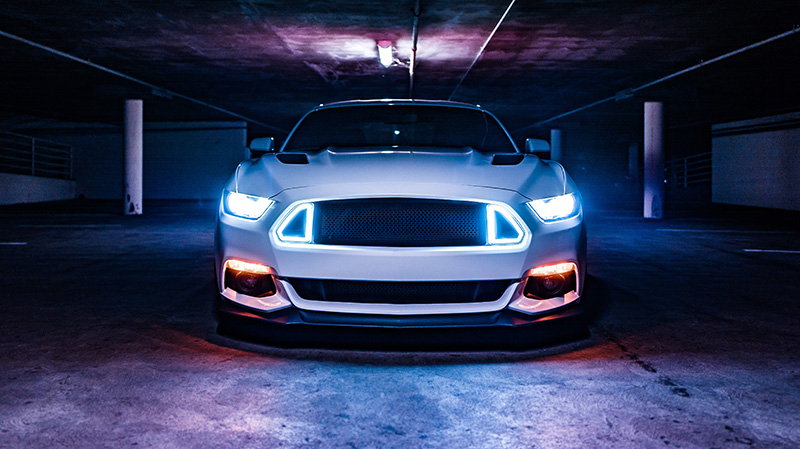
This is the simpler route: replace the full headlight assembly with an aftermarket unit, often one that adds projectors. It may be a major improvement over an old reflector assembly, but aftermarket headlight quality varies. Some look great and perform poorly, so try to find beam pattern photos and real reviews before buying.
Custom projector retrofits
A true retrofit means opening the headlight and installing a better projector, often based on high-performing OE-style projector designs. This can create excellent output and beam control, but the work is more involved and is often best handled by an experienced retrofit shop.
Cost can climb quickly once you add quality projectors, shrouds, labor, seals, paintwork, switchbacks, halos, or custom finishing. But if you want the best possible lighting from a weak factory headlight, better optics usually matter more than chasing a brighter bulb.
Final Advice
Do not start with the brightest advertised bulb. Start with the vehicle. Identify the housing, bulb type, wiring behavior, and your actual goal. Then compare real test results for the products that fit that situation.
For many drivers, the best path is simple: fresh halogen for a basic restore, upgraded halogen for a low-risk improvement, a tested LED kit for a modern plug-in upgrade, or a quality 35W HID kit when a projector housing is a good match. For factory Xenon vehicles, replace aging D-series bulbs with quality matched replacements. For factory LED vehicles, remember that there often is no bulb to upgrade.
More light is only useful when the headlight can put it in the right place. Beam pattern, glare control, fitment, color, heat, and electronics matter just as much as brightness.