
On this page
General testing rules
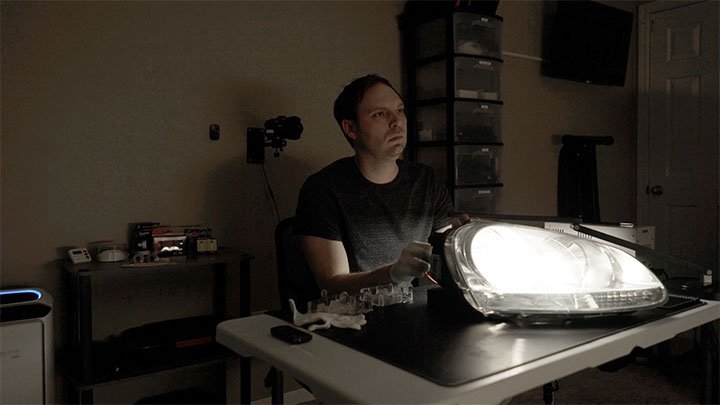
BulbFacts uses specific automotive housings and repeated procedures so each product in a category is compared against the same baseline. Common test sizes include H7, H11, 9005, and D-series HID bulbs depending on the category. Other vehicles and housings can behave differently, so the charts should be used as controlled comparison data rather than a vehicle-specific guarantee.
LED test details
LED kits are compared against a stock halogen reference and measured in reflector and projector-style headlight housings. Because LED conversions can vary dramatically by housing, BulbFacts looks beyond raw brightness and includes beam quality, glare, power draw, heat, noise, DRL behavior, and CANBUS-style load notes when available.
Reflector headlights
Reflector low and high beam results use OEM halogen reflector housings at 25 feet, including a 2013 VW Jetta reflector setup for H7 testing and a 2013 Buick Lacrosse reflector setup for H11/H9 testing where applicable. Percentage values are compared to a new stock-style halogen reference.
Projector headlights
Projector results use OEM projector housings at 25 feet, including a Hella premium bi-halogen projector and additional OEM projector housings when a kit is not available in the primary size. These results help show whether an LED kit works in a focused projector beam, not just a reflector housing.
Glare, CANBUS, and ownership notes
Version 2.1 added glare figures for LED reflector tests. Glare is measured from 9 feet away, 2.64 inches above center focal height, and 2.85 inches left from center focal using a driver-side headlight position. These glare-point checks use the same controlled setup and may use the Extech LT40 LED light meter for LED-specific readings. A 93 lux glare reading represents a rough maximum comfort reference, or about 700 candela in that setup.
CANBUS / bulb-out compatibility is a bench-based load estimate. LED products are tested against the stock halogen electrical load: 50% or more is labeled CANBUS-friendly, 40% to 49% may need a decoder, and under 40% is listed as likely requiring a decoder. Actual vehicle behavior can still vary by BCM sensitivity, DRL strategy, PWM, wiring, and monitoring logic.
Halogen test details
Halogen bulbs are compared against a stock OSRAM-style halogen reference in controlled reflector and projector setups. The halogen charts focus on measured output, color temperature, lumens, claimed or tested life where available, price, and practical upgrade value.
Reflector headlights
Reflector beam results use an OEM 2013 VW Jetta halogen reflector housing at 25 feet. Results are compared against a new OSRAM Original / stock-style halogen bulb, with peak lux and percentage differences shown in the charts.
Projector headlights
Projector testing uses an OEM 2009 Mercedes E550 halogen low-beam projector and an OEM 2017 Kia Sorento halogen high-beam projector at 25 feet. This helps show whether a halogen upgrade performs differently in a projector than it does in a reflector.
Lumen output is measured with a TES-133 luminous flux meter, with readings taken after warm-up. Color temperature is measured through the headlight output rather than from the bare bulb, so the Kelvin value reflects what the tested housing produced on the wall.
Halogen lumens are measured per bulb at 2 minutes of runtime with ambient cooling. Lifespan ratings, where available, are based on controlled long-term runtime samples and should be treated as comparative data, not a guarantee.
Aftermarket HID kit test details
Aftermarket HID conversion kits are primarily evaluated in projector-style headlight tests because HID conversions can create serious glare and beam-control problems in unsuitable reflector housings. HID bulbs are burned in before measurement so lux and Kelvin values stabilize.
Projector testing uses OEM projector housings at 25 feet. Kits are tested with the ballast included with the product unless otherwise noted, and results include brightness, color temperature, lumens where available, ballast wattage, price, and practical notes.
Xenon bulb test details
Xenon replacement bulbs are D-series style factory-replacement bulbs, not aftermarket HID conversion kits. These are tested in factory bi-xenon projector lens assemblies with a 35 watt ballast at 25 feet.
Bulbs are burned in before final lux and Kelvin readings. Scores are weighted around measured low and high beam output for the category, and percentages are compared against a stock OSRAM HID reference bulb.
Factory Headlights research
Factory Headlights is a separate BulbFacts research lane for people shopping vehicles, not just replacement bulbs. These pages compare factory vehicle headlight systems by model year, trim/package, headlight type, high-beam assist, adaptive lighting, glare notes, and whether the vehicle is better left stock or worth upgrading after purchase.
BulbFacts OE scores prioritize measured low-beam reach, including both straight-line throw and curve coverage. This helps reward headlights that not only reach far ahead, but also light the road edge through gradual and sharp turns without excessive glare.
Factory Headlights pages summarize public safety, measurement, and equipment information into practical BulbFacts recommendations. Source references may include public IIHS headlight measurement pages, manufacturer equipment notes, NHTSA safety information, AAA night-driving research, Consumer Reports public summaries where available, and BulbFacts upgrade analysis.
Important limitations
Test results are based on the sample tested, the equipment used, and the process in place at the time. Manufacturing changes, sample variation, installation, voltage, headlight aim, vehicle housing design, and environment can all change the final result in your vehicle.
BulbFacts results are not legal approval, safety certification, or a guarantee that a product is suitable for public-road use. Always confirm fitment, legality, safe installation, and proper headlight aim for your own vehicle.