
Philips Ultinon Pro9000 & Pro5000 LED Review
A two-product review of the Philips Ultinon Pro9000 and Pro5000 LED kits, focused on clean 5000K color, very controlled reflector beam quality, low glare, compact fitment, low heat, projector limitations, CANBUS notes, and warranty coverage.
- Reflector performance
- 4.1 / 3.4Pro9000 / Pro5000 · 5.0 baseline
- Projector performance
- 2.3 / 1.7Pro9000 / Pro5000 · 5.0 baseline
- Measured output
- 1,942 / 1,910 lmper bulb · Pro9000 / Pro5000
- Color temperature
- 5,000 / 4,950 Kmeasured · Pro9000 / Pro5000
Our verdict
The Philips Ultinon Pro9000 and Pro5000 suit reflector-headlight owners who prioritize clean white color, controlled beam shape, compact hardware, and low heat over the highest output numbers. The Pro9000 is the stronger choice when prices are close; both are less compelling in projector housings, and neither should be treated as universally compatible with vehicle electronics or reduced-voltage DRLs.
What we liked
- The Pro9000 produced a clean 5 / 5 reflector beam-pattern rating with only 102 lux of recorded glare.
- Measured color stayed near pure white at 5,000 K for the Pro9000 and 4,950 K for the Pro5000.
- Compact built-in drivers, low electrical draw, controlled temperatures, and stable warmed-up output support easier ownership.
What to consider
- Projector output was modest: 411 / 434 lux for the Pro9000 and 334 / 365 lux for the Pro5000.
- Neither bulb truly dimmed in the recorded low-voltage DRL test, and the current chart calls for a decoder.
- Pro5000 glare and reflector pattern ratings remain unrecorded, its long-term result is N/A, and warranty terms vary by source.
Build quality
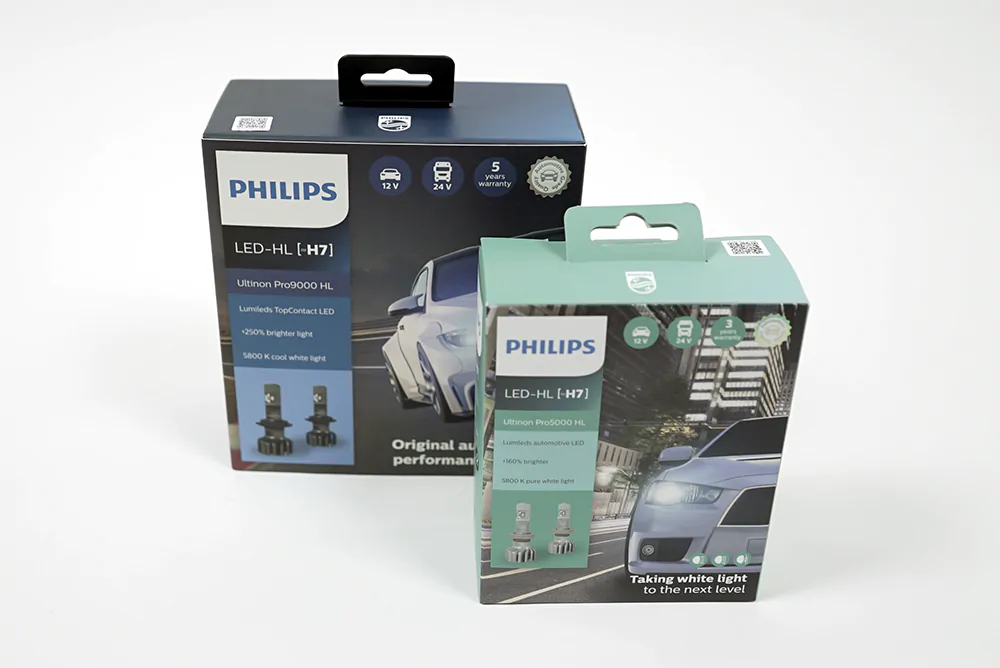
The Ultinon Pro9000 and Ultinon Pro5000 are not the Philips LEDs you buy for the biggest number on the chart. They are not the brightest kits we have tested, and they are not the strongest projector performers.
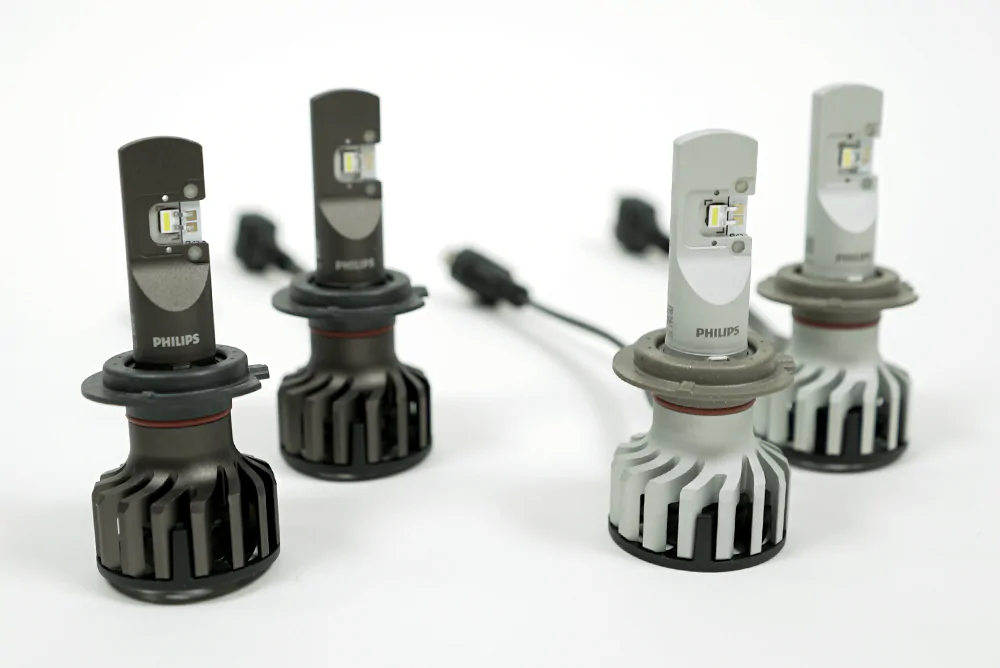
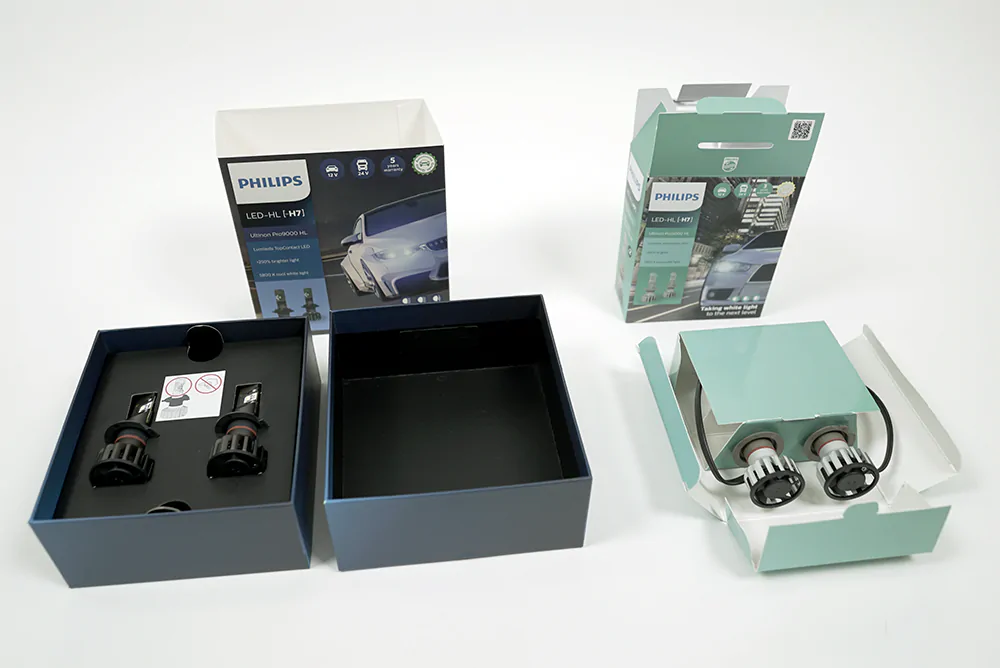
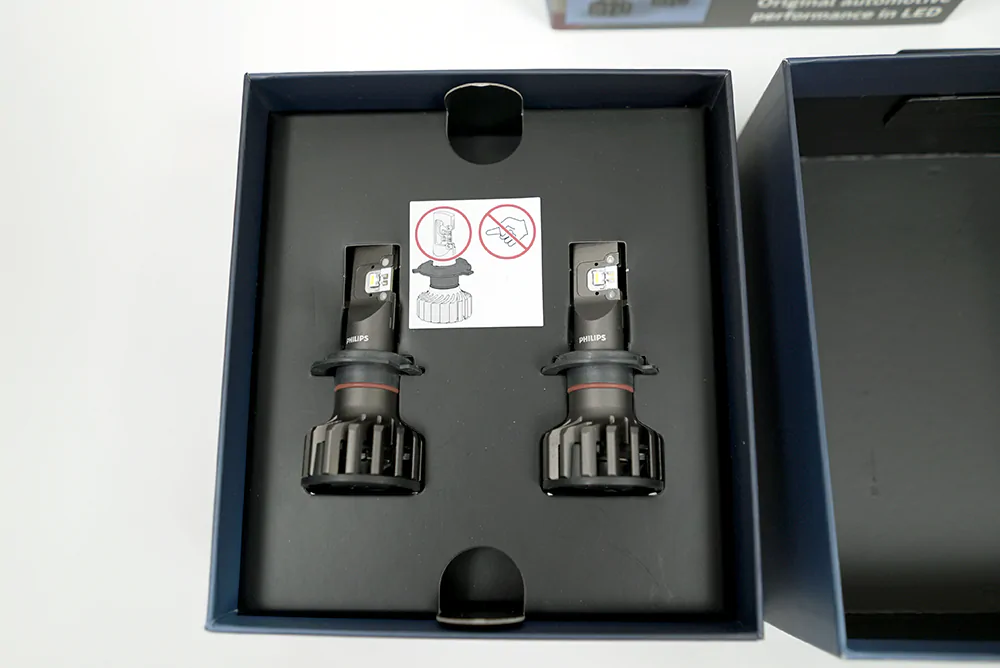
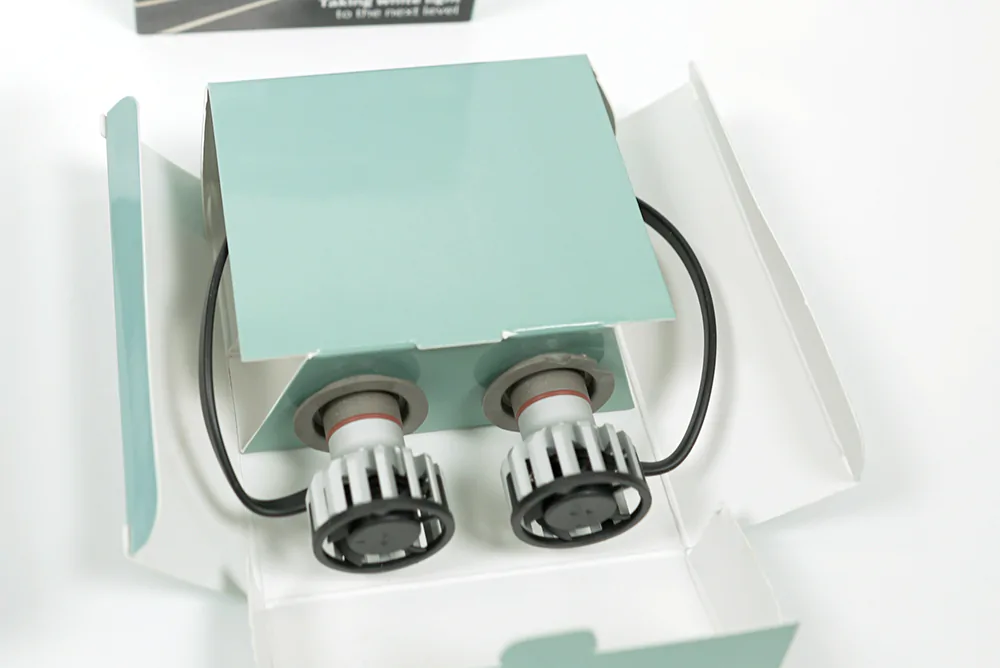
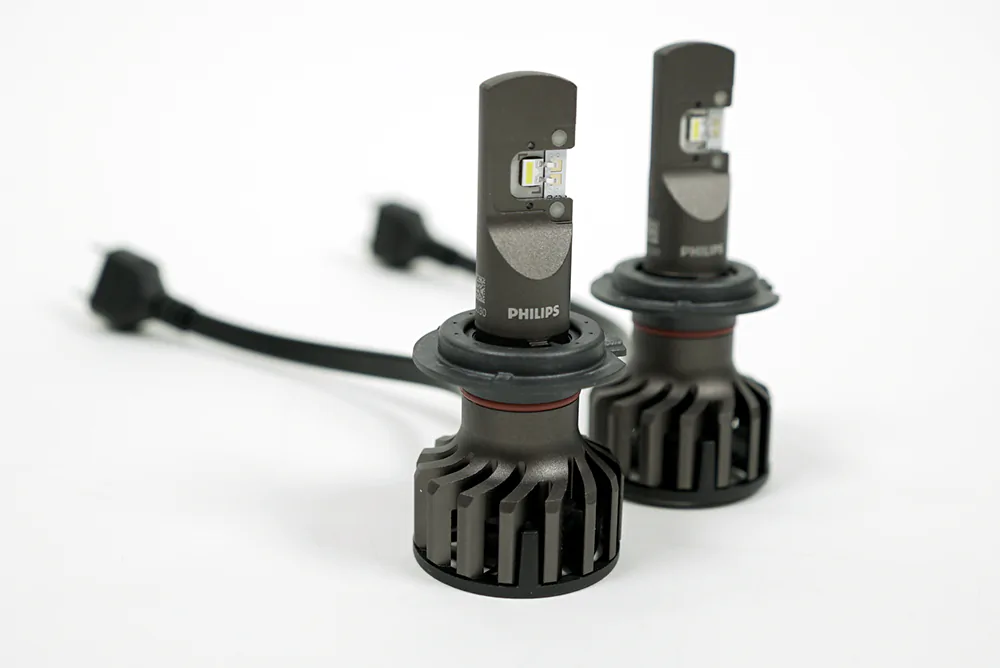
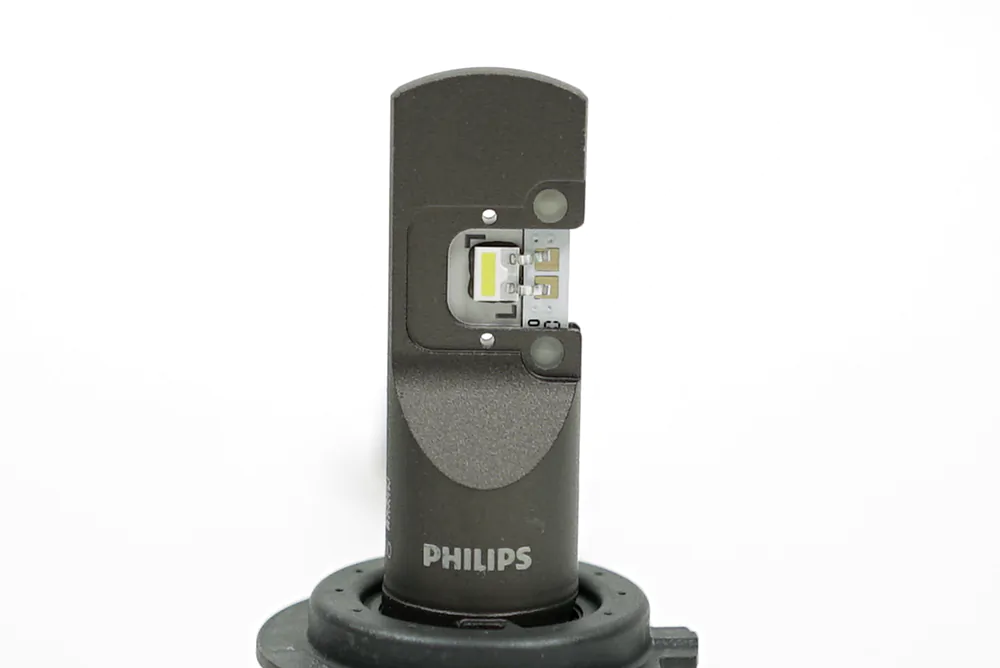
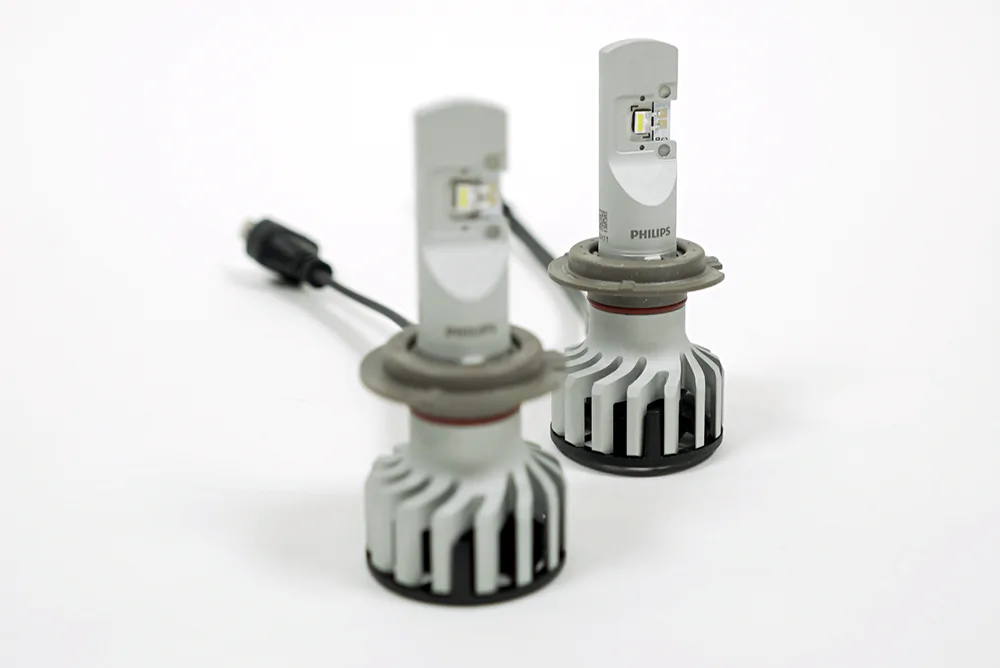
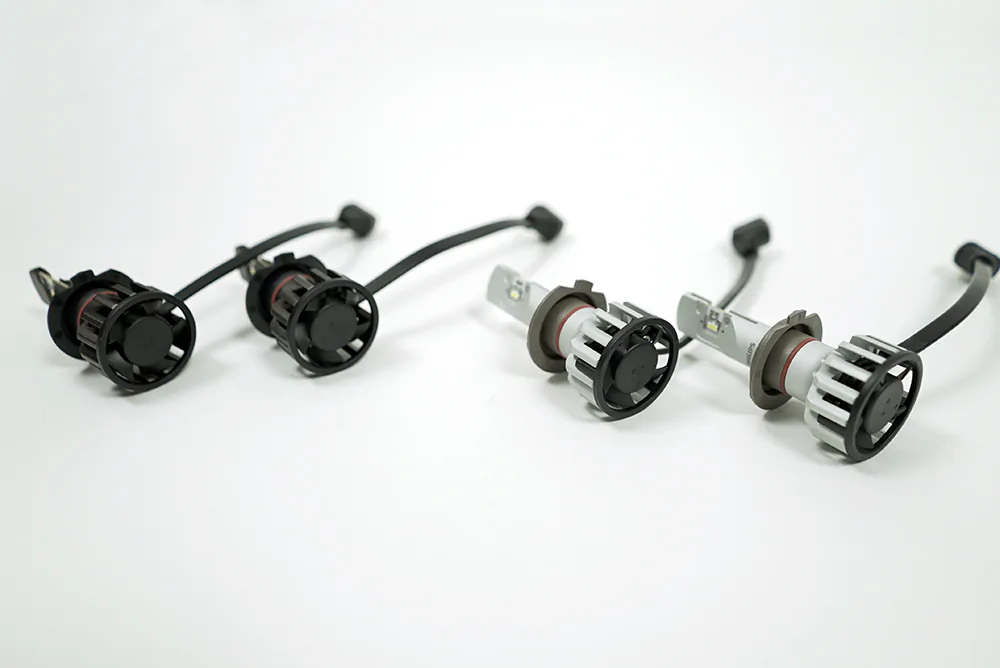
What Philips does well here is precision. Both kits use compact bulb bodies, built-in drivers, flat diode boards, and finned fan housings rather than chasing maximum raw output with larger hardware.
The Pro9000 is the stronger of the two when pricing is close. Its 5,000 K color, 102-lux glare result, and 5 / 5 reflector beam-pattern rating explain its Best Pure White Pick role, but the measured results below—not the packaging or brand—determine where either kit makes sense.
Reflector headlight performance
Reflector housings are the reason to consider these Philips kits. The Pro9000 combines useful output with a sharply controlled pattern and low recorded glare; the Pro5000 follows with lower output, although its glare and reflector pattern ratings were not recorded.
About these tests: The reflector and projector measurements below come from BulbFacts reference housings so products can be compared consistently. They are not exact-vehicle tests; bulb seating, housing optics, lens condition, and aim can change output, glare, and beam shape. The selected-vehicle panel above remains the source for any known applicability evidence.
Gray dots show every scored kit. Named markers are current BulbFacts recommendations. The 5.0 reference is a baseline, not a maximum. The Pro5000 recorded a 3.4 reflector performance score.
Philips Ultinon Pro9000 reflector performance score 4.1 compared with every scored LED kit and the 5.0 reference baseline. The Pro5000 score is 3.4.
- Low-beam hotspot
- 894 luxPro9000 · per bulb
Pro9000 reflector low-beam output of 894 lux compared with every recorded product.
- High-beam output
- 1,942 luxPro9000 · per bulb
Pro9000 reflector high-beam output of 1,942 lux compared with every recorded product.
- Glare measurement
- 102 luxPro9000 · reference housing
Pro9000 reflector glare measurement of 102 lux compared with products with recorded glare data. Lower is better.
- Beam pattern
- 5 / 5Pro9000 · separate pattern rating
Pro9000 reflector beam-pattern rating of 5 out of 5 compared with products with recorded ratings. Higher is better.

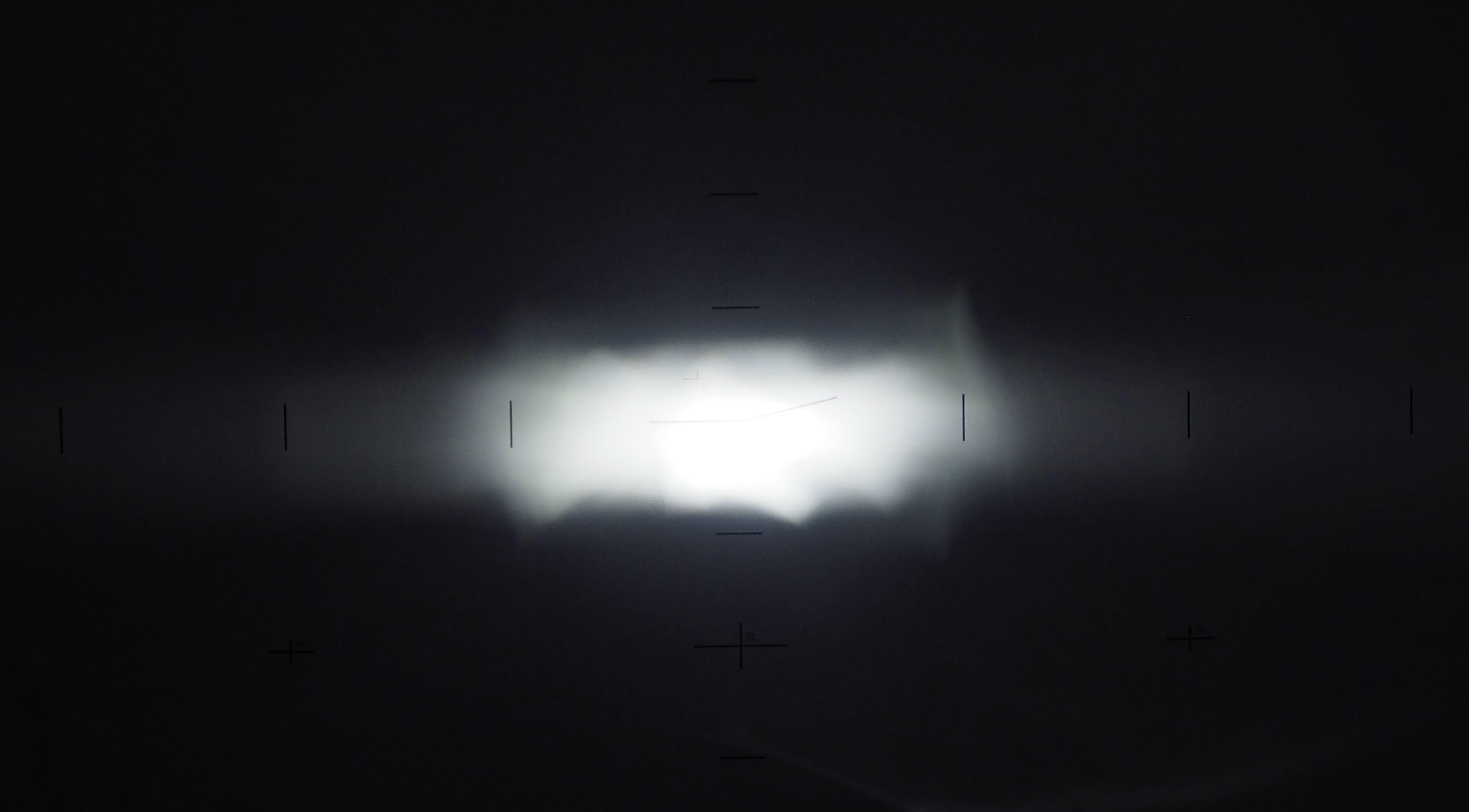

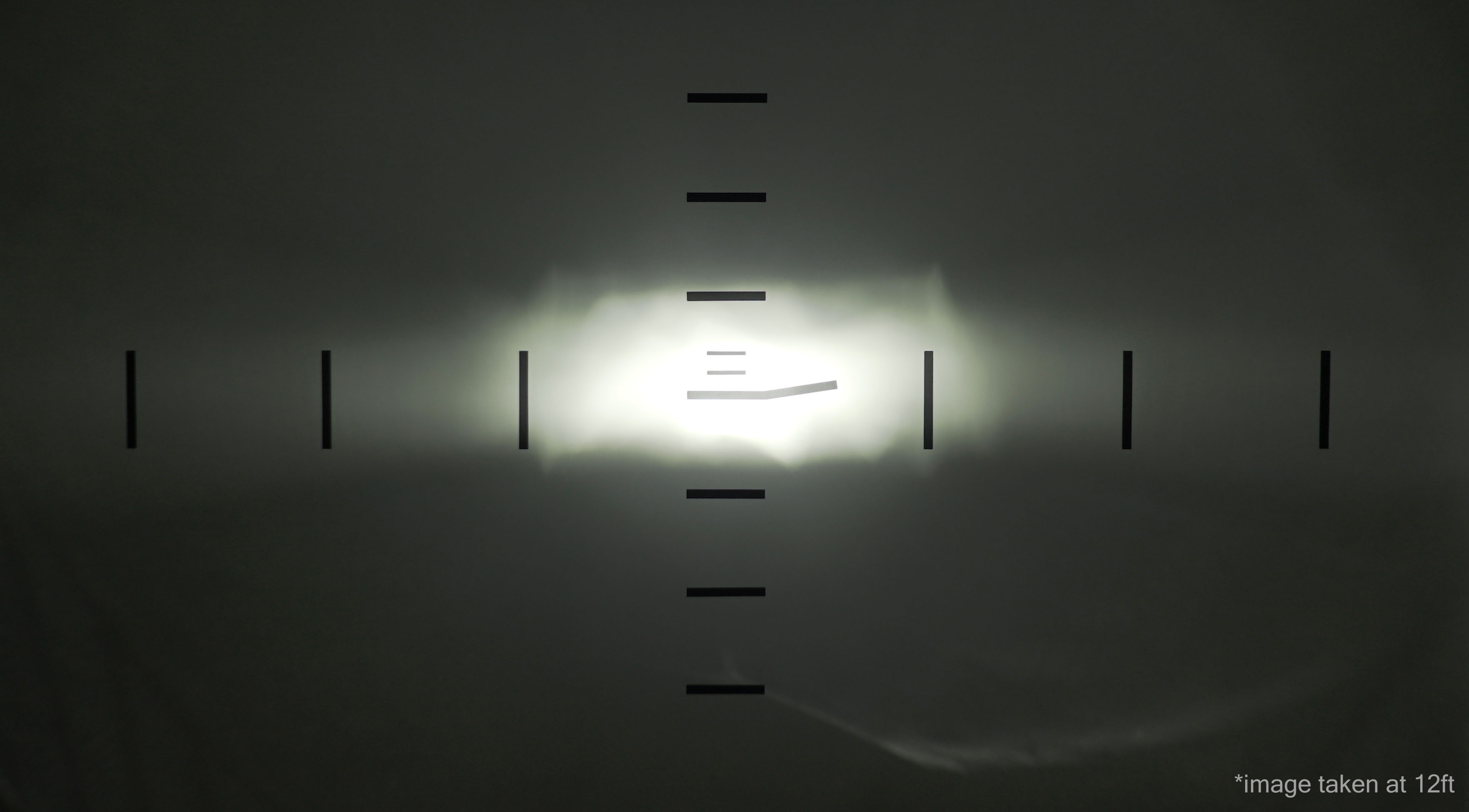
Reflector performance is the reason these Philips kits are interesting. The Pro9000 measured 894 lux on low beam and 1,942 lux on high beam. The Pro5000 measured 751 lux on low beam and 1,698 lux on high beam.
Those are not the biggest numbers among aggressive-output LEDs, but they are useful results. More importantly, the Pro9000 produced a clean reflector pattern: its hotspot looked natural, the beam stayed focused, and measured glare was only 102 lux in the reference housing.
The Pro9000's 4.1 performance score remains separate from its 5 / 5 beam-pattern rating. The Pro5000 recorded a 3.4 performance score, but its reflector glare and pattern ratings are unavailable, so this review does not assign the Pro9000's quality measurements to the Pro5000 by association.
If maximum reflector brightness is the priority, compare the higher-output kits. If clean white color, compact fitment, and a controlled reflector beam matter more, the Pro9000 is the stronger Philips choice. These reference-housing results still do not guarantee the same output, glare, or beam shape in a selected vehicle.
Projector headlight performance
Projectors are not the main reason to buy either Philips kit. The beam shapes remained controlled, but measured hotspot output was modest compared with stronger projector-focused products.
Gray dots show every scored kit. Named markers are current BulbFacts recommendations. The 5.0 reference is a baseline, not a maximum. The Pro5000 recorded a 1.7 projector performance score.
Philips Ultinon Pro9000 projector performance score 2.3 compared with every scored LED kit and the 5.0 reference baseline. The Pro5000 score is 1.7.
- Low-beam hotspot
- 411 luxPro9000 · per bulb
Pro9000 projector low-beam output of 411 lux compared with every recorded product.
- High-beam output
- 434 luxPro9000 · per bulb
Pro9000 projector high-beam output of 434 lux compared with every recorded product.
- Glare measurement
- Not recordedPro9000 projector test
- Beam pattern
- 2.5 / 5Pro9000 · separate pattern rating
Pro9000 projector beam-pattern rating of 2.5 out of 5 compared with products with recorded ratings. Higher is better.
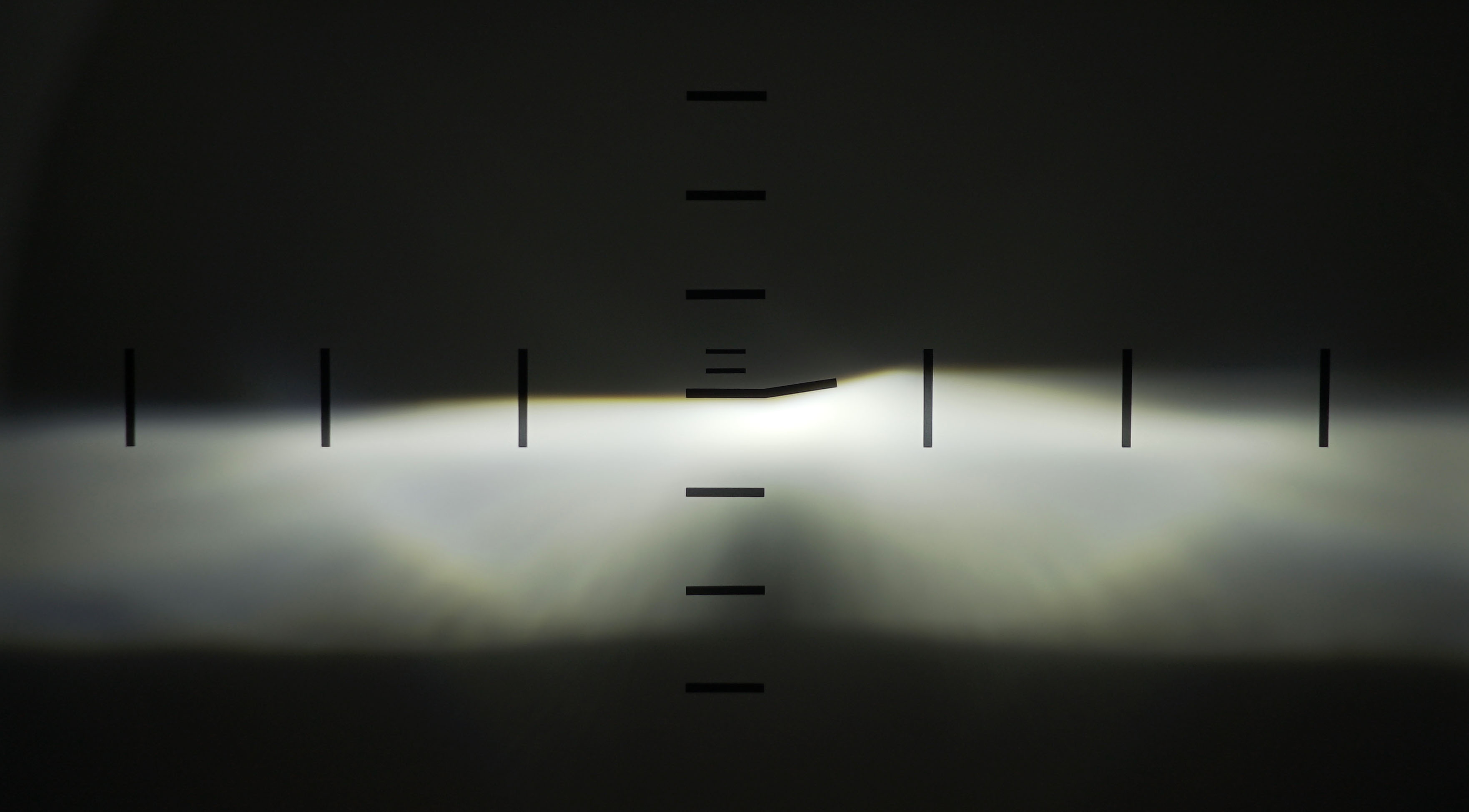
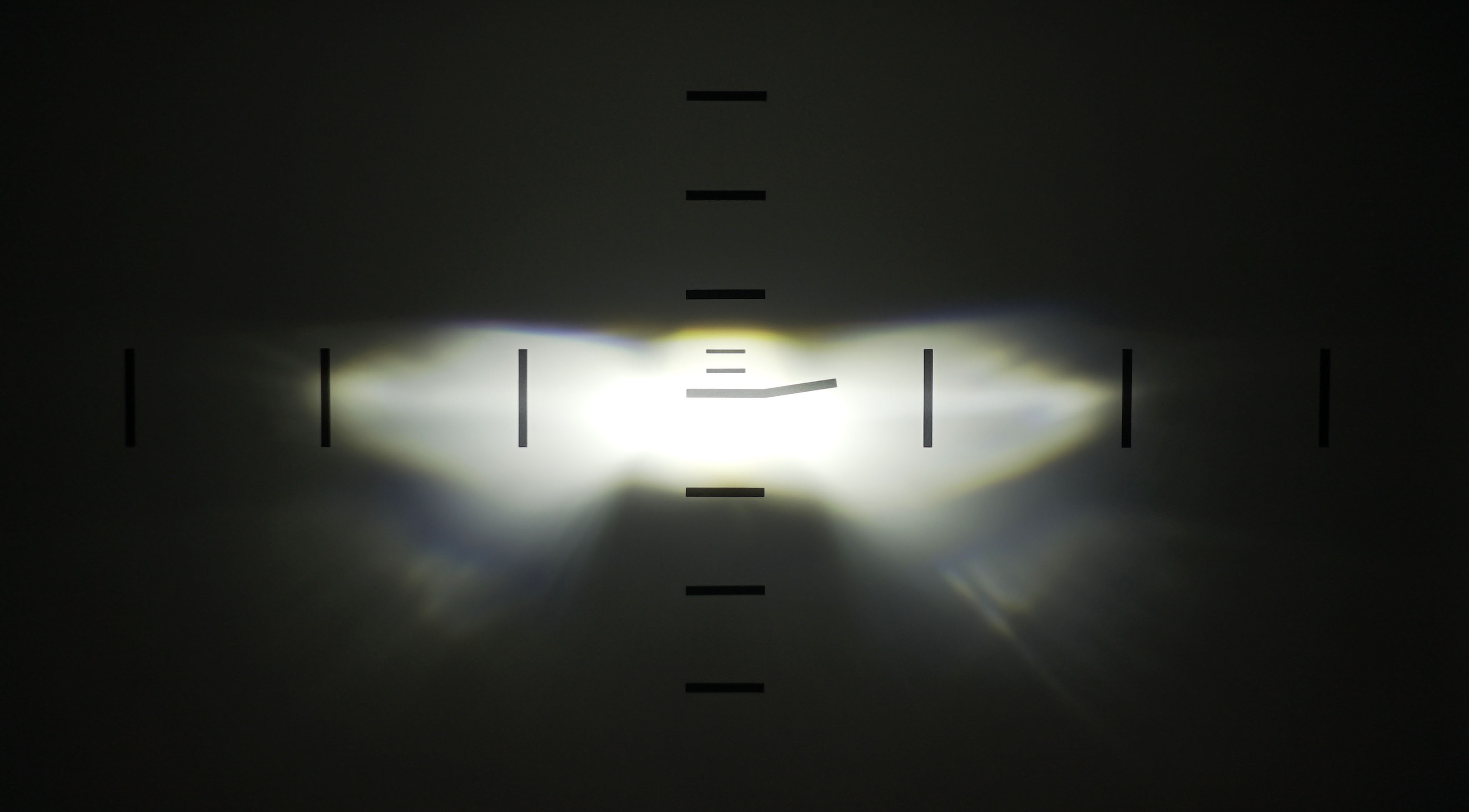
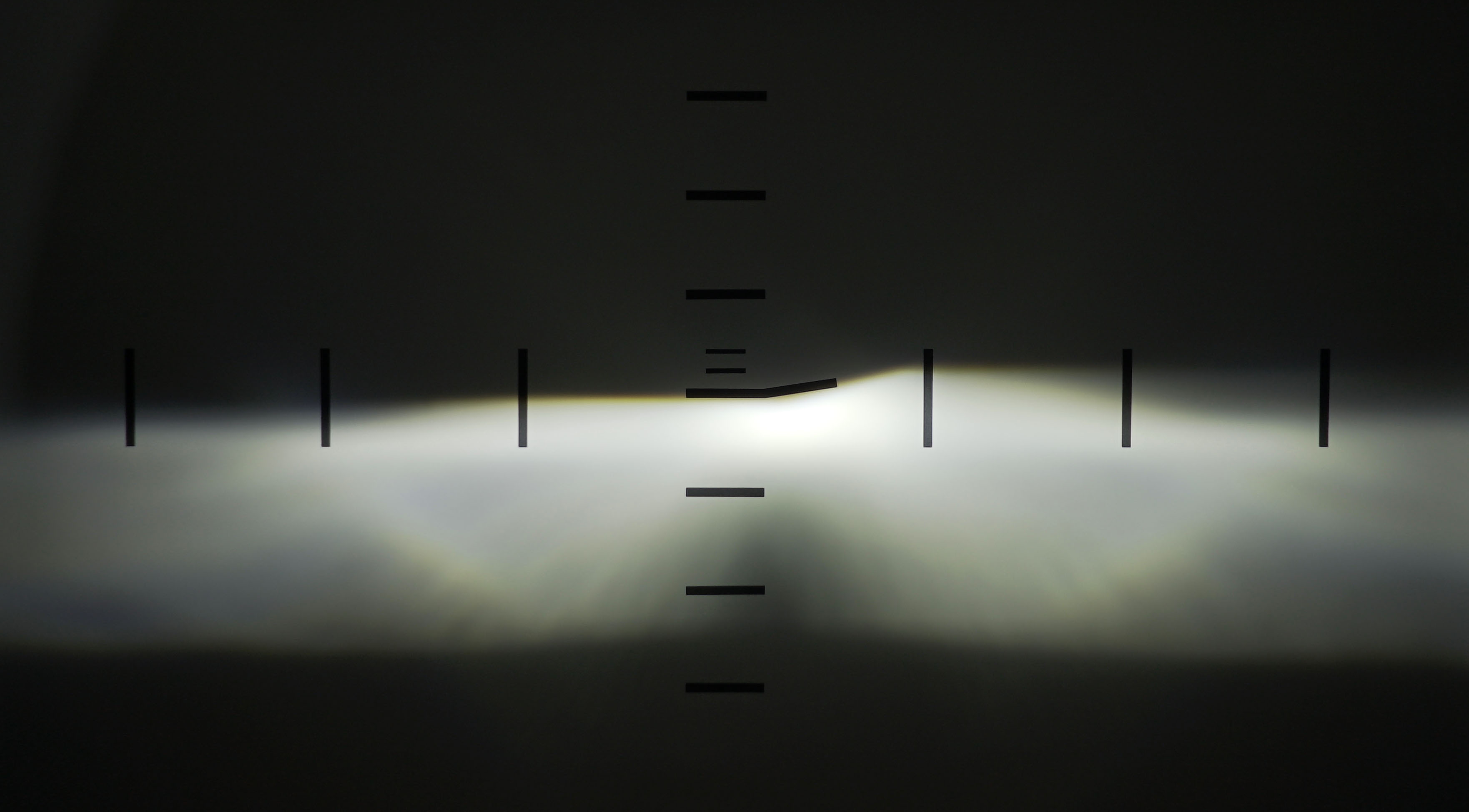
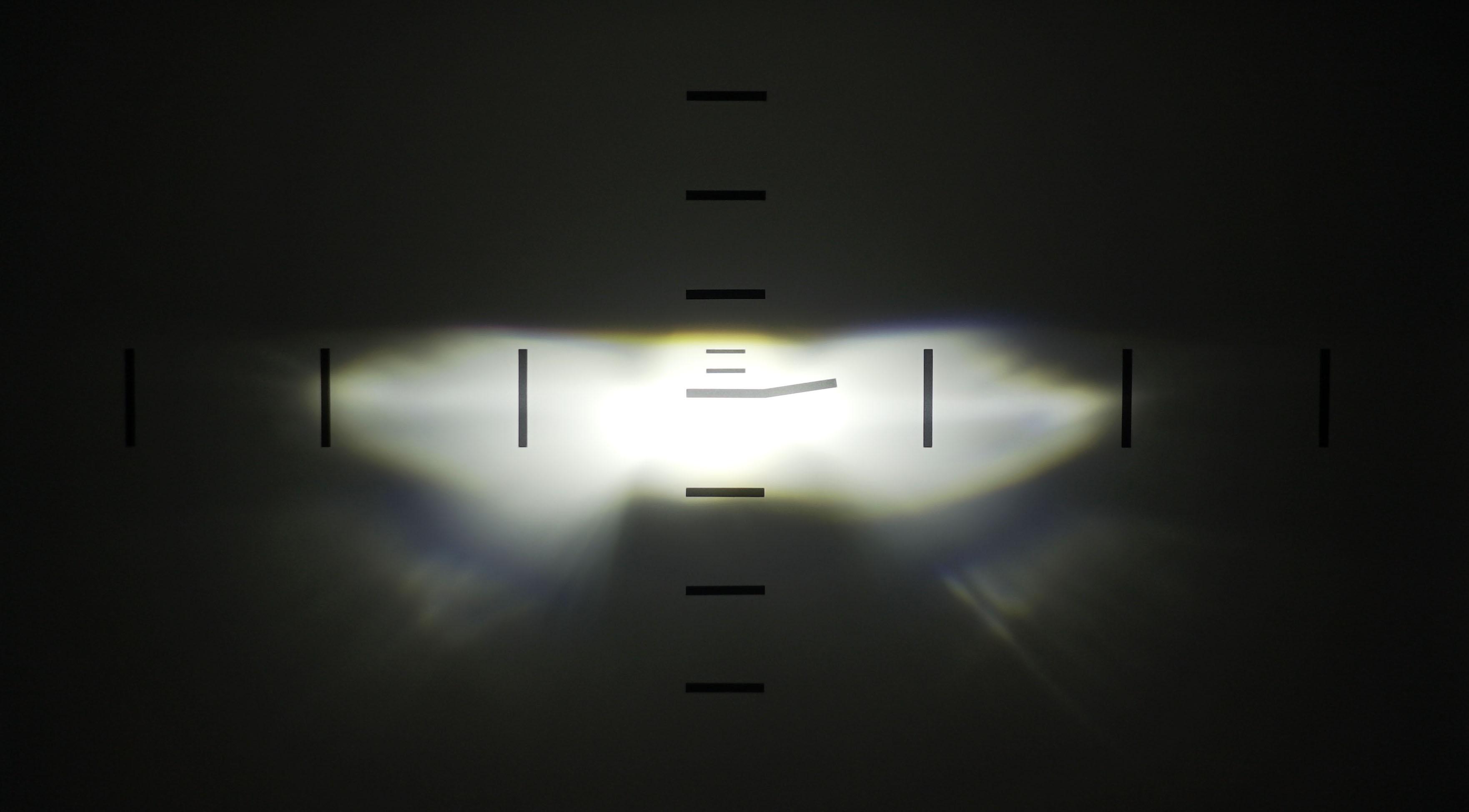
Projector performance is usable, but it is not where the Pro9000 or Pro5000 stand out. The Pro9000 recorded a 2.3 performance score, with 411 lux on low beam and 434 lux on high beam.
The Pro5000 measured 334 lux on projector low beam and 365 lux on projector high beam, with a 1.7 performance score. Its 4.5 / 5 beam-pattern rating was stronger than the Pro9000's 2.5 / 5 rating, but neither kit produced strong projector hotspot output by current chart standards.
That does not make these bad LEDs; it shows their priorities. The Philips Pro Series emphasizes precision, compactness, low heat, and clean color, and those choices worked better in the reflector reference housing than in the projector.
If your vehicle has projector headlights and brightness is the main goal, compare these with stronger projector performers before buying. Projector glare was not recorded for either Philips kit, and the reference-housing result does not guarantee behavior in a selected vehicle.
Output, color, and stability
The Pro Series nails the color target: clean white around 5000K, with stable output and very little blue or yellow tint.
Philips Ultinon Pro9000 Kelvin
Philips Ultinon Pro9000 lumens
Color is one of the biggest reasons to like the Philips Pro Series. The Pro9000 tested at 5,000 K, and the Pro5000 tested at 4,950 K, which puts both in a clean white range instead of the blue-white look common with many cheaper LEDs.
By eye, they look white with no obvious yellow and no cheap blue tint. That is the point of this product family: a premium-looking color that still makes sense for real headlight use.
Lumens are solid, but not the main selling point. The Pro9000 measured 1,942 lumens per bulb, or 3,884 lumens per kit. The Pro5000 measured 1,910 lumens per bulb, or 3,820 lumens per kit. The Pro9000 is only slightly higher in raw lumens, but it does better in the lux results.
Warm-up stability was excellent. From the two-minute mark to the 30-minute mark, the Pro9000 dropped only 2.2%, and the Pro5000 dropped only 1.2%.
Installation and cooling
The built-in drivers and compact dimensions simplify the package, while the low measured draw and controlled temperatures are practical strengths. Vehicle electronics, reduced-voltage DRLs, and rear clearance still need to be checked before ordering.
Per-bulb draw
The Pro9000's 17.7-watt-per-bulb result is compared with the recorded LED chart range and the 53-watt halogen reference. The Pro5000 measured 14.6 watts per bulb.
30-min temp
The Pro9000's 116-degree result is compared with the LED chart and the 525-degree halogen reference. The Pro5000 measured 102 degrees Fahrenheit.
Fan noise
The Pro9000's 59-decibel result is compared with products ranging from fanless to 71 decibels. The Pro5000 measured 65 decibels. Halogen has no cooling fan.
Physical size and fit
The recorded dimensions for both kits are 34 mm at the widest point, 35 mm from the base to the rear, and 44 mm across the diode-handle dimension. Both use a built-in driver rather than a separate box, and the H7 collars are listed as rotatable in 1-degree increments.
The recorded size lists differ: the Pro9000 covers H1, H3, H4, H7, H8, H9, H11, 9003, 9005, 9006, and 9012, while the Pro5000 record lists H4 and H7. A matching bulb size alone does not establish fitment; verify seating, rear clearance, dust-cover space, and vehicle electronics.
Power draw and cooling
The Pro9000 measured 17.7 watts per bulb; the Pro5000 measured 14.6 watts per bulb. Their derived pair totals are 35.4 watts and 29.2 watts respectively, both below the recorded 53-watt-per-bulb halogen reference.
After 30 minutes, the Pro9000 measured 116°F / 47°C and the Pro5000 measured 102°F / 39°C. Their active rear fans manage that heat; these short bench measurements are not long-term durability results.
Noise and electronics
Fan noise measured 59 dB for the Pro9000 and 65 dB for the Pro5000 on the bench. We did not record cabin noise after installation, so in-vehicle sound remains unknown.
At lower voltage, the bulbs did not flicker, but they also did not power on; neither is a good assumption for a reduced-voltage high-beam DRL. The original test recorded no pre-errors or full-time errors, while the current chart labels both products Requires Decoder. That is a source and vehicle-context distinction, not a universal compatibility guarantee. Radio-frequency interference remains unrecorded.
Warranty and long-term testing
Coverage
The current LED chart records a three-year warranty for both products. The original review material instead recorded two years, with up to five years after product registration. Coverage varies by market, seller, and registration, so confirm the current terms, exclusions, and claim process where you buy.
The current chart carries an S lifespan rating for the Pro9000 and N/A for the Pro5000. No supporting runtime-hour total is included in this review, so the Pro5000 must remain unknown and neither warranty coverage nor the short temperature test is presented as measured lifespan.
Should you buy it?
Choose the Philips Ultinon Pro9000 when your priority is a clean 5,000 K appearance, compact premium hardware, low heat, and a controlled reflector beam rather than maximum raw output. Its 4.1 reflector performance score, 102-lux glare result, and separate 5 / 5 beam-pattern rating make the clearest case for this product family.
The Pro5000 follows the same compact, clean-white approach at lower measured output. If prices are close, the Pro9000 is the stronger buy because it produced higher reflector and projector lux, lower fan noise, and the only recorded reflector glare and pattern results in this dual review.
Consider another option when maximum projector output, proper reduced-voltage DRL behavior, or confirmed plug-and-play vehicle electronics are essential. Exact fitment remains vehicle-specific, Pro5000 long-term testing remains N/A, and the listed warranty should be confirmed with the seller.
If those tradeoffs suit your housing and vehicle, check current pricing or compare both Philips results with the complete LED chart.
Full measurements and specifications
Open this reference for every recorded measurement, specification, unavailable field, and source discrepancy for both Philips products. The main reflector and projector findings remain visible above.
Show all recorded measurements and specificationsFive groups · version 2.0 bench record
Measured output
- Reflector performance score
- Pro9000: 4.1; Pro5000: 3.4; 5.0 reference baseline
- Reflector low-beam hotspot
- Pro9000: 894 lux per bulb; Pro5000: 751 lux per bulb
- Reflector low-beam improvement
- Not separately recorded for either product
- Reflector high-beam output
- Pro9000: 1,942 lux per bulb; Pro5000: 1,698 lux per bulb
- Reflector high-beam improvement
- Not separately recorded for either product
- Projector performance score
- Pro9000: 2.3; Pro5000: 1.7; 5.0 reference baseline
- Projector low-beam hotspot
- Pro9000: 411 lux per bulb; Pro5000: 334 lux per bulb
- Projector low-beam improvement
- Not separately recorded for either product
- Projector high-beam output
- Pro9000: 434 lux per bulb; Pro5000: 365 lux per bulb
- Projector high-beam improvement
- Not separately recorded for either product
- Measured lumens
- Pro9000: 1,942 lm per bulb, 3,884 lm per kit; Pro5000: 1,910 lm per bulb, 3,820 lm per kit
- Lumen improvement
- Not separately recorded for either product
Beam quality
- Reflector beam-pattern rating
- Pro9000: 5 / 5; Pro5000: not recorded
- Projector beam-pattern rating
- Pro9000: 2.5 / 5; Pro5000: 4.5 / 5
- Reflector glare measurement
- Pro9000: 102 lux in the reference housing; Pro5000: not recorded
- Projector glare measurement
- Not recorded for either product
Power, color, and thermal behavior
- Measured color temperature
- Pro9000: 5,000 K; Pro5000: 4,950 K
- Measured electrical draw
- Pro9000: 17.7 watts per bulb; Pro5000: 14.6 watts per bulb
- Derived pair draw
- Pro9000: 35.4 watts per pair; Pro5000: 29.2 watts per pair
- 30-minute running temperature
- Pro9000: 116°F / 47°C; Pro5000: 102°F / 39°C
- Cold-start to 30-minute output drop
- Not separately recorded for either product
- 2-minute to 30-minute output drop
- Pro9000: 2.2%; Pro5000: 1.2%
- Fan noise
- Pro9000: 59 dB on the bench; Pro5000: 65 dB on the bench
- Cooling method
- Fan; rear active-cooling design on both products
Dimensions, features, and recorded compatibility
- Maximum bulb width
- 34 mm for both products
- Base-to-rear dimension
- 35 mm for both products
- Diode-handle dimension
- 44 mm for both products
- Rotatable H7 collar
- Yes; 1° increments
- LED diodes
- Lumileds TopContact
- Emitter layout
- 6 per color, 12 total per bulb; flat direction
- Driver configuration
- Built-in; no external driver box recorded
- Recorded product sizes
- Pro9000: H1, H3, H4, H7, H8, H9, H11, 9003, 9005, 9006, 9012; Pro5000: H4, H7
- CANBUS behavior
- Current chart: Requires Decoder; original test recorded no pre-errors or full-time errors; not a universal compatibility guarantee
- DRL / high-beam dimming
- No; the recorded low-voltage test did not flicker but the bulbs did not power on
- Radio-frequency interference
- Not recorded for either product
- Exact-vehicle fitment
- Unconfirmed; verify bulb type, seating, rear clearance, dust-cover space, and vehicle electronics
- Housing context
- Reflector-first results with modest projector output in reference housings; not an exact-vehicle test
Warranty and test status
- Estimated price
- Pro9000: $67-90 per set; Pro5000: $70-100 per set
- Warranty
- Current chart: 3 years for both; original review: 2 years, up to 5 years with registration; confirm by seller and market
- Long-term lifespan status
- Pro9000: S rating in the current chart, with supporting runtime hours not included here; Pro5000: N/A
- Publication date
- March 13, 2021
- Last updated
- May 31, 2026
- Test version
- Version 2.0 bench record
Facts listed above are based on BulbFacts testing processes at the time of this review and the current local LED chart record. See how we test for current procedures. Warranty terms and the Pro9000 lifespan grade remain source-context items rather than invented durability conclusions.