
Nineo Gen II LED Kit Review
A budget LED kit that surprised us in reflector headlights, with useful high-beam output and a controlled pattern—but its projector results, cool 6150K color, loud fan, and DRL limitation matter.
- Reflector performance
- 3.8BulbFacts score · 5.0 baseline
- Projector performance
- 3.4BulbFacts score · 5.0 baseline
- Measured output
- 2,270 lmper bulb · 4,540 lm per pair
- Color temperature
- 6,150 Kmeasured
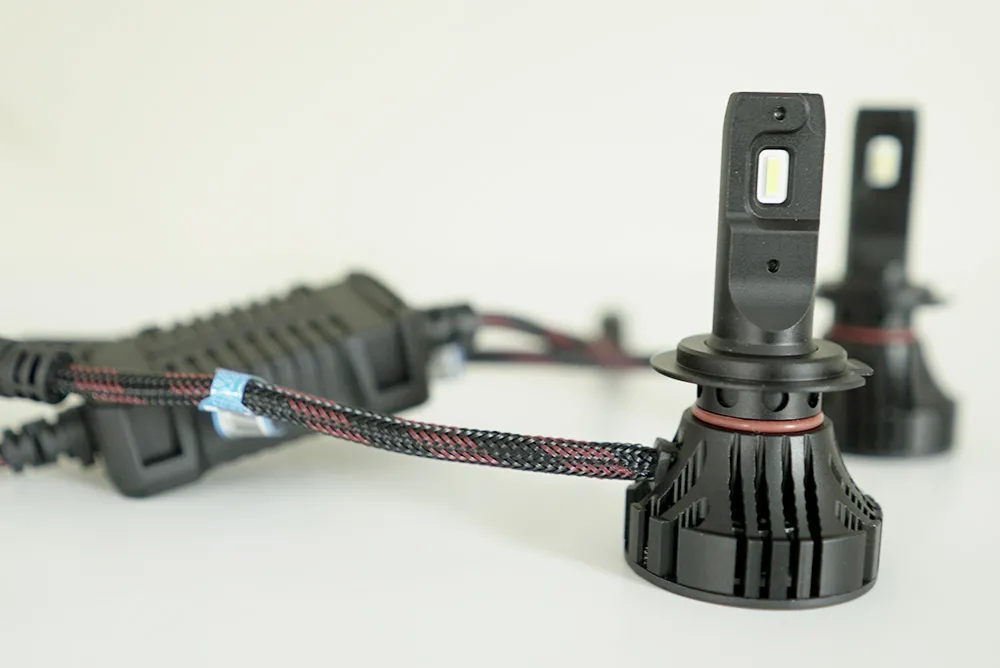
Our verdict
The Nineo Gen II is most convincing as a low-cost reflector-headlight option. Its current chart record shows useful low- and high-beam output with a good separate beam-pattern rating, while the projector result is ordinary. The tradeoffs are budget-grade hardware, a very audible fan, cool-white color, limited warranty, and electronics behavior that still depends on the vehicle.
What we liked
- Useful current reflector output with a separate 4/5 beam-pattern rating and relatively low recorded glare.
- Six flat-mounted CREE emitters, a rotatable collar, and a removable external driver at a budget price.
- No bulb-out warning in the mildly sensitive VW Jetta used for the recorded CANBUS check.
What to consider
- The projector score and 2.5/5 projector pattern rating are less compelling than the reflector result.
- The 70 dB bench reading makes this one of the louder fan-cooled kits in the chart.
- It did not dim correctly in the recorded DRL/high-beam test; exact-vehicle fitment, electronics behavior, RFI, and lifespan remain unconfirmed.
Build quality
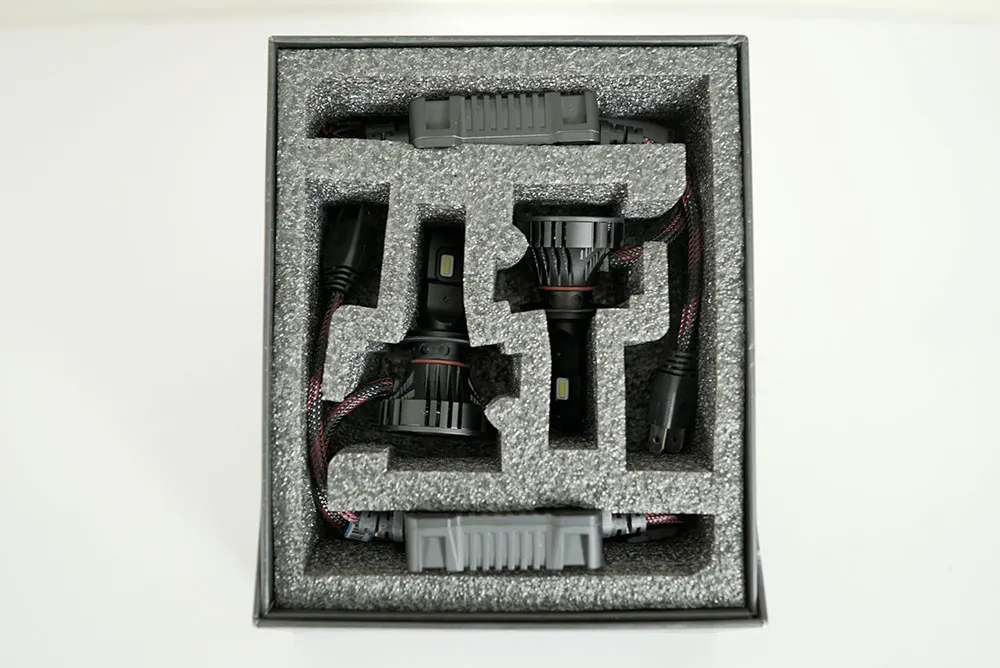
Shortly after the Hikari Ultra review, we tested more viewer-requested LEDs, including the Nineo Gen II. We expected it to land somewhere in the middle of the group, but its reflector result was surprising enough that we double, triple, and quadruple checked it.
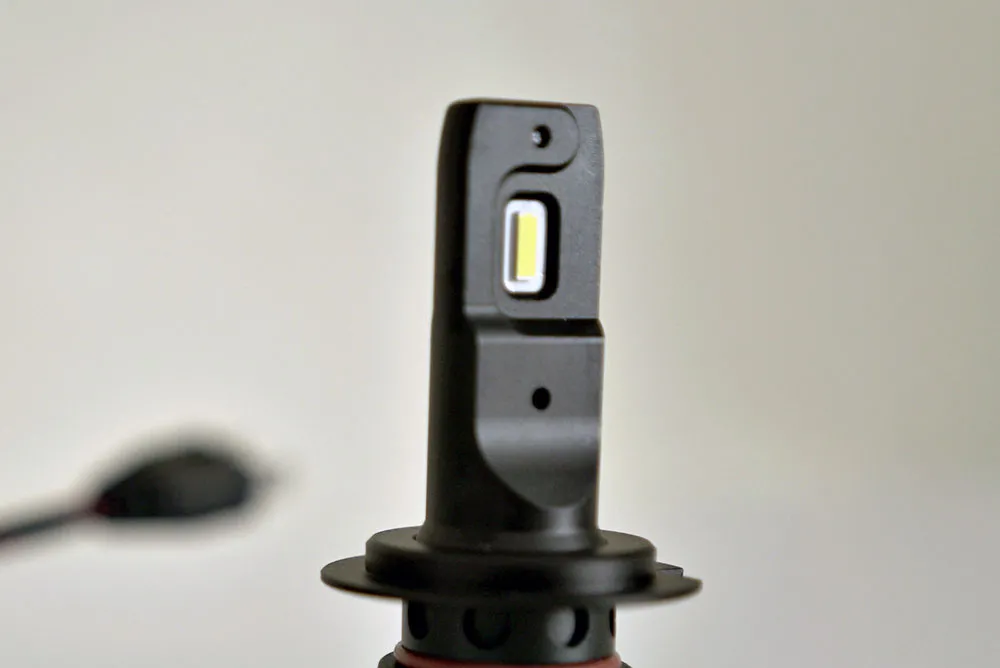
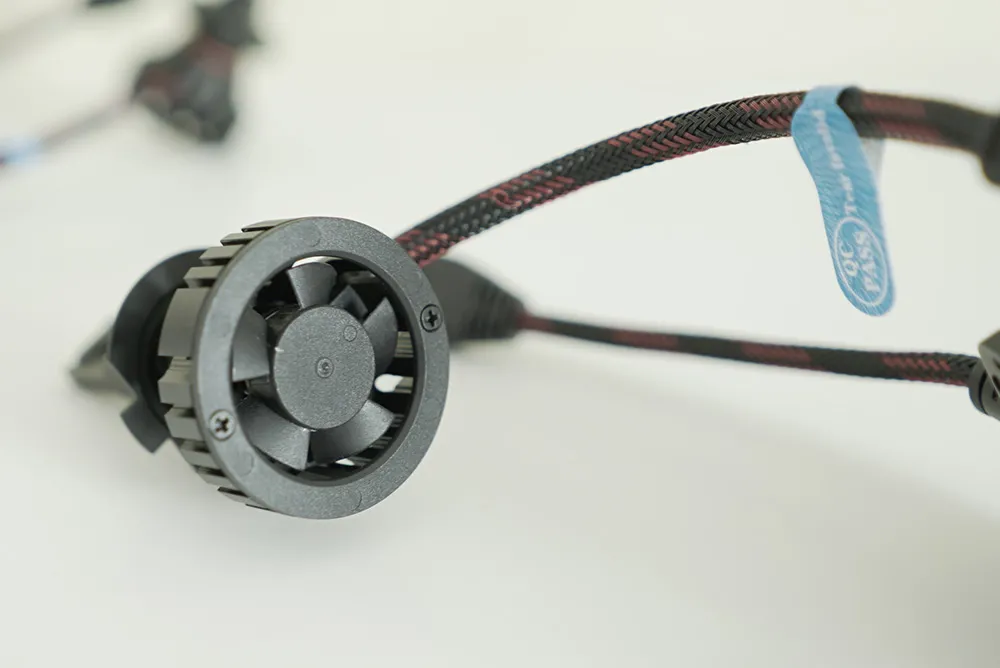
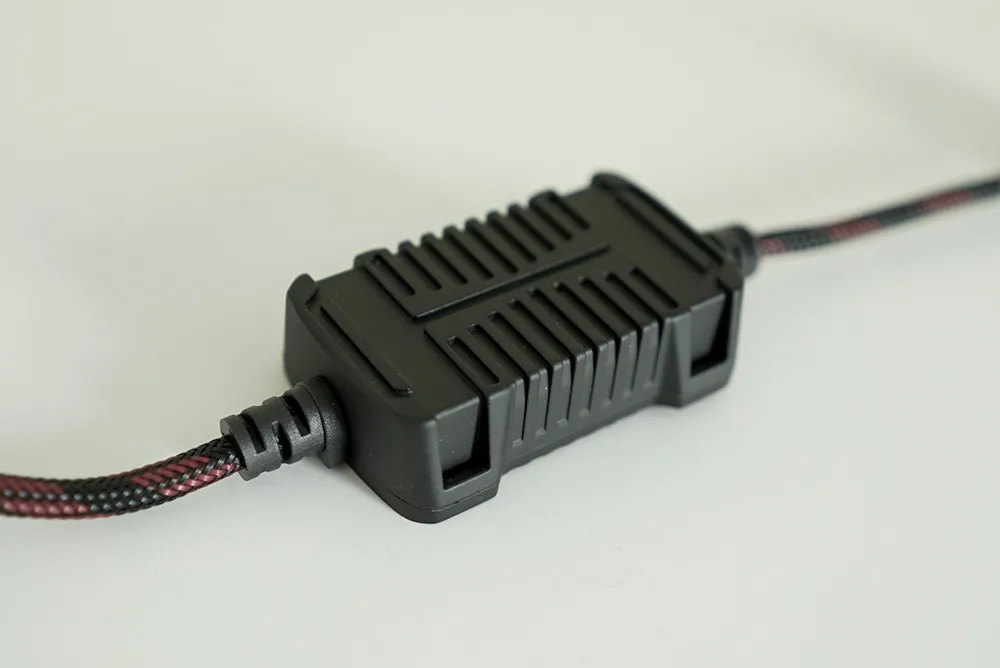
The construction is clearly budget-oriented, yet the layout is practical: six CREE emitters sit in a flat orientation, the bulb collar rotates through a recorded 45 degrees, active cooling is built into the rear, and the external driver can be removed from the harness.
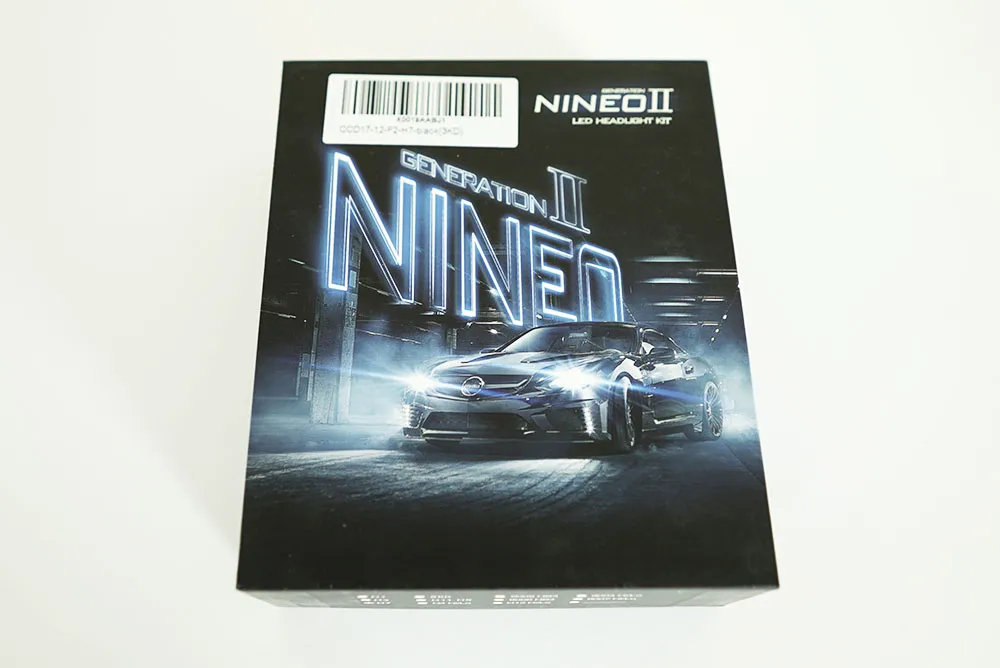
The original review described impressive value around $50. That context explains the first impression, but the current chart readings and beam evidence below—not the packaging or price alone—determine where the kit fits today.
Reflector headlight performance
The current chart record is the Nineo Gen II’s strongest case: useful low- and high-beam output, a 4/5 pattern rating, and 164-lux glare in the reference housing.
Test-version context: Headline measurements use the current version 2.1 chart record. The original 2019 version 1.0 article used a different test format and recorded larger lux values; those historical findings are preserved below rather than mixed into the current comparison graphs. Reference-housing results do not guarantee the same outcome in a selected vehicle.
Gray dots show every scored kit. Named markers are current BulbFacts recommendations. The 5.0 reference is a baseline, not a maximum.
Reflector performance score 3.8 compared with 54 scored LED kits and the 5.0 reference baseline.
- Low-beam hotspot
- 872 luxper bulb
Reflector low-beam output of 872 lux compared with 54 scored products.
- High-beam output
- 1,576 luxper bulb
Reflector high-beam output of 1,576 lux compared with 54 scored products.
- Glare measurement
- 164 luxreference housing
Reflector glare measurement of 164 lux compared with 22 products with recorded glare data. Lower is better.
- Beam pattern
- 4 / 5separate pattern rating
Reflector beam-pattern rating of 4 out of 5 compared with 22 products with recorded ratings. Higher is better.

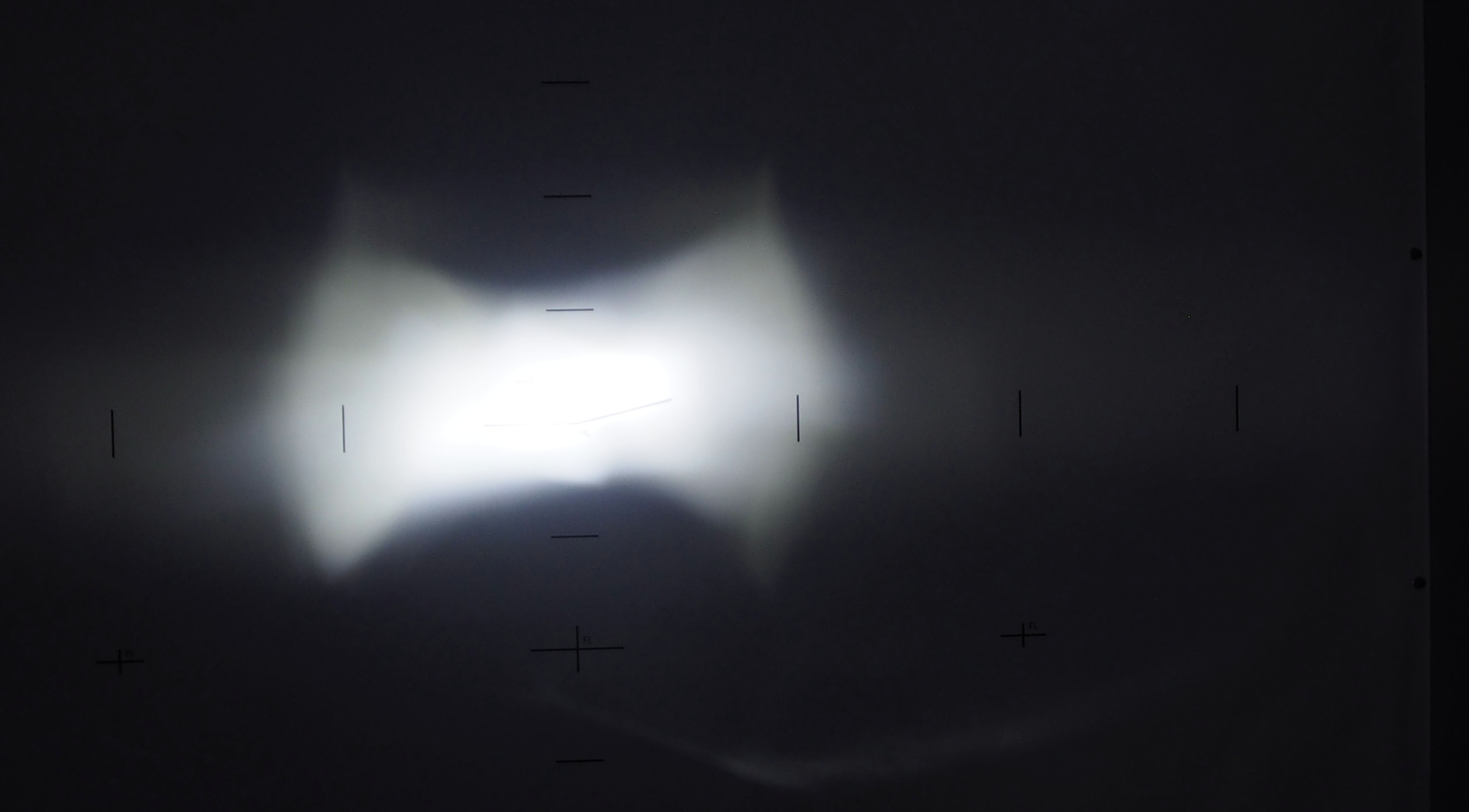
Current chart output measured 872 lux per bulb on reflector low beam and 1,576 lux per bulb on reflector high beam. The separate 4 / 5 beam-pattern rating describes beam shape, not the 3.8 performance score.
Glare measured 164 lux in the reflector reference housing. The beam remained more controlled than expected for a budget kit, but bulb seating, reflector optics, lens condition, and aim can change both distribution and glare.
The original version 1.0 article recorded 4,820 lux on low beam and 6,490 lux on high beam, describing the low beam as nearly three times its recorded halogen result and the high beam as an 83% improvement. Those historical values explain the enthusiastic 2019 conclusion, but they are not directly interchangeable with the current chart scale.
Projector headlight performance
The Nineo Gen II can produce usable projector output, but its current 3.4 performance score and 2.5/5 pattern rating make the reflector result the clearer reason to consider it.
Gray dots show every scored kit. Named markers are current BulbFacts recommendations. The 5.0 reference is a baseline, not a maximum.
Projector performance score 3.4 compared with 54 scored LED kits and the 5.0 reference baseline.
- Low-beam hotspot
- 508 luxper bulb
Projector low-beam output of 508 lux compared with 54 scored products.
- High-beam output
- 546 luxper bulb
Projector high-beam output of 546 lux compared with 54 scored products.
- Glare measurement
- Not recordedprojector test
- Beam pattern
- 2.5 / 5separate pattern rating
Projector beam-pattern rating of 2.5 out of 5 compared with 47 products with recorded ratings. Higher is better.

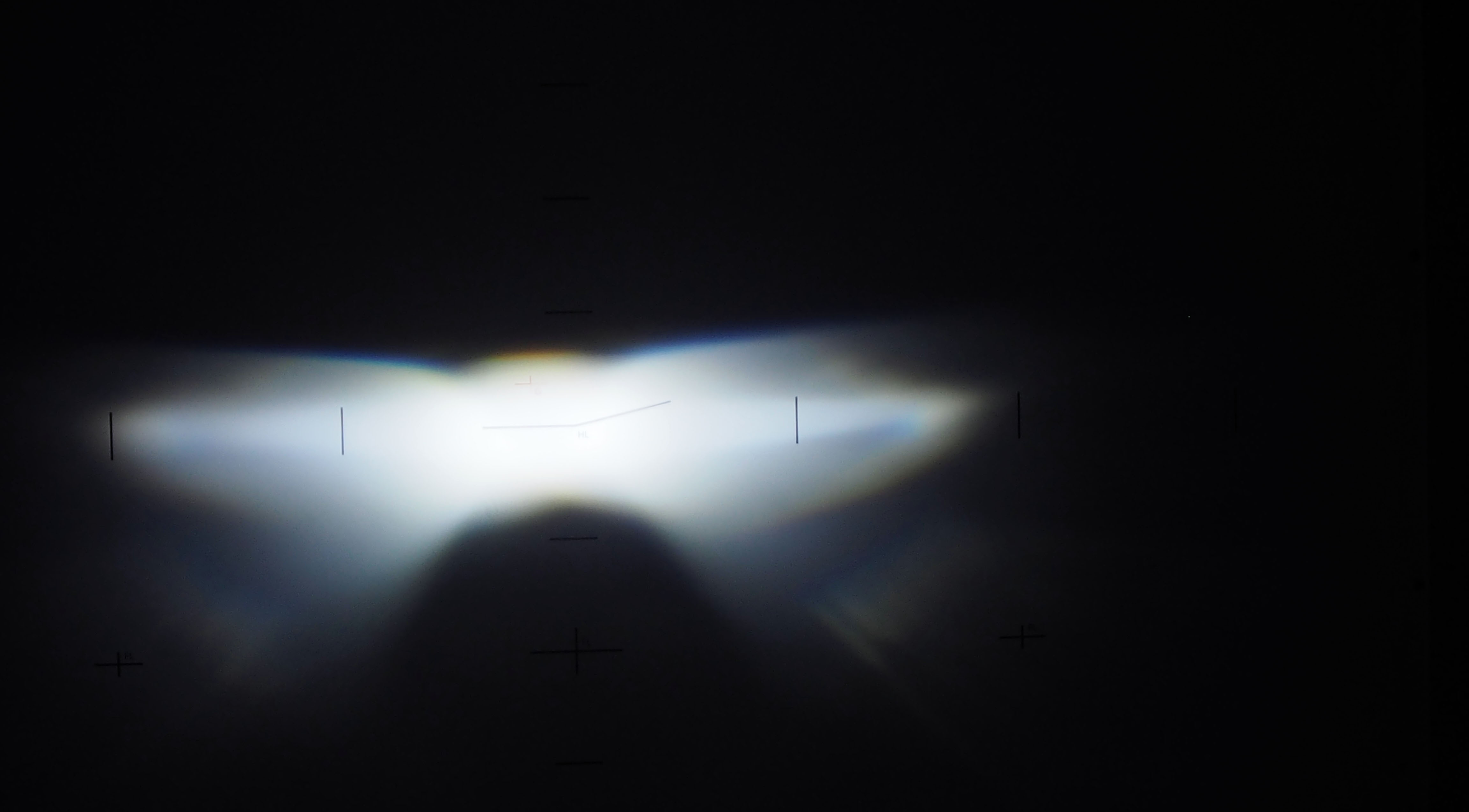
Current projector output measured 508 lux per bulb on low beam and 546 lux per bulb on high beam. The 2.5 / 5 beam-pattern rating is separate from the 3.4 performance score, and no projector glare measurement was recorded.
The original version 1.0 article measured 2,270 lux on projector low beam and 3,820 lux on projector high beam. Even in that original review, we noted that projector users had stronger alternatives.
If your vehicle uses reflector headlights, the Nineo Gen II makes more sense. Projector users should compare it carefully with projector-focused kits, and neither reference-housing result guarantees performance in an exact vehicle.
Output, color, and visibility
The current chart records a cool-white 6150K color and 2,270 measured lumens per bulb.
Nineo Gen II Kelvin
Nineo Gen II lumens
Color temperature measured 6,150K, which appears mostly white with a slight blue tint. A whiter-looking source is not automatically better in rain, snow, or other conditions where cooler light can create more scatter.
The current chart records 2,270 lumens per bulb, or a derived 4,540 lumens per pair. Lumens alone do not explain the reflector result; the distribution and hotspot shown above are the more direct evidence.
The original archived narrative says approximately 5,540 lumens per kit, while its facts table says 5,570 lumens per kit. That discrepancy remains documented rather than forcing either legacy figure into the current measurement.
Installation and cooling
The rotatable collar and removable driver help with orientation and routing, while the rear fan, external electronics, DRL limitation, and loud bench reading require attention before ordering.
Per-bulb draw
Recorded temp
Fan noise
Physical size and fit
The recorded heat-sink dimensions are 40 × 33 mm (width × length). The collar rotates through 45 degrees, and the external driver is removable, which can help with emitter orientation and cable routing.
The chart records H4, H7, H8, H9, H11, H13, 9003, 9005, 9006, 9007, and 9008 sizes. A matching base alone does not confirm fitment: verify seating, orientation, rear clearance, driver placement, dust-cover space, and electronics for the selected vehicle.
Power draw and cooling
Power draw measured 29.6 watts per bulb. The 59.2-watt pair total is derived from that per-bulb measurement rather than independently measured as a complete kit.
Running temperature measured approximately 110°F / 43°C, compared with about 160°F for the halogen reference cited in the original review. The fan manages heat, but this temperature is not a completed durability result.
Noise, electronics, and DRL behavior
Fan noise measured 70 dB on the bench. No in-cabin sound measurement was recorded, so the result does not predict how loud a specific installation will sound.
The kit produced no bulb-out warning in the mildly sensitive VW Jetta used for the reference CANBUS check, and the current chart calls it CANBUS-friendly. Vehicle monitoring systems vary, so that result is useful evidence rather than a universal compatibility guarantee.
The kit did not dim correctly in the recorded high-beam/DRL test and may cut off instead. Radio-frequency interference was not recorded, and both DRL and RFI behavior remain unconfirmed for an exact vehicle.
Warranty and long-term testing
Coverage
The kit is listed with a one-year warranty. That is manufacturer or seller coverage, not evidence of measured service life, and current terms should be confirmed before ordering.
Long-term lifespan remains N/A because a completed runtime result is not recorded. The temperature result and external-driver construction do not replace durability testing.
Should you buy it?
The Nineo Gen II best suits a budget shopper using a reflector-style headlight who values controlled beam shape and useful high-beam output more than premium construction. Its current 4 / 5 reflector pattern rating, 164-lux glare result, and strong original-review showing explain why it stood out.
Projector users should be more selective. The 3.4 projector performance score, separate 2.5/5 pattern rating, loud fan, short warranty, cool 6150K color, and DRL limitation are meaningful tradeoffs.
At the current recorded $30–50 estimated price, it remains a value-minded reflector option if the dimensions, electronics, and beam pattern suit the vehicle. Confirm fitment and aim after installation rather than treating the reference-housing result as a vehicle-specific recommendation.
If those tradeoffs fit your vehicle, check the current price or compare the current chart before deciding.
Full measurements and specifications
Open this reference for every recorded measurement, specification, unknown, and test-version detail. The main reflector and projector evidence remains visible above.
Show all recorded measurements and specificationsFive groups · current v2.1 + original v1.0 context
Measured output
- Reflector performance score
- 3.8 in the current chart; 5.0 is a reference baseline, not a maximum
- Reflector low-beam hotspot
- 872 lux per bulb current; 4,820 lux per bulb in the original version 1.0 article
- Reflector low-beam improvement
- Not recorded for the current value; original article described nearly 200% more light, or about three times its recorded halogen result
- Reflector high-beam output
- 1,576 lux per bulb current; 6,490 lux per bulb in the original version 1.0 article
- Reflector high-beam improvement
- Not recorded for the current value; original article recorded an 83% improvement over its halogen result
- Projector performance score
- 3.4 in the current chart; 5.0 is a reference baseline, not a maximum
- Projector low-beam hotspot
- 508 lux per bulb current; 2,270 lux per bulb in the original version 1.0 article
- Projector low-beam improvement
- Not recorded for the current value
- Projector high-beam output
- 546 lux per bulb current; 3,820 lux per bulb in the original version 1.0 article
- Projector high-beam improvement
- Not recorded for the current value
- Measured lumens
- 2,270 lm per bulb current; 4,540 lm per pair derived. Original narrative says about 5,540 lm per kit, while its facts table says 5,570 lm per kit
- Lumen improvement
- Not recorded; the conflicting original kit-lumen figures are preserved rather than normalized
Beam quality
- Reflector beam-pattern rating
- 4 / 5 in the current chart; separate from the 3.8 performance score
- Projector beam-pattern rating
- 2.5 / 5 in the current chart; separate from the 3.4 performance score
- Reflector glare measurement
- 164 lux in the reference housing
- Projector glare measurement
- N/A; not recorded
Power, color, and thermal behavior
- Measured color temperature
- 6,150 K
- Measured electrical draw
- 29.6 watts per bulb
- Derived pair draw
- 59.2 watts per pair
- 30-minute running temperature
- 110°F / 43°C recorded; original article compares it with about 160°F for halogen
- Cold-start to 30-minute output drop
- Not recorded
- 2-minute to 30-minute output drop
- Not recorded
- Fan noise
- 70 dB on the bench; no in-cabin measurement recorded
- Cooling method
- Active fan
Dimensions, features, and recorded compatibility
- Maximum bulb width
- 40 mm recorded heat-sink width; a separate overall maximum was not preserved
- Base-to-rear dimension
- 33 mm recorded heat-sink length; exact base-to-rear basis was not preserved
- Diode-handle dimension
- Not recorded
- Rotatable H7 collar
- Yes; 45-degree rotation recorded. The standardized label does not imply every listed size uses identical hardware
- LED diodes
- CREE emitters; exact model not recorded
- Emitter layout
- Flat, described as unique; six emitters per bulb
- Driver configuration
- External and removable; original conclusion describes a capacitor in the driver assembly
- Recorded product sizes
- H4, H7, H8, H9, H11, H13, 9003, 9005, 9006, 9007, and 9008
- CANBUS behavior
- No bulb-out warning in the mildly sensitive VW Jetta reference check; current chart says CANBUS-friendly, not universally compatible
- Exact-vehicle fitment
- Unconfirmed; verify bulb type, seating, orientation, rear clearance, driver placement, dust-cover space, DRL behavior, and electronics
- Housing context
- BulbFacts reflector and projector reference housings; results do not guarantee performance in a selected vehicle
Warranty and test status
- Estimated price
- $30–50 in the current chart; original article discussed a price around $50
- Recorded warranty
- 1 year
- Long-term lifespan
- N/A; no completed durability result recorded
- DRL / high-beam dimming
- No in the recorded test; the kit may cut off rather than dim
- Radio-frequency interference
- N/A; not recorded
- High-beam test photographs
- Available for both reflector and projector reference housings
- Publication date
- February 15, 2019
- Last updated
- May 31, 2026
- Test version
- Current chart version 2.1 values are used for headline comparisons; original publication used version 1.0 values, which are preserved as historical context
Current headline facts use the BulbFacts version 2.1 chart record where available; the original version 1.0 findings are labeled separately. See how we test for current procedures and use the current LED chart for current comparisons.