
Morimoto 2Stroke 3.0 LED Review
A discontinued premium LED with a very controlled reflector beam, clean 5300K color, true low-voltage DRL dimming, and unusually strong long-runtime results—but much weaker projector performance.
- Reflector low beam
- 1,022 luxper bulb · v2.0 reference housing
- Projector low beam
- 314 luxper bulb · v2.0 reference housing
- Measured output
- 2,025 lmper bulb · 4,050 lm per kit
- Color temperature
- 5,300 Kmeasured
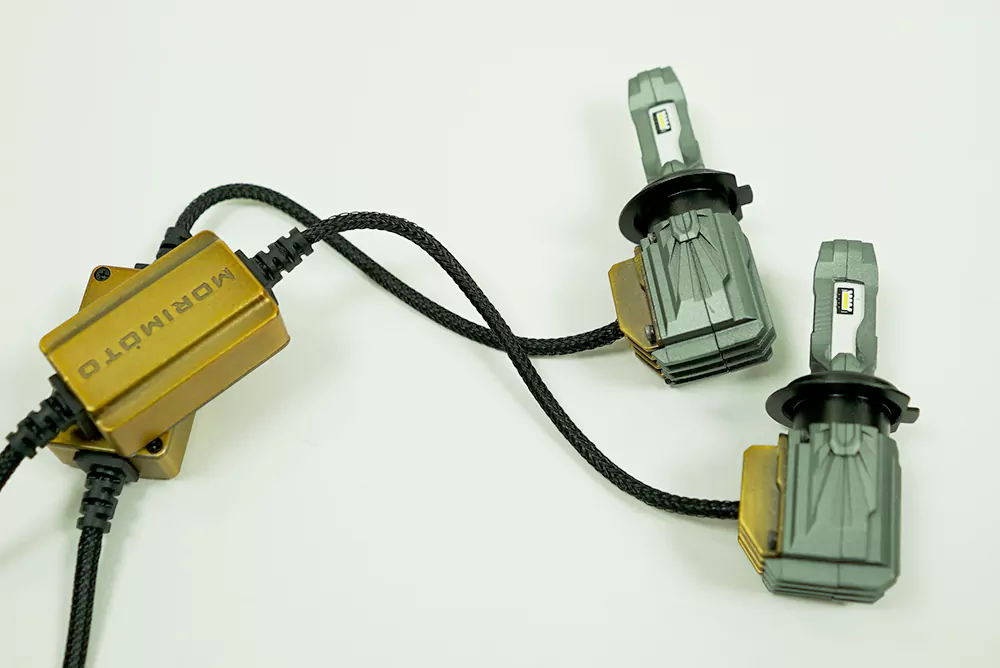
Our verdict
The Morimoto 2Stroke 3.0 is most convincing in reflector headlights, where its compact OSRAM emitter layout produced a strong, controlled beam that closely resembled the halogen reference. Its clean color, low-voltage DRL behavior, and recorded long-runtime performance make this an unusually complete older review, but the projector result was modest and the product is now discontinued.
What we liked
- Strong reflector output with 1,022 low-beam lux, 1,821 high-beam lux, and a separate 5 / 5 beam-pattern rating.
- Clean 5,300K color, 2,025 measured lumens per bulb, and only a 4.9% output drop from two to 30 minutes.
- True dimming down to 3.5 volts and about 4,200 bench hours above 75% output, with operation recorded beyond 7,500 hours.
What to consider
- Projector output was modest at 314 low-beam lux and 373 high-beam lux, with documented dark-area cut into the beam.
- The product is discontinued, and its roughly $205 price is historical rather than a current offer.
- The external driver, front-side fan system, and 68 dB bench-noise result require clearance and installation checks; exact-vehicle compatibility is not guaranteed.
Build quality
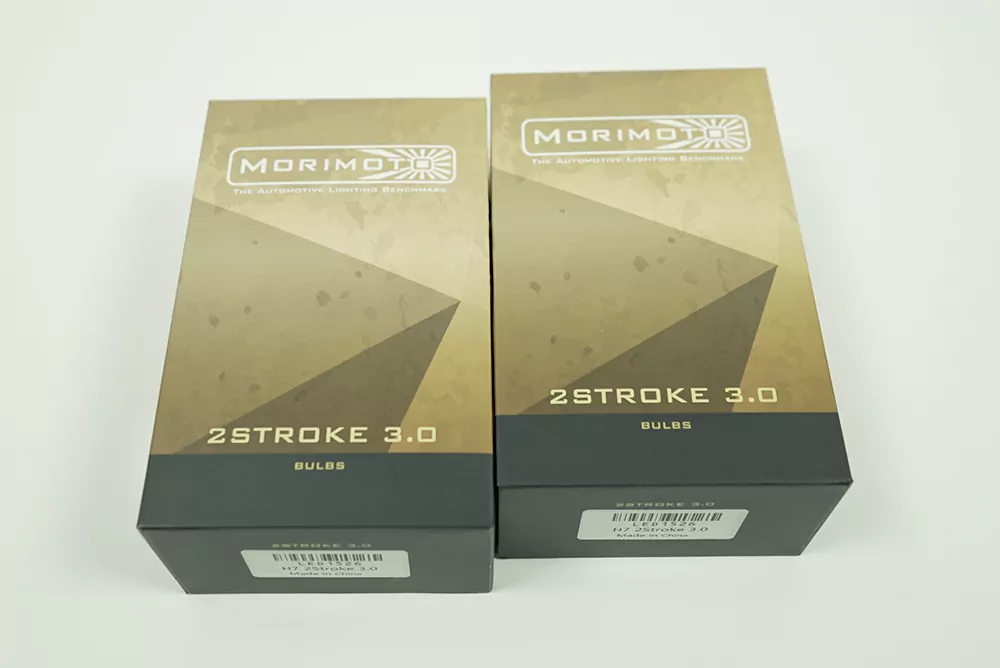
We bought the 2Stroke 3.0 after Morimoto presented it as a substantial revision of the older 2.0. We approached the promotional claims skeptically, but Morimoto's earlier products had generally held up under our testing and the new hardware deserved a closer look.
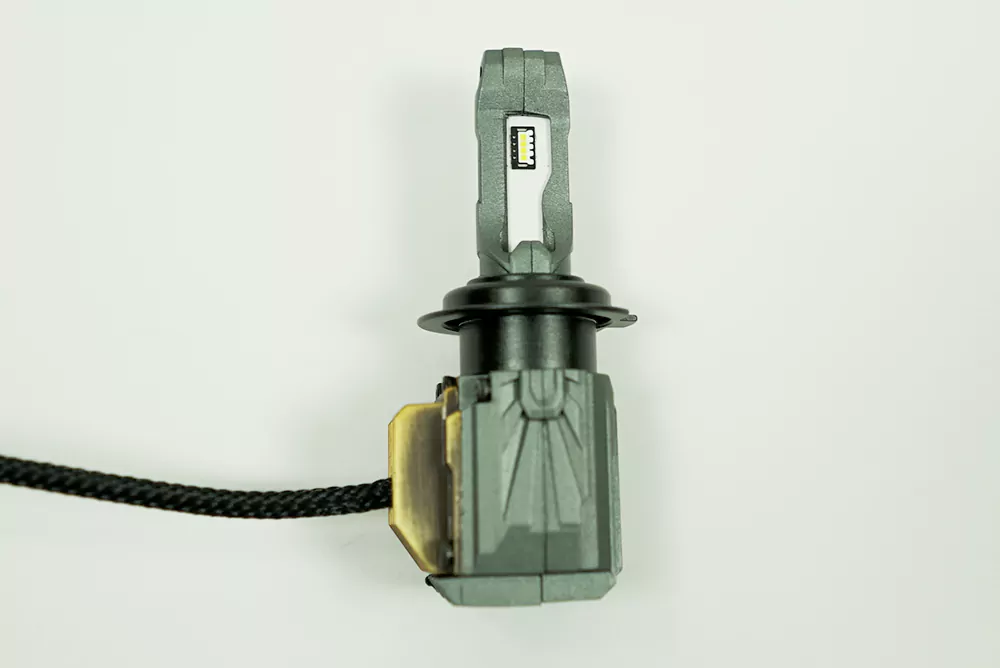
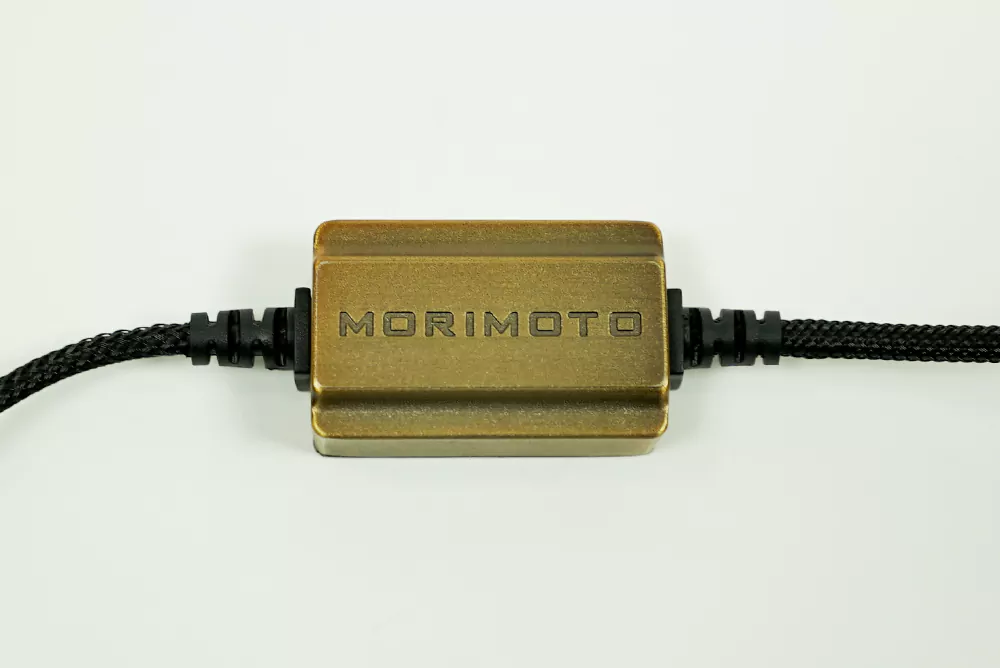
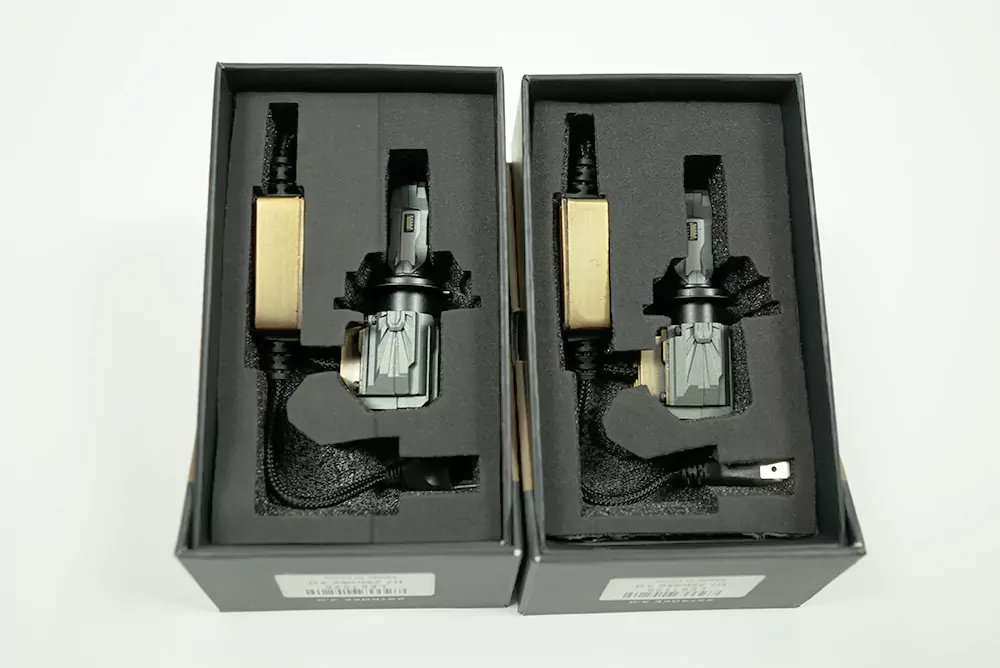
The 3.0 uses compact OSRAM Oslon Black Flat S emitters with very tight side-to-side spacing, a rotatable collar, a slimmer heat sink, a side-exit cable, and external metal drivers. The construction is distinctive and purposeful rather than a generic bulb fitted with a different label.
Those details made the kit easier to take seriously, but the measured reflector and projector results below—not the branding or finish—determine where the design actually worked.
Reflector headlight performance
The 2Stroke 3.0's compact OSRAM diode layout worked especially well in the reflector reference housing, producing a strong hotspot and a beam shape that remained very close to the halogen control.
About these tests: These v2.0 measurements came from BulbFacts reference housings and the original article's 25-foot output test. They are not exact-vehicle tests; bulb seating, housing optics, lens condition, and aim can change output, glare, and beam shape. The selected-vehicle panel above remains the source for any known applicability evidence.
This review predates the current performance-score record. The documented lux measurements and separate 5 / 5 beam-pattern rating remain available below; no performance score has been inferred.
- Low-beam hotspot
- 1,022 luxper bulb · historical v2.0 test
Reflector low-beam hotspot of 1,022 lux per bulb compared with the current recorded LED range.
- High-beam output
- 1,821 luxper bulb · historical v2.0 test
Reflector high-beam output of 1,821 lux per bulb compared with the current recorded LED range.
- Glare measurement
- Not recordedhistorical reflector test
- Beam pattern
- 5 / 5separate pattern rating
Reflector beam-pattern rating of 5 out of 5 compared with the current recorded LED rating range.
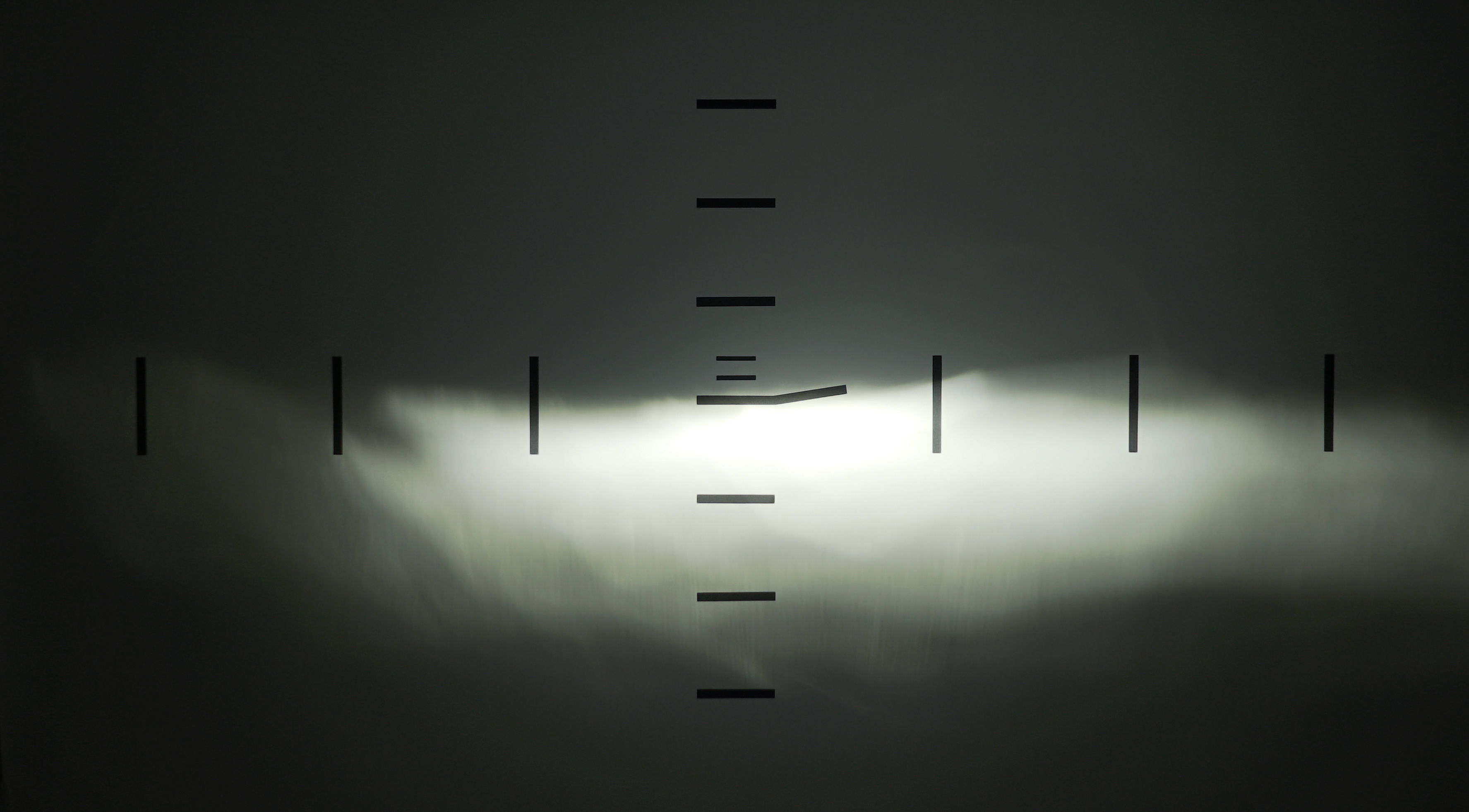
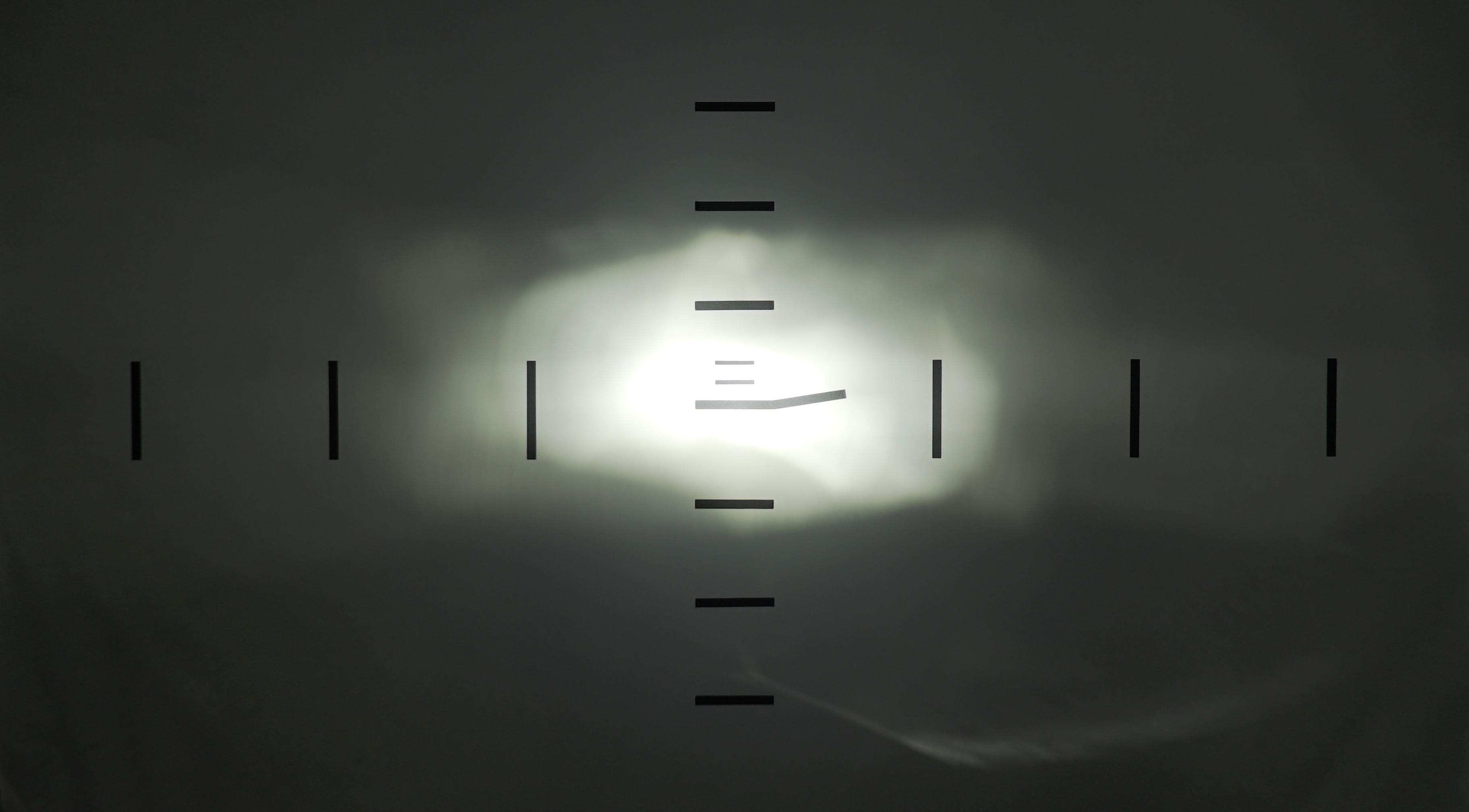
Low beam measured 1,022 lux per bulb at 25 feet, or 174% more than the recorded 373-lux halogen control. That put useful throw at more than two and a half times the reference result.
The separate 5 / 5 reflector beam-pattern rating describes shape, not the missing performance score. The hotspot stayed controlled and the pattern remained close enough to the halogen bulb that the main visual differences were the cleaner color and higher output. Reflector glare was not measured in this review.
High beam measured 1,821 lux per bulb against an 876-lux halogen result, a documented increase of about 108%. The hotspot was tight and strong, although these reference-housing results do not guarantee the same output or beam behavior in a selected vehicle.
Projector headlight performance
The compact emitter package looked promising, but the 2Stroke 3.0 was much less convincing in projector-style headlights because the handle design cut into useful beam coverage.
The original review described the projector beam as acceptable but did not record a numerical projector beam-pattern rating, glare measurement, or modern performance score.
- Low-beam hotspot
- 314 luxper bulb · historical v2.0 test
Projector low-beam hotspot of 314 lux per bulb compared with the current recorded LED range.
- High-beam output
- 373 luxper bulb · historical v2.0 test
Projector high-beam output of 373 lux per bulb compared with the current recorded LED range.
- Glare measurement
- Not recordedhistorical projector test
- Beam pattern
- Not rateddescribed as acceptable
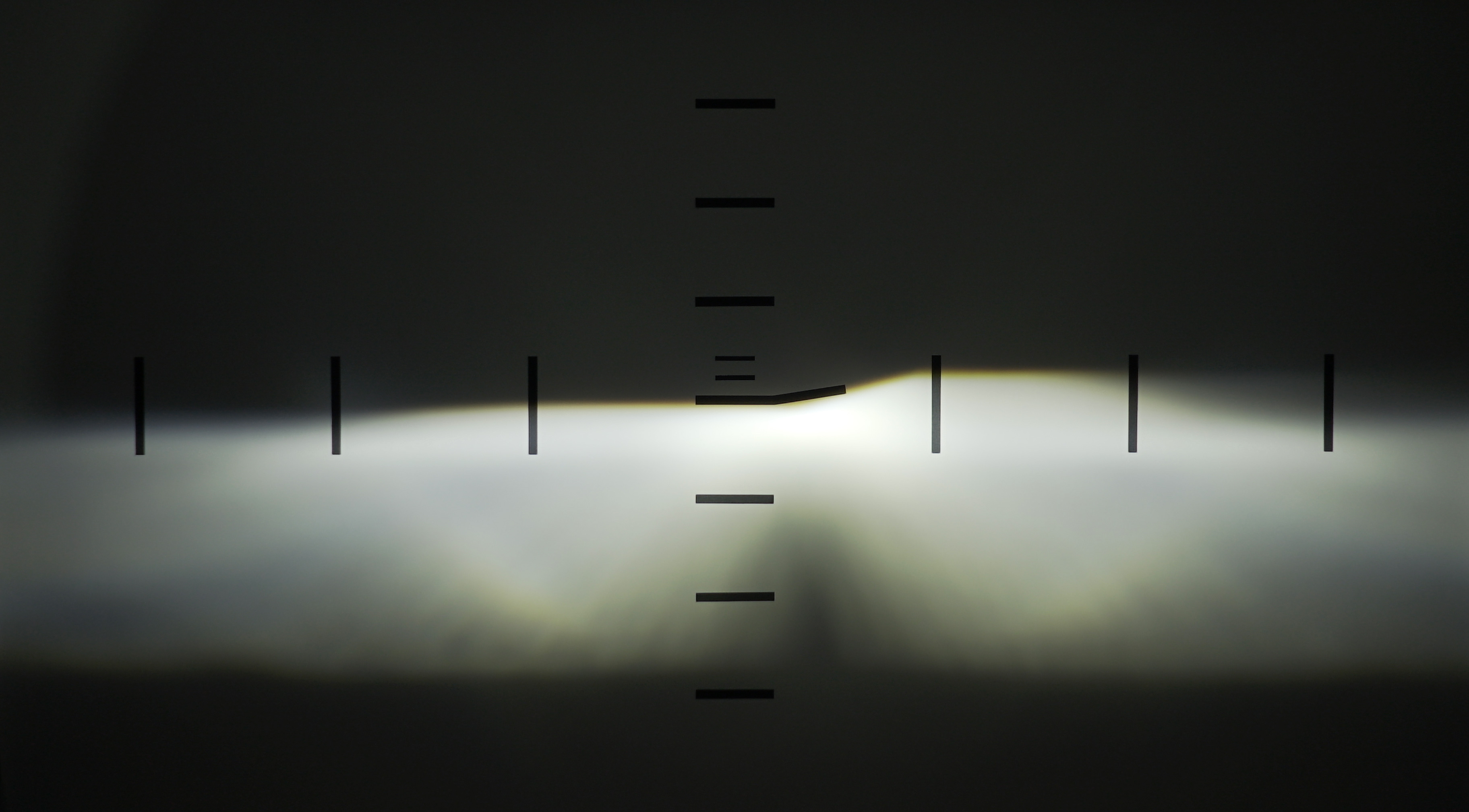
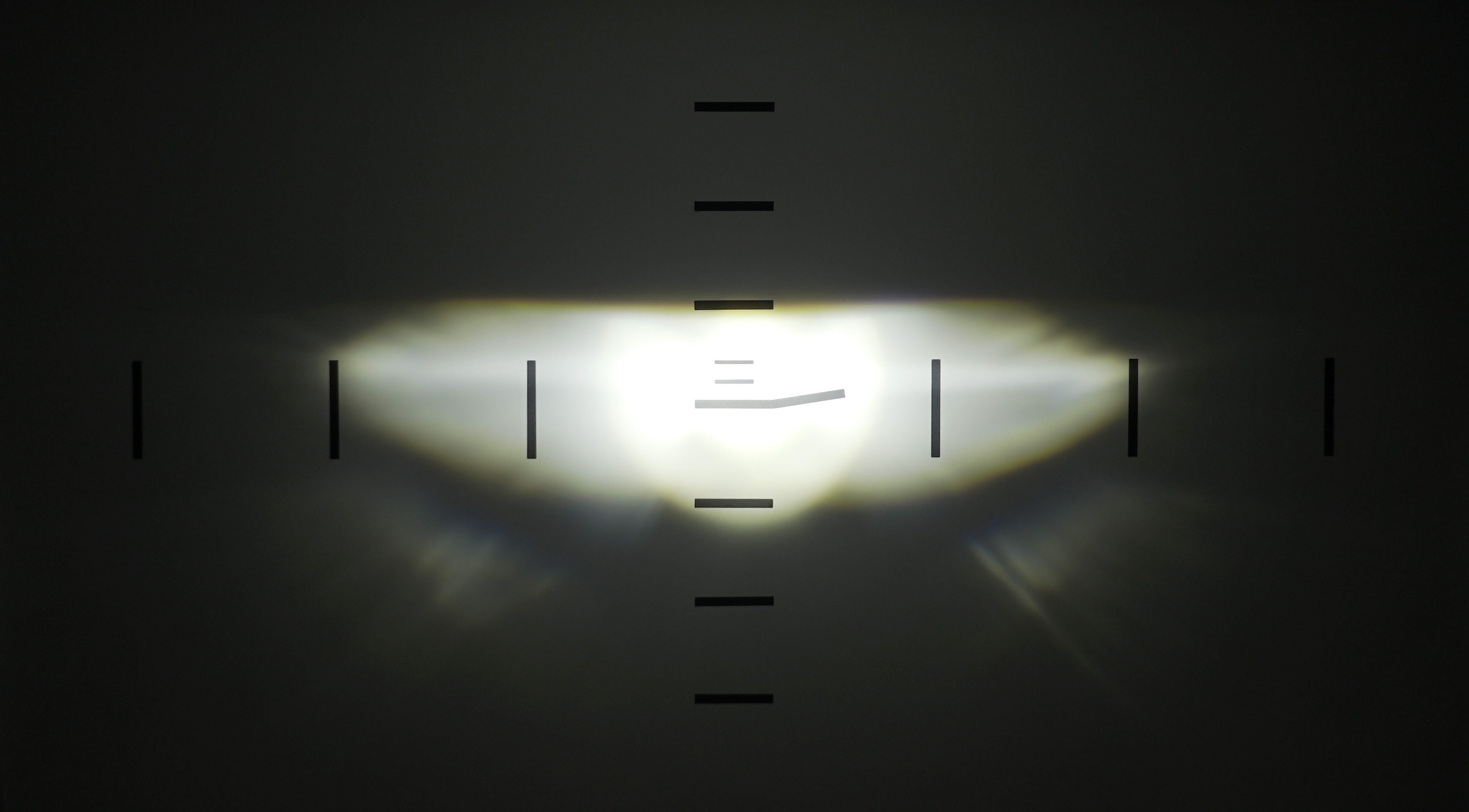
Projector low beam measured 314 lux per bulb, compared with 230 lux from the recorded halogen reference. That is an improvement, but far less decisive than the reflector result.
Projector high beam measured 373 lux per bulb. Both standalone and bi-halogen projector setups produced less light than we wanted from a premium LED upgrade.
The original review called the beam pattern acceptable but documented a dark area at the bottom where the bulb handle cut into useful coverage. No numerical projector pattern rating or glare measurement was recorded, so neither is inferred here. Projector-headlight owners should compare stronger current options.
Output, color, and stability
The 2Stroke 3.0 prioritized beam placement over headline lumens, with clean white color and a modest output change after warm-up.
Morimoto 2Stroke 3.0 Kelvin
Morimoto 2Stroke 3.0 lumens
Morimoto claimed 5,500K, but we measured 5,300K. That is a clean white tone without the heavy blue hue common to cooler aftermarket LEDs, and it was only slightly cooler than the older 2Stroke 2.0 result recorded around 5,250K.
Measured output was 2,025 lumens per bulb, or 4,050 lumens per kit, after five minutes of runtime with mild cooling. It did not reach Morimoto's claimed 2,600 lumens per bulb or match the highest-output kits, but the reflector lux result showed that the available light was being placed effectively.
From the two-minute measurement to 30 minutes, output dropped only 4.9%. Startup, two-minute, and 30-minute values were recorded, but this review does not preserve a separate cold-start-to-30-minute percentage.
Installation and cooling
The adjustable collar and slimmer heat sink support careful fitment, while the external driver, front-side fan system, and vehicle electronics still require space and compatibility checks.
Per-bulb draw
30-min temp
Fan noise
Physical size and fit
The bulb measures 34 mm at its widest point, 42 mm from the base to the rear, and 44 mm across the diode-handle dimension. The external, non-removable driver measures 52 × 30 × 18 mm. The collar rotates in 1-degree increments for precise emitter alignment.
The side-exit cable and slimmer heat sink improve packaging relative to earlier designs, but this review does not preserve a complete bulb-size list. Verify bulb type, seating, rear clearance, driver placement, dust-cover space, and vehicle electronics before ordering any remaining stock.
Power draw and cooling
Power consumption measured 22.6 watts per bulb, closely matching Morimoto's 22-watt claim. The 45.2-watt pair total is derived from that per-bulb measurement and remains below the recorded 53-watt-per-bulb halogen reference.
After 30 minutes, temperature measured 132°F / 56°C. The distinctive front-side fan system manages that heat and can contribute some lens warming in colder conditions, although not as much as a halogen bulb.
Noise, electronics, and DRL behavior
Fan noise measured 68 dB outside the housing. The original review observed that the fan was generally not noticeable after installation when the bulb and wiring were secured, but no in-cabin noise measurement was recorded.
The tested bulbs did not produce warning errors in several CANBUS vehicles, unlike the older 2.0, but that observation is not a compatibility guarantee. Sensitive Ram, newer GMC or Ford, and some European vehicles can still require decoders or anti-flicker modules. Radio-frequency interference remains unrecorded.
Low-voltage behavior was a genuine strength: the bulbs continued to dim down to 3.5 volts. Morimoto designed this DRL Drive behavior to reduce output for low-voltage high-beam DRL operation, but PWM systems can still require an appropriate module.
Warranty and long-term testing
Coverage
The kit was listed with a three-year Morimoto warranty. That is manufacturer coverage, not the basis for the lifespan result, and current service terms should be confirmed because the product is discontinued.
The durability evidence is measured separately. After about 4,200 bench hours, output remained above 75%, earning an A lifespan rating. The bulbs continued beyond 7,500 hours while retaining about 70% output.
Should you buy it?
The 2Stroke 3.0 remains a strong historical result for reflector-headlight owners. Its 1,022-lux low beam, 1,821-lux high beam, separate 5 / 5 pattern rating, clean color, low-voltage DRL operation, and documented long-runtime performance explain why it earned a premium reputation.
The tradeoffs matter: projector output was modest, the handle created a documented dark area in the projector beam, the external driver and fan require room, and exact-vehicle compatibility was never universal. The original price was roughly $205 per set.
Because the 2Stroke 3.0 is discontinued, current buyers should start with the newer 2Stroke 4.0 review and the current LED chart. Existing owners have reassuring durability evidence, but condition, installation quality, and vehicle-specific behavior still determine whether an individual set remains suitable.
Use the complete chart to compare this historical result with products that are currently available.
Full measurements and specifications
Open this reference for every recorded measurement, specification, unavailable field, and test-method detail. The main reflector and projector findings remain visible above.
Show all recorded measurements and specificationsFive groups · version 2.0 bench record
Measured output
- Reflector performance score
- Not recorded; no modern score inferred
- Reflector low-beam hotspot
- 1,022 lux per bulb at 25 feet
- Reflector low-beam improvement
- 174% over the recorded 373-lux halogen baseline
- Reflector high-beam output
- 1,821 lux per bulb
- Reflector high-beam improvement
- 108% over the recorded 876-lux halogen baseline
- Projector performance score
- Not recorded; no modern score inferred
- Projector low-beam hotspot
- 314 lux per bulb
- Projector low-beam improvement
- Compared with the recorded 230-lux halogen baseline
- Projector high-beam output
- 373 lux per bulb
- Projector high-beam improvement
- Not separately recorded in this review
- Measured lumens
- 2,025 lm per bulb; 4,050 lm per kit; below the manufacturer claim of 2,600 lm per bulb
- Lumen improvement
- Not calculated against a halogen lumen baseline in this review
Beam quality
- Reflector beam-pattern rating
- 5 / 5 in the original test record
- Projector beam-pattern rating
- Not numerically recorded; described as acceptable with a dark area at the bottom
- Reflector glare measurement
- Not recorded in this review
- Projector glare measurement
- Not recorded in this review
Power, color, and thermal behavior
- Measured color temperature
- 5,300 K; manufacturer claim was 5,500 K
- Measured electrical draw
- 22.6 watts per bulb
- Derived pair draw
- 45.2 watts per pair
- 30-minute running temperature
- 132°F / 56°C
- Cold-start to 30-minute output drop
- Not separately recorded in this review
- 2-minute to 30-minute output drop
- 4.9%
- Fan noise
- 68 dB outside the housing; cabin measurement not recorded
- Cooling method
- Fan; front-side cooling design
Dimensions, features, and recorded compatibility
- Maximum bulb width
- 34 mm
- Base-to-rear dimension
- 42 mm
- Diode-handle dimension
- 44 mm
- Rotatable H7 collar
- Rotatable collar recorded in 1° increments; complete bulb-size list not preserved
- LED diodes
- OSRAM Oslon Black Flat S
- Emitter layout
- Flat; 8 emitters per color and 16 total per bulb in the original record
- Driver configuration
- External, non-removable; 52 × 30 × 18 mm (W × L × D)
- Recorded product sizes
- Not listed in this review
- CANBUS behavior
- No errors observed in several tested vehicles; not a universal compatibility guarantee
- Exact-vehicle fitment
- Unconfirmed; verify bulb type, seating, rear clearance, driver placement, dust-cover space, and electronics
- Housing context
- BulbFacts reflector and projector reference housings; results do not guarantee performance in a selected vehicle
Warranty and test status
- Estimated price
- About $205 per set in the original review; product discontinued and absent from the current LED chart
- Recorded warranty
- 3 years in the original review
- Long-term lifespan
- A rating; about 4,200 hours above 75% output and about 70% output after 7,500 hours
- DRL / high-beam dimming
- Yes; continued dimming to 3.5 volts; PWM systems may require a module
- Radio-frequency interference
- N/A; unconfirmed
- High-beam test photographs
- Available for both reference housings
- Publication date
- November 26, 2020
- Last updated
- March 11, 2023
- Test version
- Version 2.0 bench record; original article used 25-foot output testing
Facts listed above are based on BulbFacts testing processes at the time of this review. See how we test for current procedures. This discontinued product is not part of the current LED chart dataset.