
Lightening Dark Philips LED Review
A discontinued early LED kit whose Philips TX1860 version combined exceptional reflector output with thoughtful emitter placement, a controlled beam, cool running temperature, and strong value in its original test period.
- Reflector low beam
- 4,380 luxper bulb · historical v1.0 test
- High-beam output
- 7,580 luxper bulb · historical v1.0 test
- Beam pattern
- 4 / 5separate reflector rating
- Color temperature
- 6,050 Kmeasured
Our verdict
The Philips-version Lightening Dark was the surprise leader in its original Amazon test group. Its recessed row of emitters placed light closer to the geometry a halogen reflector expected, producing a major low-beam gain without the uncontrolled pattern common to many early LED kits. It was an unusually strong value at roughly $52, but the product is discontinued, its version-1.0 readings are not current-chart rankings, and several modern ownership measurements were never recorded.
What we liked
- Reflector low beam measured 4,380 lux per bulb, about 172% above the recorded halogen result.
- The separate 4 / 5 reflector beam-pattern rating paired with a 62-lux glare result in the original test format.
- A rotatable emitter design, cool 97°F running temperature, and very quiet 28 dB bench result.
What to consider
- The tested Philips TX1860 version is discontinued and must not be confused with the later driverless CREE revision.
- No Philips-version projector result, lumen output, electrical draw, completed lifespan result, CANBUS result, or RFI result was preserved.
- The external driver, 33 mm heat sink, bulb orientation, headlight aim, housing geometry, and vehicle electronics still require installation checks.
Build quality
The Lightening Dark was added as an eleventh product after the original Amazon test group was selected. That backup entry became the group’s strongest reflector performer and helped demonstrate that emitter placement could matter as much as a large marketing claim.
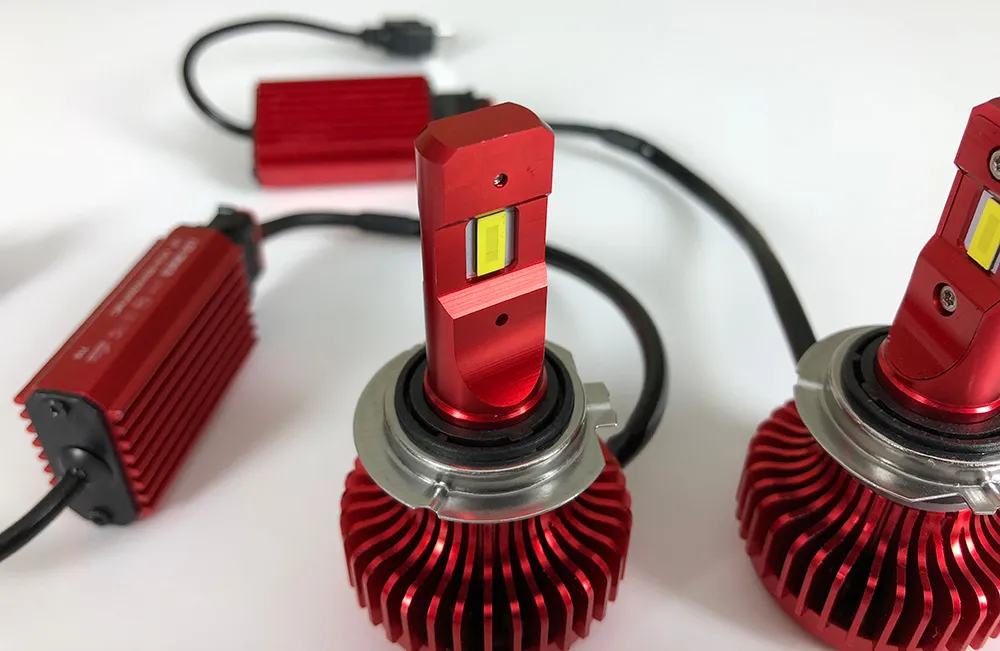
Six emitters per bulb sit in a flat, recessed row intended to mimic a halogen filament more closely than the centered, protruding chips common on many early LED kits. The bulb could rotate in 5-degree increments, allowing its position to be tuned to the reflector.
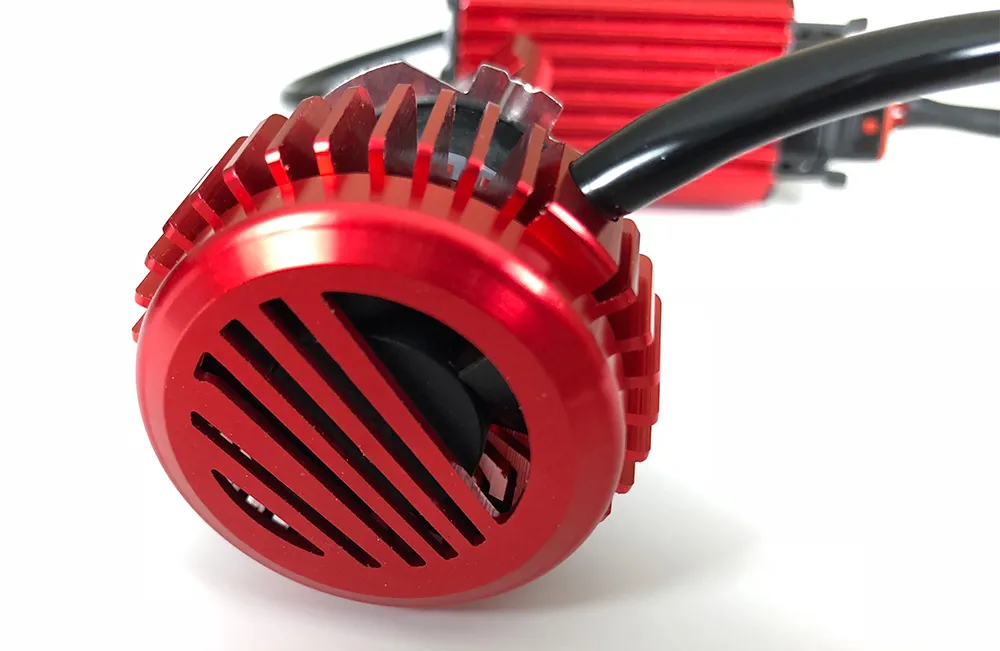
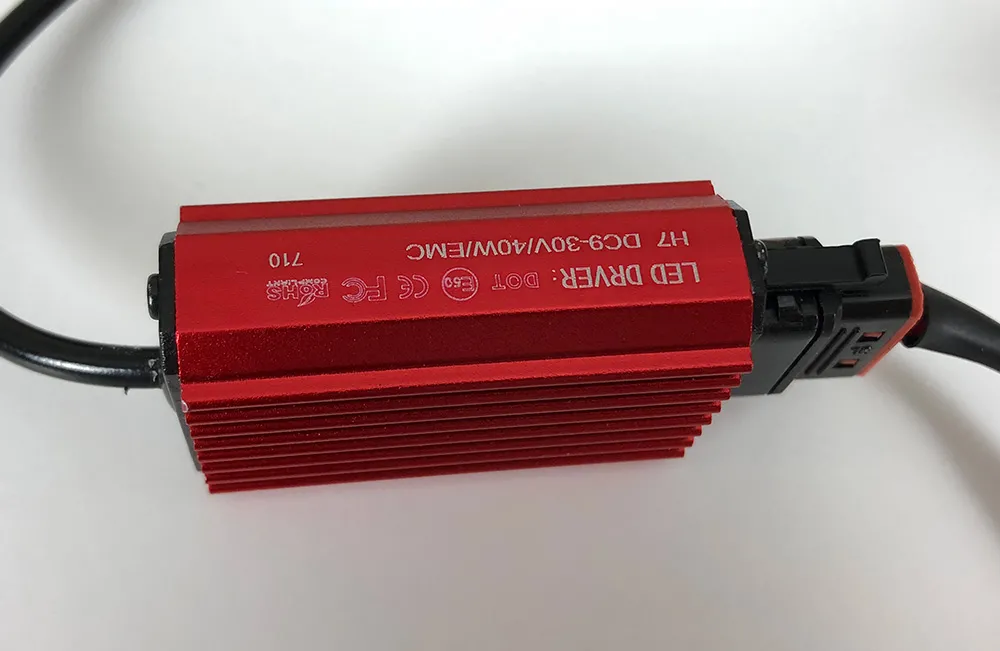
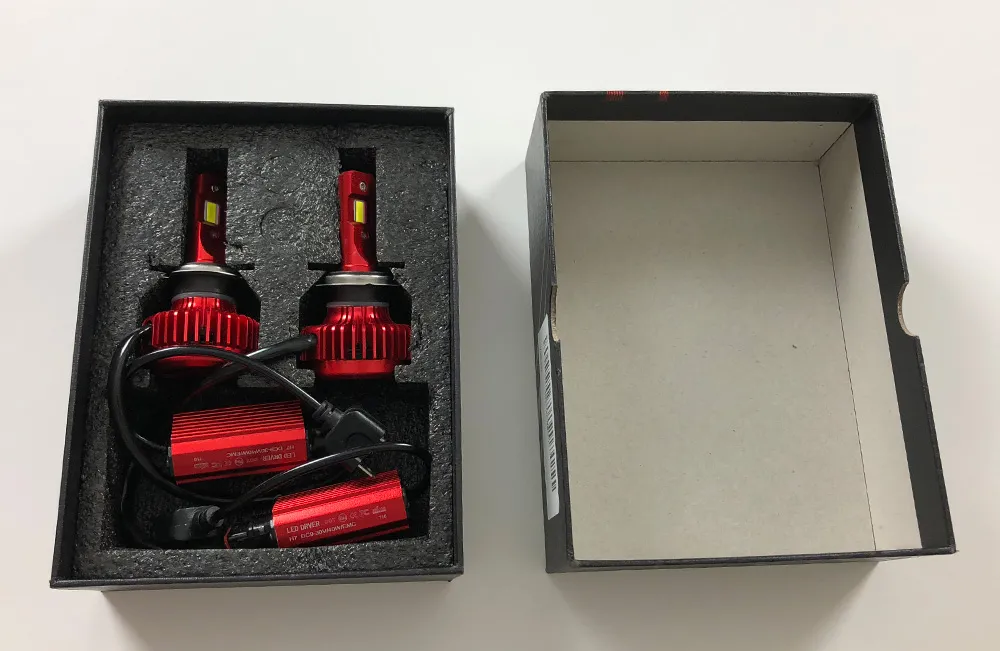
The red metal body, 33 mm fan-cooled heat sink, braided wiring, and removable external driver made the system more involved than a halogen bulb. The original review found some scatter at this output level, but substantially better control than the generic layouts tested beside it.
Reflector headlight performance
The Philips-version Lightening Dark combined the strongest low-beam output in its original Amazon group with a controlled reflector pattern.
Historical-test context: These measurements come from the version-1.0 BulbFacts bench and its earlier glare geometry. They are preserved as historical evidence, not positioned against today’s differently recorded chart range, and they do not predict an exact vehicle.
The archived article ranked this Philips version first in its original Amazon group and separately recorded a 4 / 5 beam-pattern rating, but it did not preserve a numerical performance score. None has been inferred.
- Low-beam hotspot
- 4,380 luxper bulb · historical v1.0 test
- High-beam output
- 7,580 luxper bulb · historical v1.0 test
- Glare measurement
- 62 luxat 8 in · historical test
- Beam pattern
- 4 / 5separate pattern rating
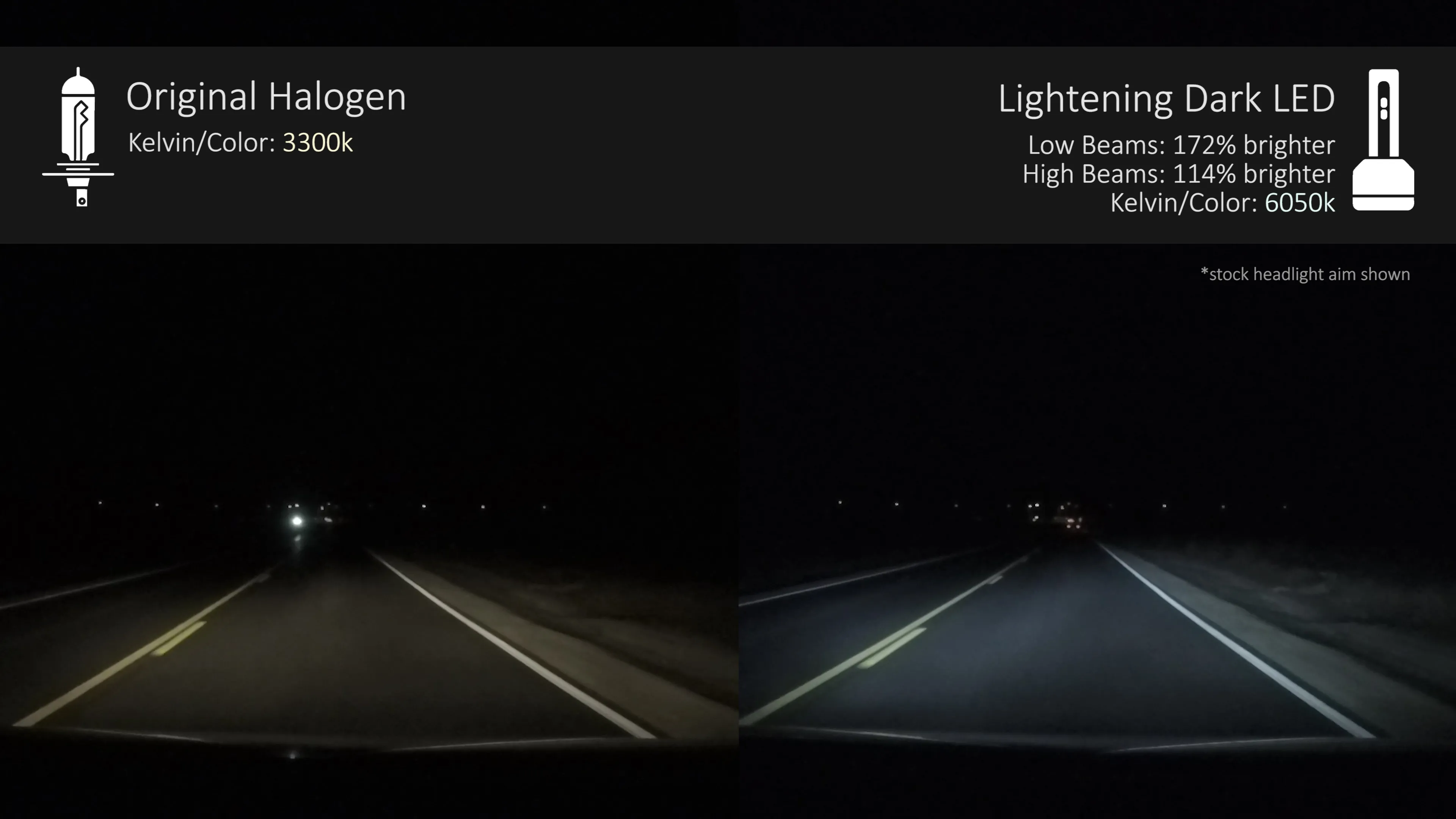
Low beam measured 4,380 lux per bulb. The original article described that as 172% more light than the recorded halogen result, or roughly 2.7 times halogen. The next-highest product in that early Amazon group was reported at a much smaller 49% gain.
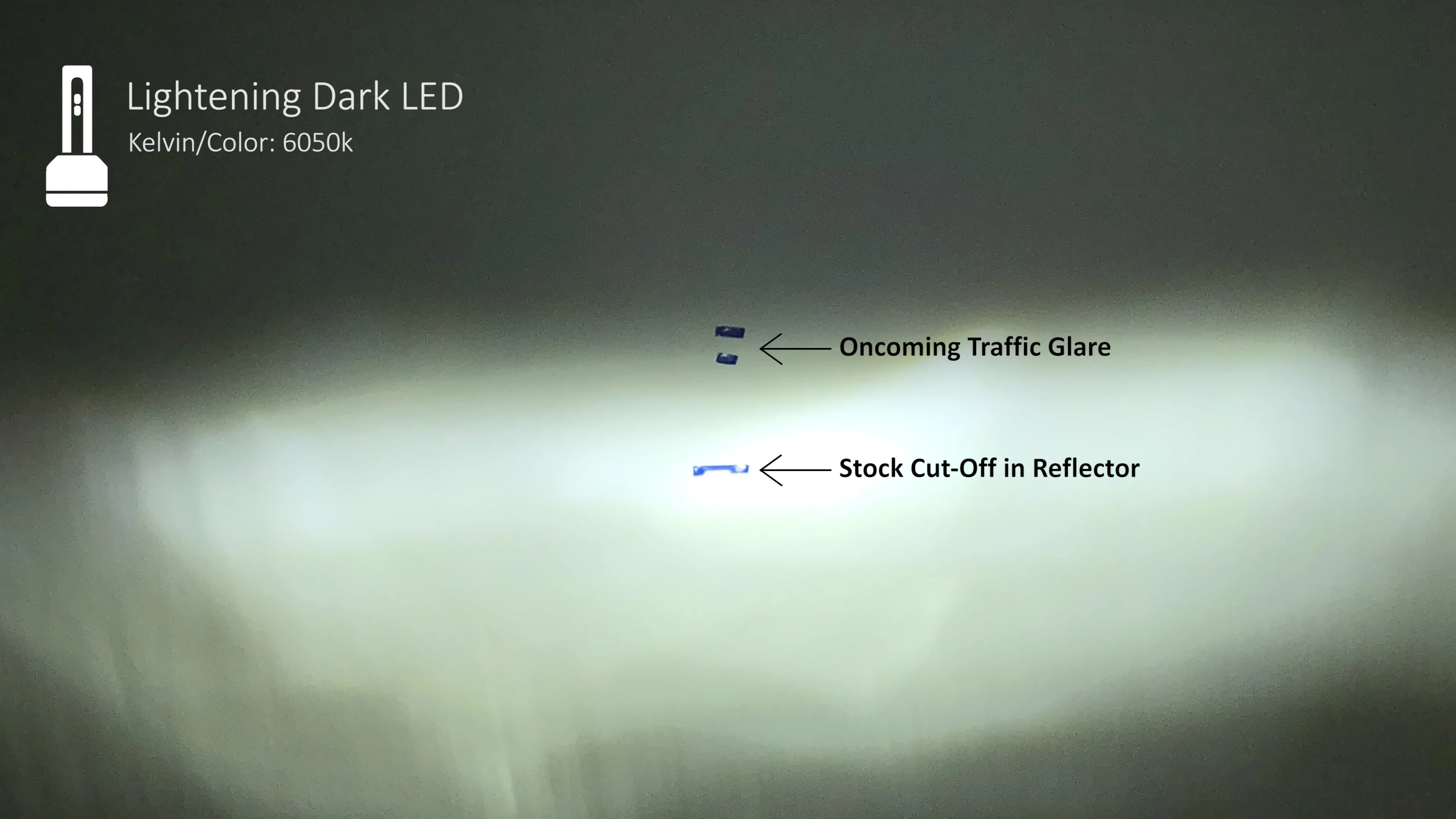
The separate 4 / 5 beam-pattern rating describes beam shape rather than an overall performance score. The archived record lists 62 lux of glare at 8 inches and notes very good cutoff for the amount of light, while still advising the installer to re-aim the headlights because the LED pattern could appear a few inches higher than stock.
High beam measured 7,580 lux per bulb, about 114% above the recorded halogen hotspot. A small rotation adjustment was needed to reach the best hotspot, reinforcing that emitter clocking and housing optics affect the result.
Projector headlight performance
The archived Philips-version review did not preserve a projector measurement or matching projector photograph.
No Philips-version projector hotspot, improvement, glare, pattern rating, or performance score was preserved. Later CREE-version photographs cannot be substituted for those missing results.
- Low-beam hotspot
- Not recordedPhilips-version review
- High-beam output
- Not recordedPhilips-version review
- Beam pattern
- Not ratedno numerical projector record
The absence of projector data is not a poor result; it is an untested or unpreserved result. This page therefore makes no Philips-version projector recommendation and does not turn the reflector measurements into a claim about a different housing.
The original update dated October 15, 2018 says a later, driverless CREE version tested well and produced a perfect beam, although other kits surpassed it in brightness. That update describes a different revision and does not change the Philips TX1860 measurements above.


Output, color, and recorded behavior
The surviving Philips-version record provides reflector lux and color temperature, but not integrating-sphere lumens or warm-up stability measurements.
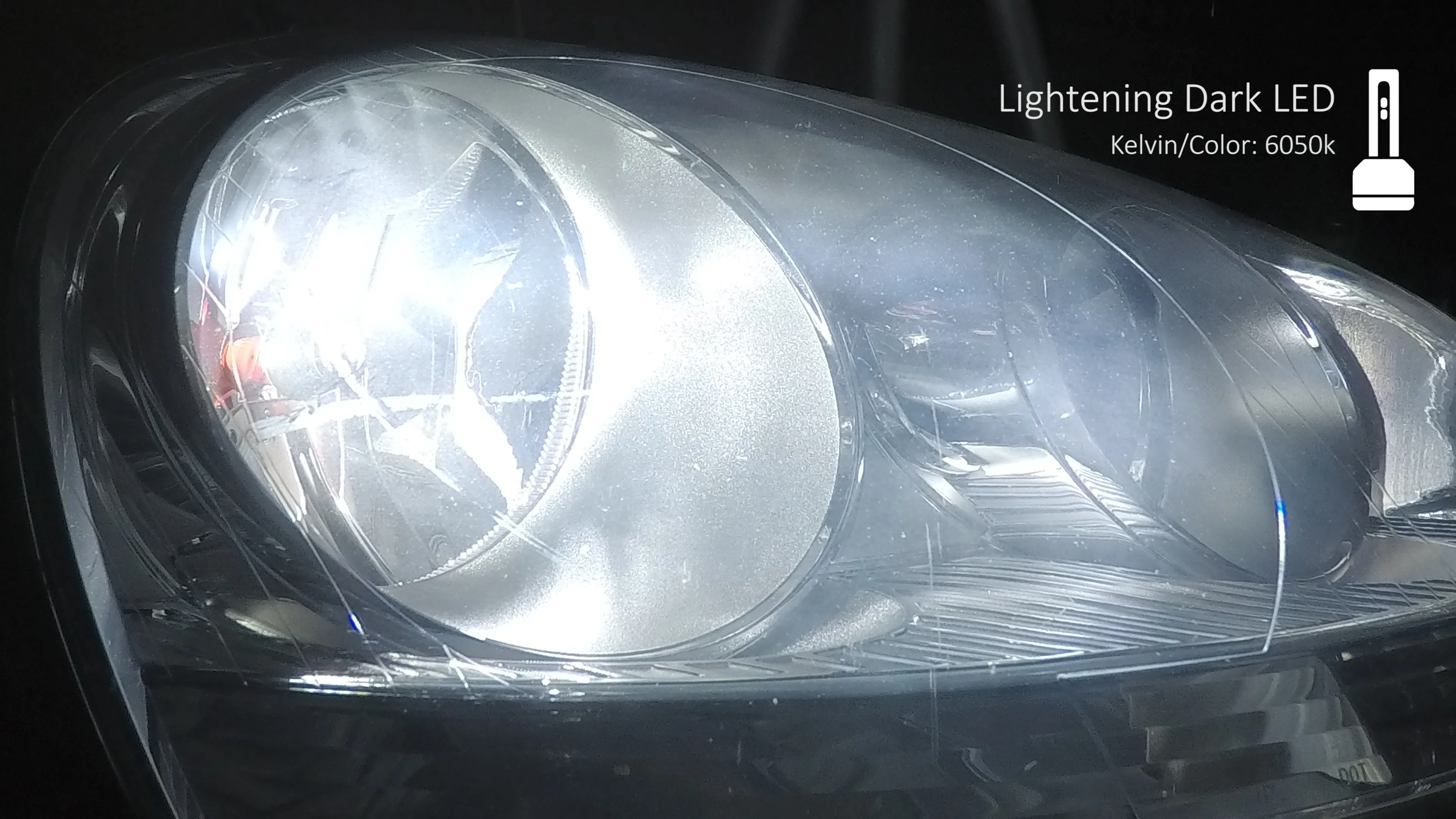
Lightening Dark Kelvin
Lightening Dark hotspot
Color temperature measured 6,050K, placing it in the cool-white range typical of LEDs from this period. The original photographs show a whiter result than halogen without the intensely blue appearance of some higher-Kelvin products.
Reflector low beam and high beam were hotspot measurements, not lumens. The archive does not preserve a measured lumen total, electrical draw, cold-start-to-30-minute output change, or two-minute-to-30-minute change, so those remain unavailable.
The later CREE version has its own beam photographs and update note, but its hardware and results are not used to complete missing Philips fields.
Installation and cooling
The rotatable collar, 33 mm heat sink, external driver, active fan, and missing electrical-compatibility records are the practical details to check before maintaining an existing installation or considering old stock.
Recorded temp
Fan noise
Physical size and fit
The archived facts record a 33 mm heat-sink size, although its exact width/length basis and the full base-to-rear dimension were not preserved. The bulb rotates in 5-degree increments, which helped tune the hotspot in the original test.
A size listing or matching base does not prove exact-vehicle fitment. Verify bulb type, seating, emitter orientation, rear clearance, driver placement, dust-cover space, headlight aim, local legality, and electronics in the actual vehicle.
Power draw and cooling
Electrical draw was not recorded in the surviving Philips-version facts, so neither a per-bulb number nor a derived pair total is supplied. The external driver and fan are recorded hardware observations, not evidence of a specific current draw.
Running temperature was recorded at 97°F / 36°C. The archive does not preserve the exact timing basis, so it is presented as a running-temperature result rather than relabeled as a 30-minute measurement. This short bench result is not a durability test.
Noise and electronics
Fan noise measured 28 dB on the bench, exceptionally quiet within the recorded LED range. No in-cabin measurement was recorded, so that value does not predict sound inside a specific vehicle.
CANBUS behavior, DRL / high-beam dimming, and radio-frequency interference were not recorded. None of those compatibility points should be assumed from a clean reference-housing beam result.
Warranty and long-term testing
Coverage
The Philips version was listed with a three-year warranty. That was manufacturer or seller coverage, not evidence of measured lifespan, and current coverage should not be assumed for a discontinued product.
Long-term lifespan testing remains N/A. The cool running temperature and positive original recommendation do not replace a completed runtime result.
Should you buy it?
The Lightening Dark Philips version remains a useful historical example of how good emitter placement can help a reflector housing. Its 172% low-beam improvement, strong high beam, 4 / 5 pattern rating, and original price near $52 explain why the review recommended it so strongly in 2018.
It is not a current buying recommendation. The Philips version is discontinued, the later CREE revision is a different product, and projector performance, electrical draw, vehicle compatibility, and lifespan remain unconfirmed for the tested version.
Readers shopping today should compare current BulbFacts results instead. Anyone maintaining old stock should verify the exact revision, fitment, orientation, aim, rear clearance, and electronics before installation.
Compare current test results and recommendations before choosing a replacement.
Full measurements and specifications
Open this reference for every recorded measurement, specification, unavailable field, and test-version detail. The main reflector findings remain visible above.
Show all recorded measurements and specificationsFive groups · version 1.0 bench record
Measured output
- Reflector performance score
- Not recorded; the archived article ranked the product first in its original group, but no numerical score is inferred
- Reflector low-beam hotspot
- 4,380 lux per bulb in the historical version 1.0 test
- Reflector low-beam improvement
- 172% over the recorded halogen result; about 2.7 times halogen
- Reflector high-beam output
- 7,580 lux per bulb in the historical version 1.0 test
- Reflector high-beam improvement
- About 114% over the recorded halogen result
- Projector performance score
- N/A; no Philips-version projector result was recorded
- Projector low-beam hotspot
- N/A; no Philips-version projector result was recorded
- Projector low-beam improvement
- N/A; no Philips-version projector result was recorded
- Projector high-beam output
- N/A; no Philips-version projector result was recorded
- Projector high-beam improvement
- N/A; no Philips-version projector result was recorded
- Measured lumens
- N/A; no integrating-sphere result was preserved
- Lumen improvement
- N/A; no measured lumen result was preserved
Beam quality
- Reflector beam-pattern rating
- 4 / 5 in the original test record; separate from performance score
- Projector beam-pattern rating
- N/A; no Philips-version projector rating was recorded
- Reflector glare measurement
- 62 lux at 8 inches in the historical version 1.0 test
- Projector glare measurement
- N/A; no Philips-version projector glare result was recorded
Power, color, and thermal behavior
- Measured color temperature
- 6,050 K; cool white in the original review
- Measured electrical draw
- N/A; not recorded in the surviving Philips-version facts
- Derived pair draw
- N/A; no per-bulb measurement exists from which to derive a pair total
- 30-minute running temperature
- 97°F / 36°C recorded as running temperature; exact timing basis was not preserved
- Cold-start to 30-minute output drop
- Not recorded
- 2-minute to 30-minute output drop
- Not recorded
- Fan noise
- 28 dB on the bench; no in-cabin measurement recorded
- Cooling method
- Active fan
Dimensions, features, and recorded compatibility
- Maximum bulb width
- 33 mm recorded heat-sink size; the exact width/length basis was not preserved
- Base-to-rear dimension
- Not recorded
- Diode-handle dimension
- Not recorded
- Rotatable H7 collar
- Yes, in 5-degree increments; the standardized label does not imply the tested sample was H7
- LED diodes
- Philips TX1860 version; exact diode-family name not preserved
- Emitter layout
- Flat, recessed row; 6 emitters per bulb
- Driver configuration
- External and removable; dimensions not recorded
- Recorded product sizes
- Not recorded in the surviving review facts
- CANBUS behavior
- N/A; no reference-vehicle CANBUS result was recorded
- Exact-vehicle fitment
- Unconfirmed; verify bulb type, emitter orientation, seating, rear clearance, driver placement, dust-cover space, DRL behavior, and electronics
- Housing context
- BulbFacts version 1.0 reflector testing; results do not guarantee performance in a selected vehicle or projector housing
Warranty and test status
- Estimated price
- About $52 in the original article; Philips version discontinued and absent from the current LED chart
- Recorded warranty
- 3 years in the original review
- Long-term lifespan
- N/A; no completed durability result recorded
- DRL / high-beam dimming
- N/A; not recorded for the Philips version
- Radio-frequency interference
- N/A; not recorded
- High-beam test photographs
- Not available for the Philips version; later CREE-revision low-beam photographs are shown separately
- Publication date
- April 16, 2018
- Last updated
- May 31, 2026; the archived article also records product updates through October 15, 2018
- Test version
- Version 1.0 bench record for the Philips TX1860 version; historical results are not treated as current-chart rankings
Facts listed above are based on the original BulbFacts version 1.0 testing process, the archived Philips-version article, and its dated revision notes. See how we test for current procedures and use the current LED chart for modern product comparisons.