
Hikari Wings / Future LED Headlight Kit Review
A strong semi-budget projector choice with high measured output, excellent runtime stability, and a completed 5,800-hour lifespan result—balanced by cool 6850K color, high power draw, noticeable fan noise, and weaker reflector beam control.
- Reflector performance
- 7.0BulbFacts score · 5.0 baseline
- Projector performance
- 7.0BulbFacts score · 5.0 baseline
- Measured output
- 6,243 lmper bulb · about 12,486 lm per pair
- Color temperature
- 6,850 Kmeasured
Our verdict
The Hikari Wings, previously sold as the Hikari Future, is one of the better semi-budget projector kits in the current chart. Its 762-lux projector low beam, 810-lux high beam, stable warmed-up output, and completed lifespan result support that recommendation. Reflector output is also strong, but the high glare reading and 2/5 pattern rating make it a housing-dependent choice rather than the safer reflector recommendation.
What we liked
- Strong projector output with a separate 5/5 projector beam-pattern rating.
- Only a 1.4% output drop from two to 30 minutes, plus 6,243 measured lumens per bulb.
- The recorded 5,800-hour lifespan test ended at the external driver while the LEDs and fans were still operating.
What to consider
- Reflector glare measured 382 lux and the separate reflector pattern rating was only 2/5.
- The 60.4-watt-per-bulb draw, external drivers, rear fans, and 68 dB bench result require space and electrical checks.
- The 6850K color is distinctly cool, while DRL behavior, RFI, and exact-vehicle compatibility remain unconfirmed.
Build quality
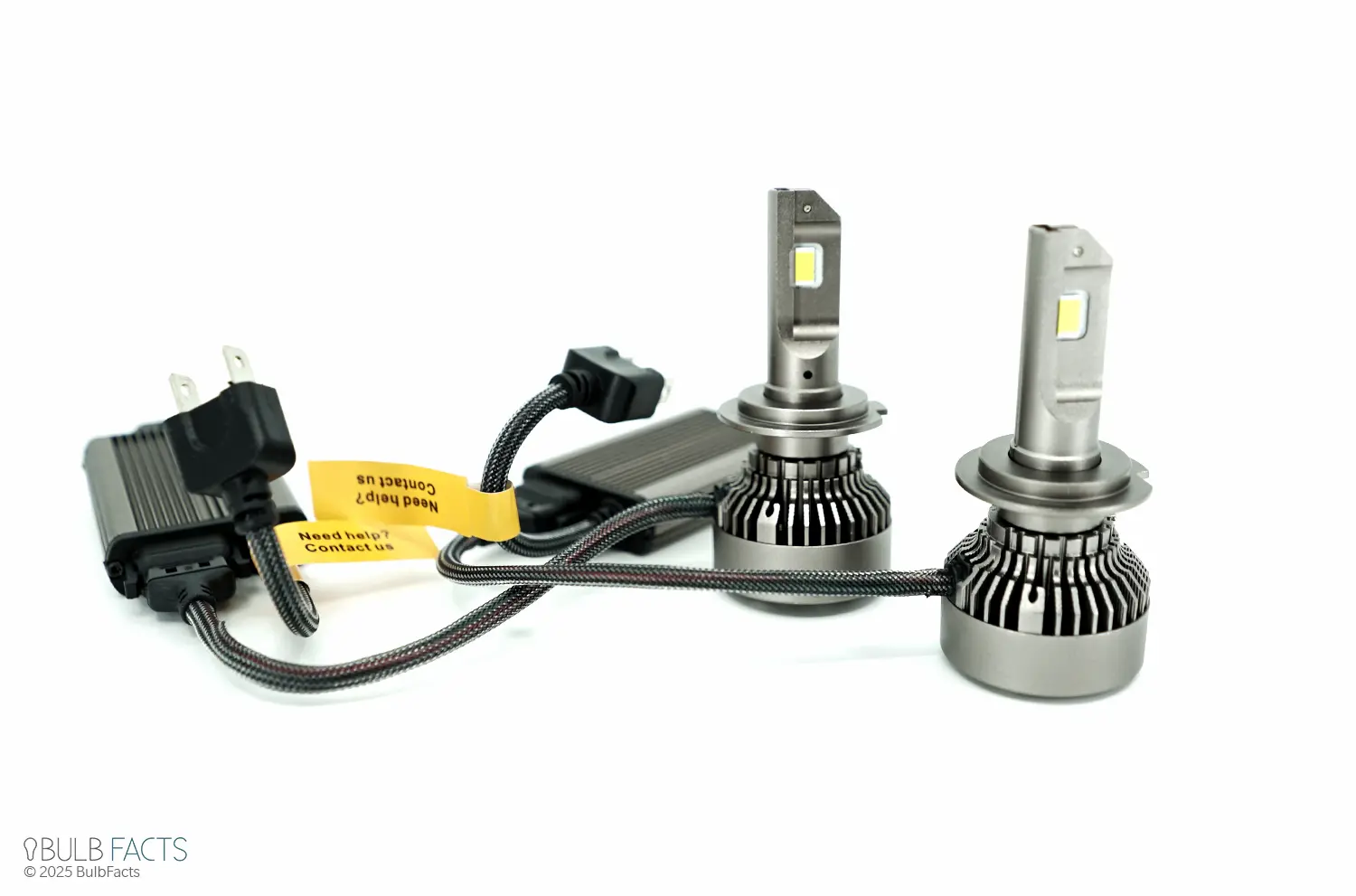
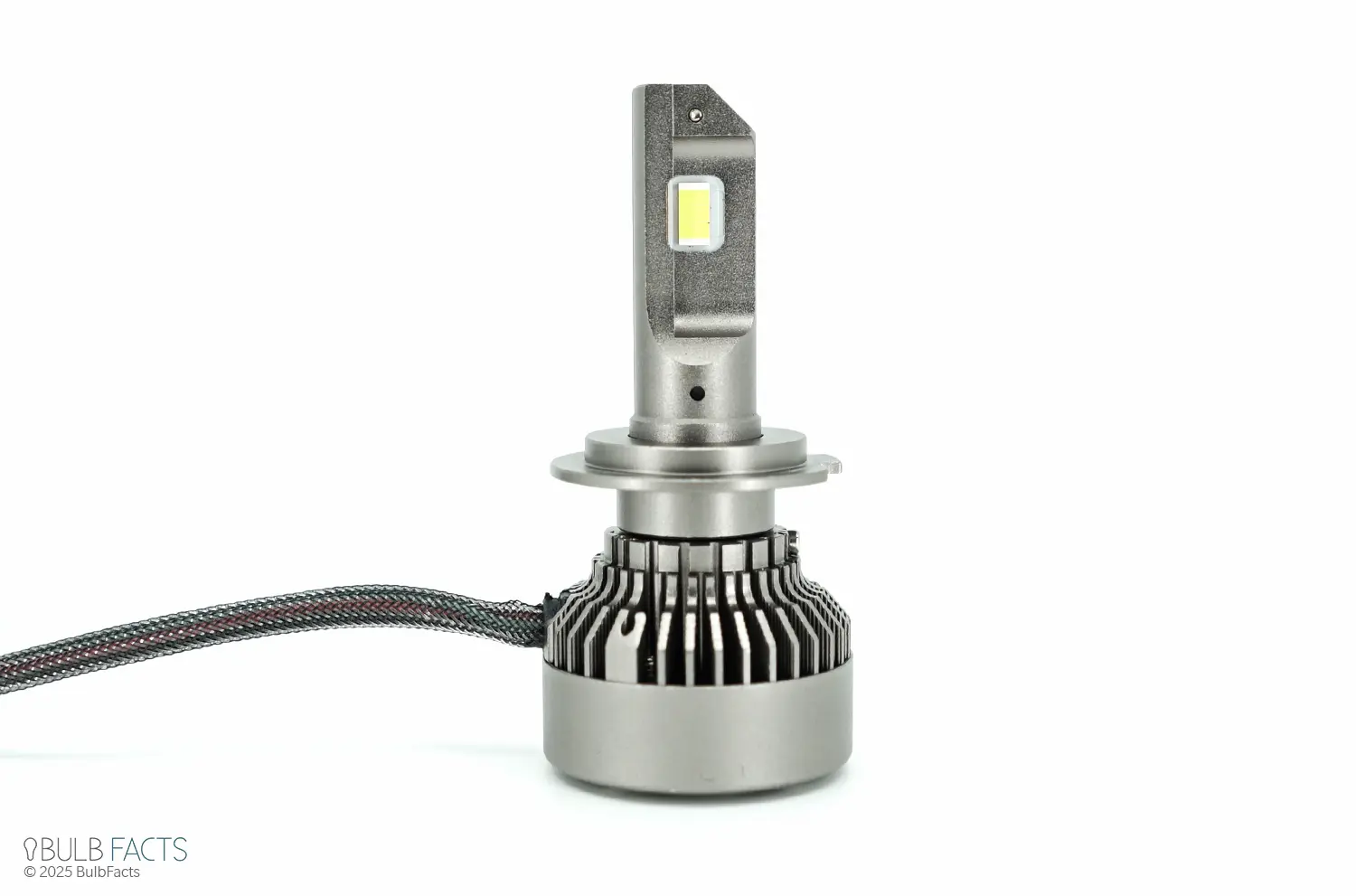
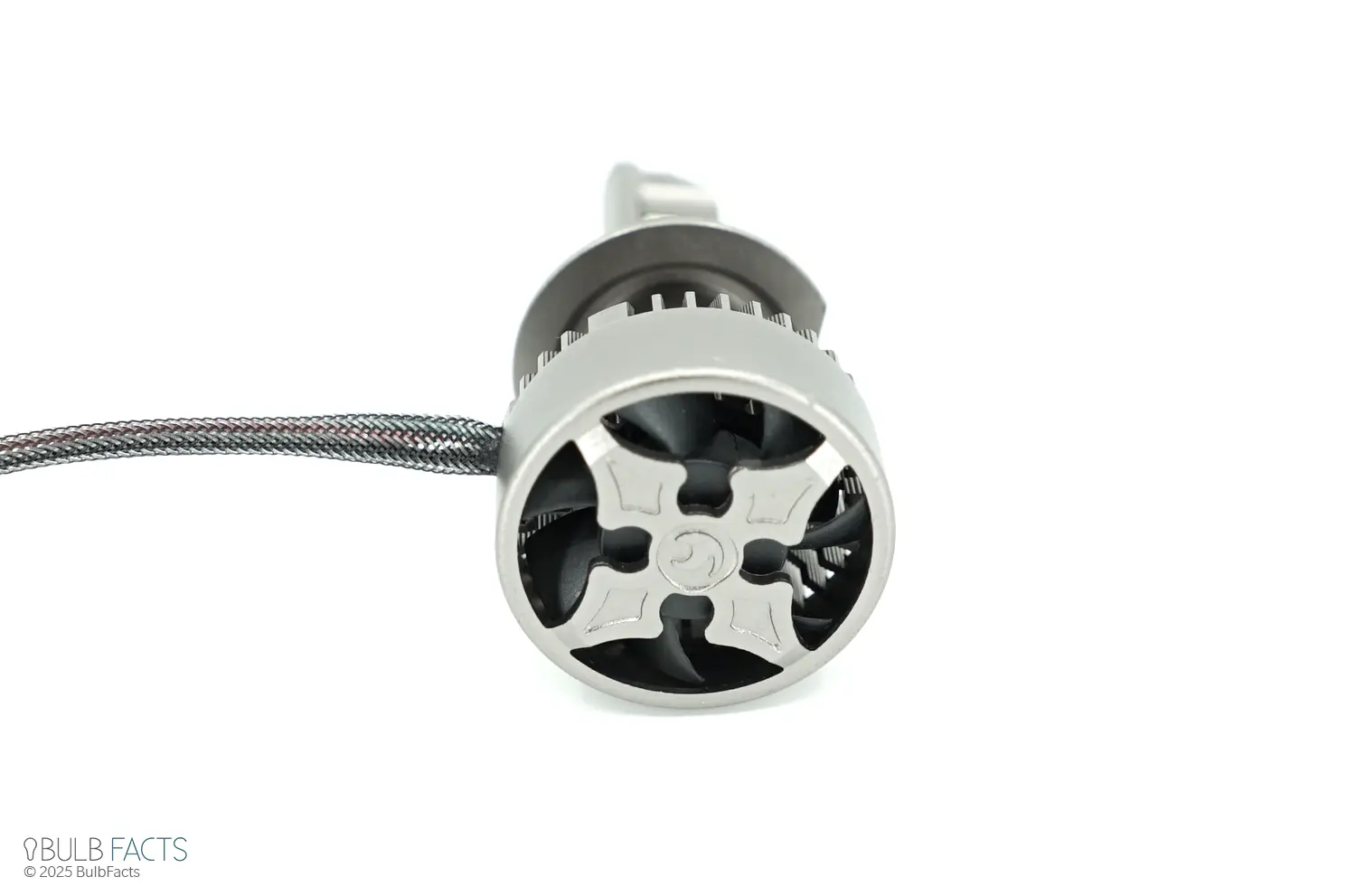
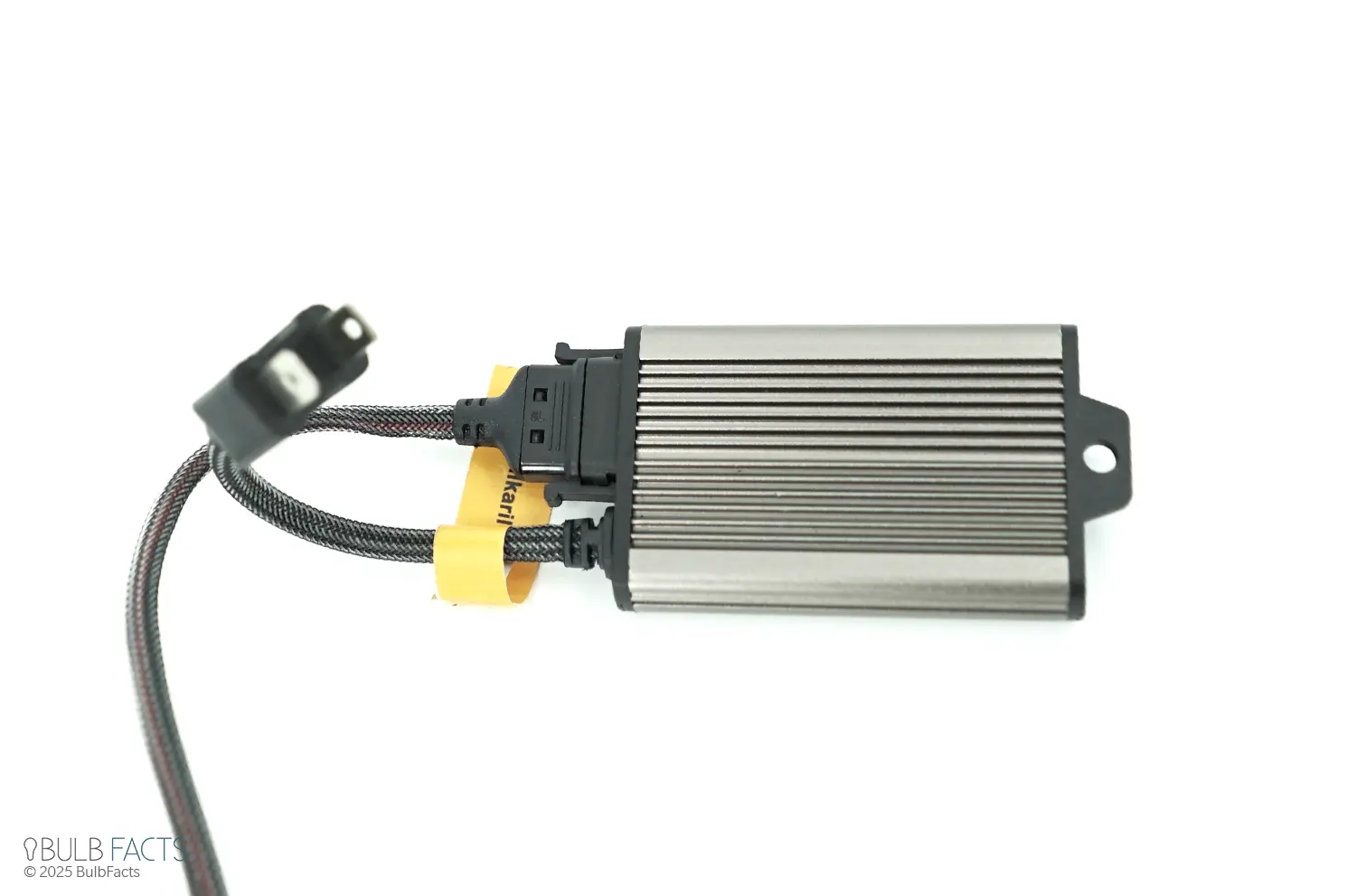
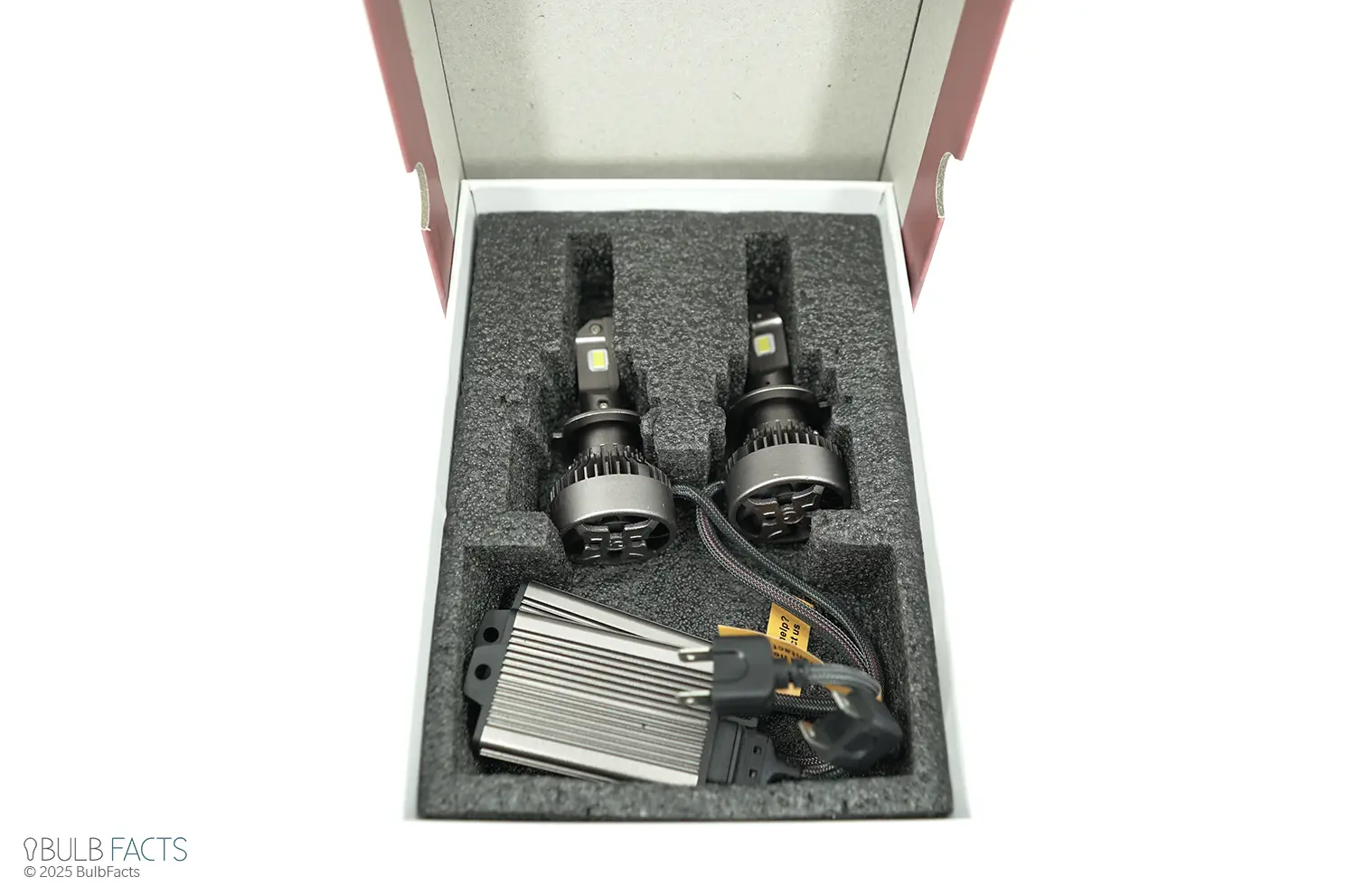
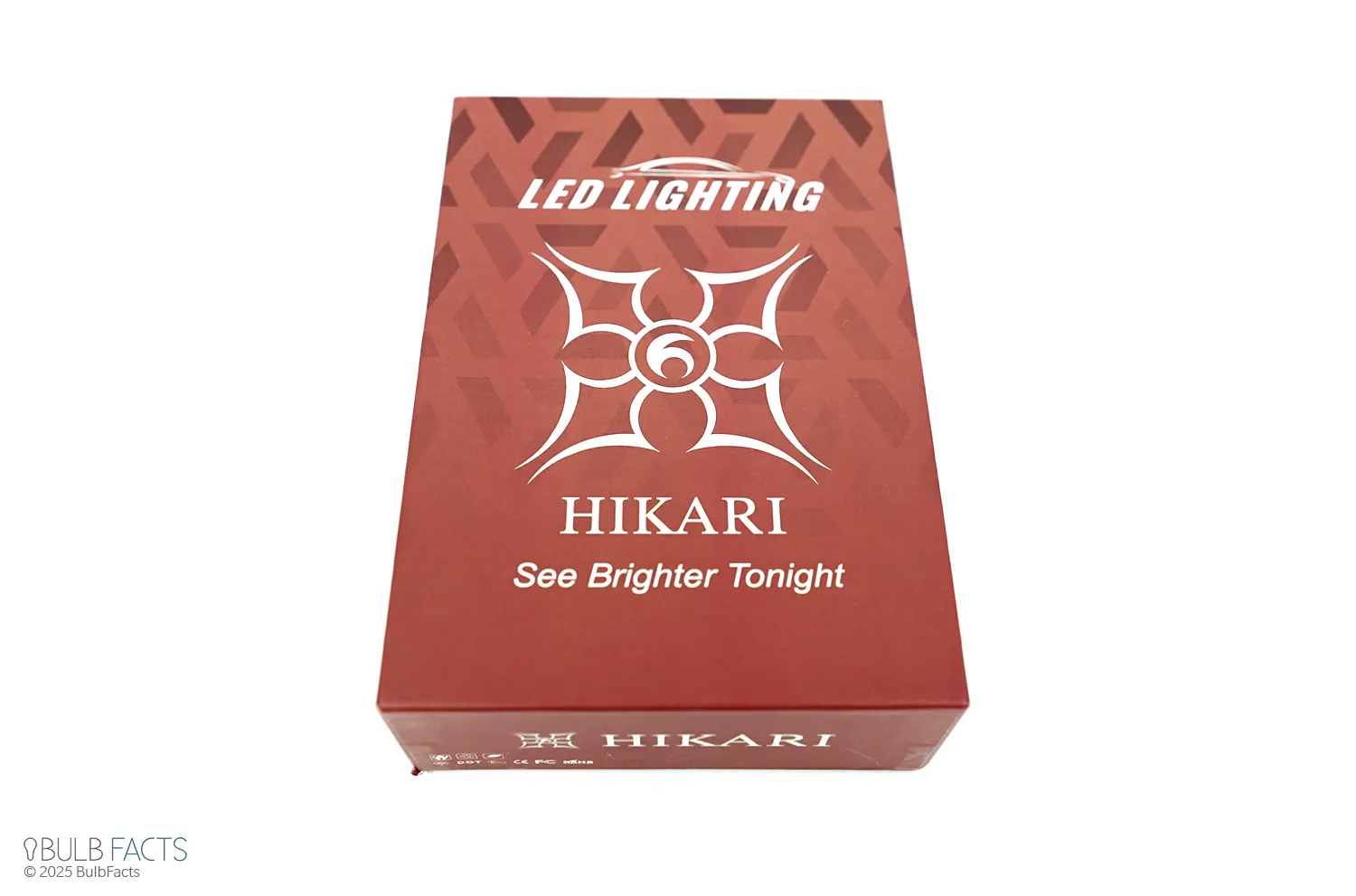
The Wings / Future sits between low-cost marketplace bulbs and the most expensive premium kits. Its large finned bulb bodies, active rear fans, braided wiring, and separate aluminum driver modules make the higher-output intent obvious before the bulbs reach the test bench.
Hikari uses CSP-style emitters on a narrow, flat substrate to place the light source near the position of a halogen filament. The H7 collar is recorded as adjustable in one-degree increments, which gives the installer useful control over emitter orientation in a housing that is sensitive to rotation.
The external-driver layout needs more installation room than a compact all-in-one bulb, but it also separates the electronics from the hottest part of the assembly. The measured beam, thermal, and lifespan results below determine the conclusion; the retail presentation is supporting context.
Reflector headlight performance
The reflector result combines chart-leading low-beam intensity with much less convincing beam control. It is bright and punchy, but the glare and pattern measurements prevent it from being the conservative reflector recommendation.
Reference-housing context: These version 2.1 bench results describe the BulbFacts reflector fixture. Seating, emitter orientation, lens condition, aim, and vehicle electronics can change the result in an exact vehicle.
Gray dots show every scored kit. Named markers are current BulbFacts recommendations. The 5.0 reference is a baseline, not a maximum.
Reflector performance score 7.0 compared with 54 scored LED kits and the 5.0 reference baseline.
- Low-beam hotspot
- 1,506 luxper bulb
Reflector low-beam output of 1,506 lux compared with 54 scored products.
- High-beam output
- 2,266 luxper bulb
Reflector high-beam output of 2,266 lux compared with 54 scored products.
- Glare measurement
- 382 luxreference housing
Reflector glare measurement of 382 lux compared with 22 products with recorded glare. Lower is better.
- Beam pattern
- 2 / 5separate pattern rating
Reflector beam-pattern rating of 2 out of 5 compared with 22 products with recorded ratings. Higher is better.
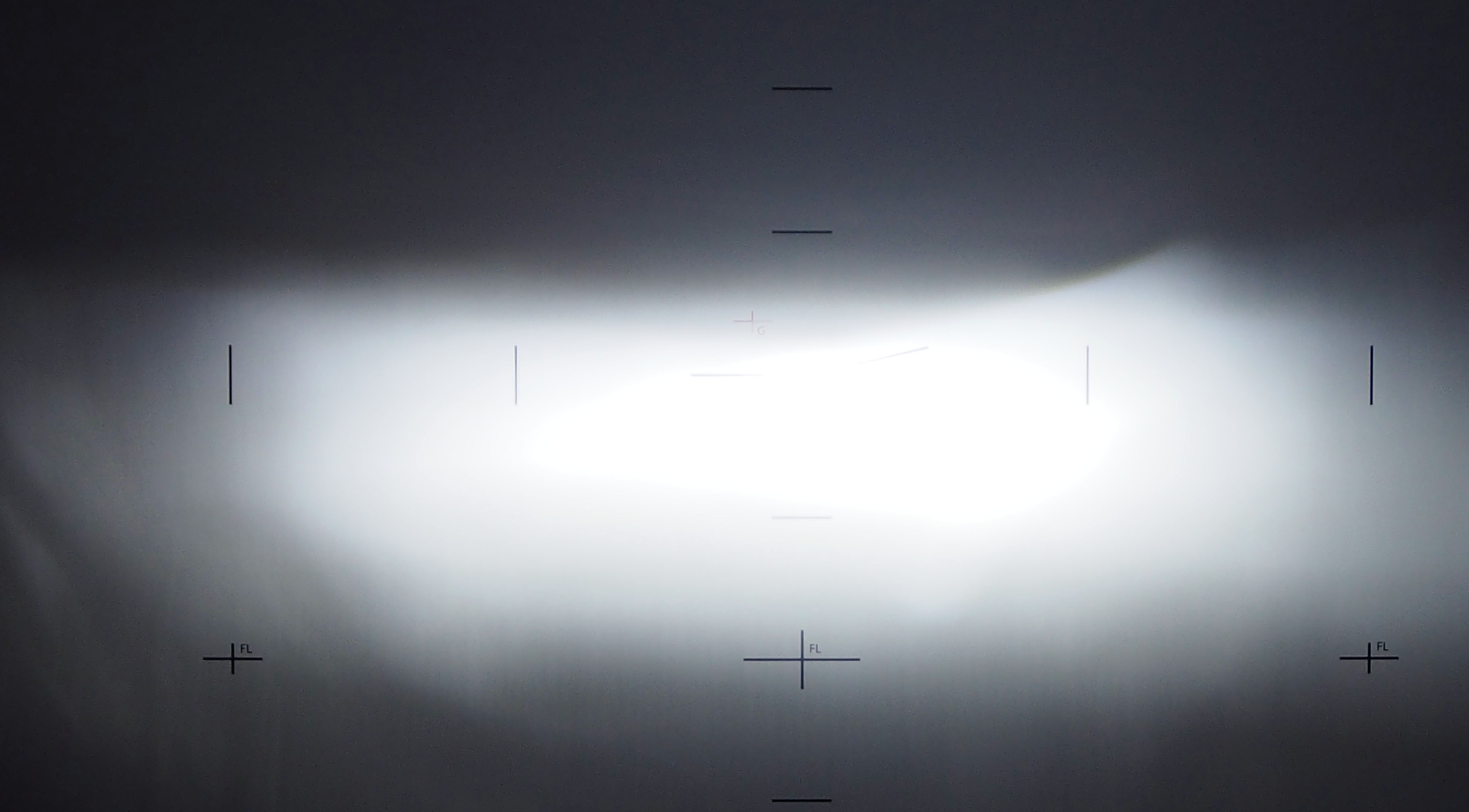
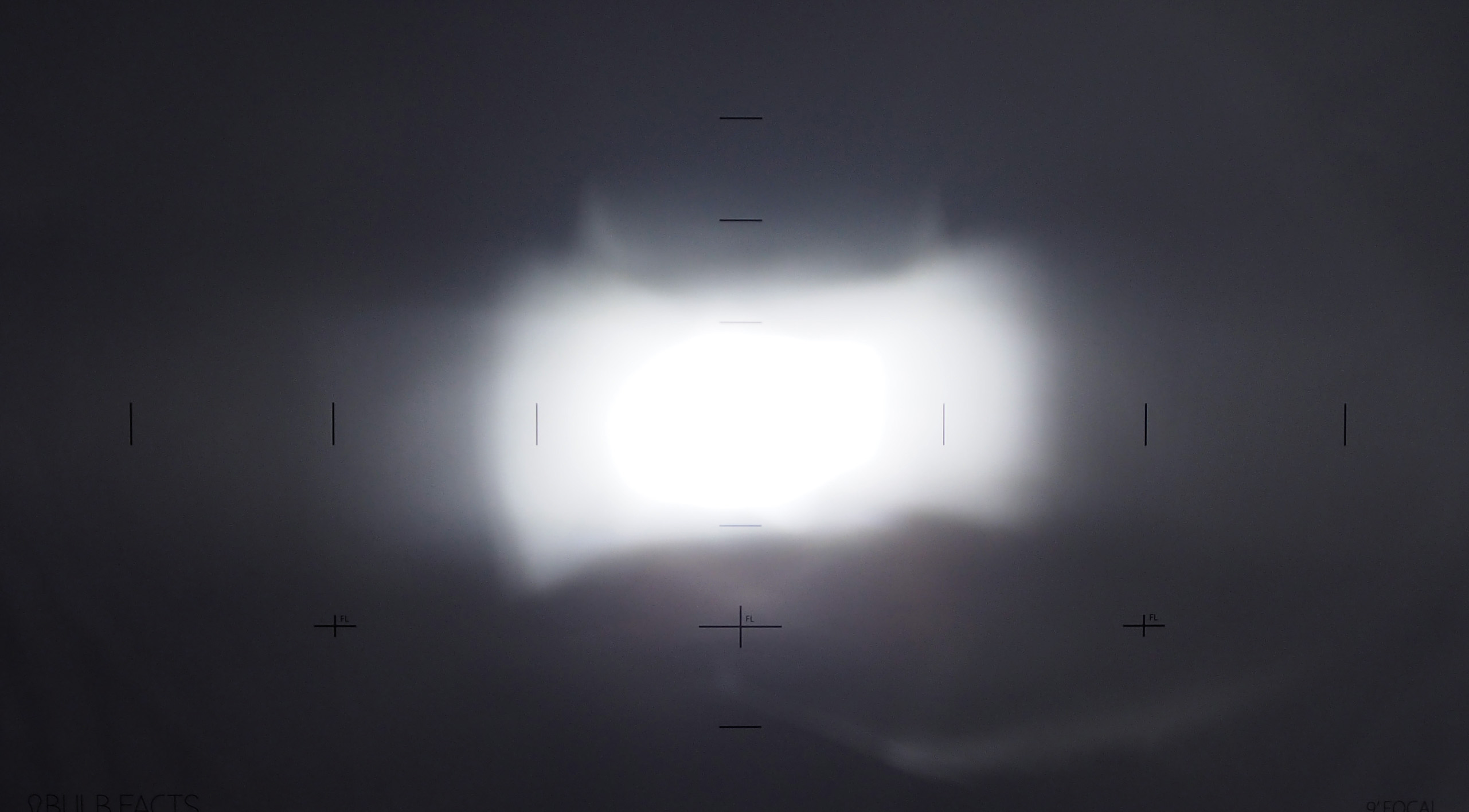
Low beam measured 1,506 lux per bulb, about a 304% increase over the recorded halogen reference. High beam measured 2,266 lux per bulb, about 159% above that reference. Those are very strong hotspot results and explain the 7.0 performance score.
Output is not the complete beam-quality story. Reflector glare measured 382 lux, and the beam received a separate 2 / 5 pattern rating. The photographs show a forceful central hotspot, but also the background haze and uncontrolled light that make housing choice and careful aiming important.
The 7.0 performance score uses 5.0 as a reference baseline, not a maximum, and is not a seven-out-of-five star rating. The 2 / 5 pattern value rates beam shape separately. Buyers prioritizing the lowest reflector glare should compare the current conservative reflector recommendation.
Projector headlight performance
Projector performance is the main reason the Wings / Future remains a current recommendation: the fixture produced strong usable intensity and a separately recorded 5/5 beam-pattern result.
Reference-housing context: These results describe the BulbFacts projector fixture, not a guarantee for every vehicle projector. Optical design, bulb seating, focus, aim, and lens condition remain important.
Gray dots show every scored kit. Named markers are current BulbFacts recommendations. The 5.0 reference is a baseline, not a maximum.
Projector performance score 7.0 compared with 54 scored LED kits and the 5.0 reference baseline.
- Low-beam hotspot
- 762 luxper bulb
Projector low-beam output of 762 lux compared with 54 scored products.
- High-beam output
- 810 luxper bulb
Projector high-beam output of 810 lux compared with 54 scored products.
- Glare measurement
- Not recordedprojector test
- Beam pattern
- 5 / 5separate pattern rating
Projector beam-pattern rating of 5 out of 5 compared with 47 products with recorded ratings. Higher is better.
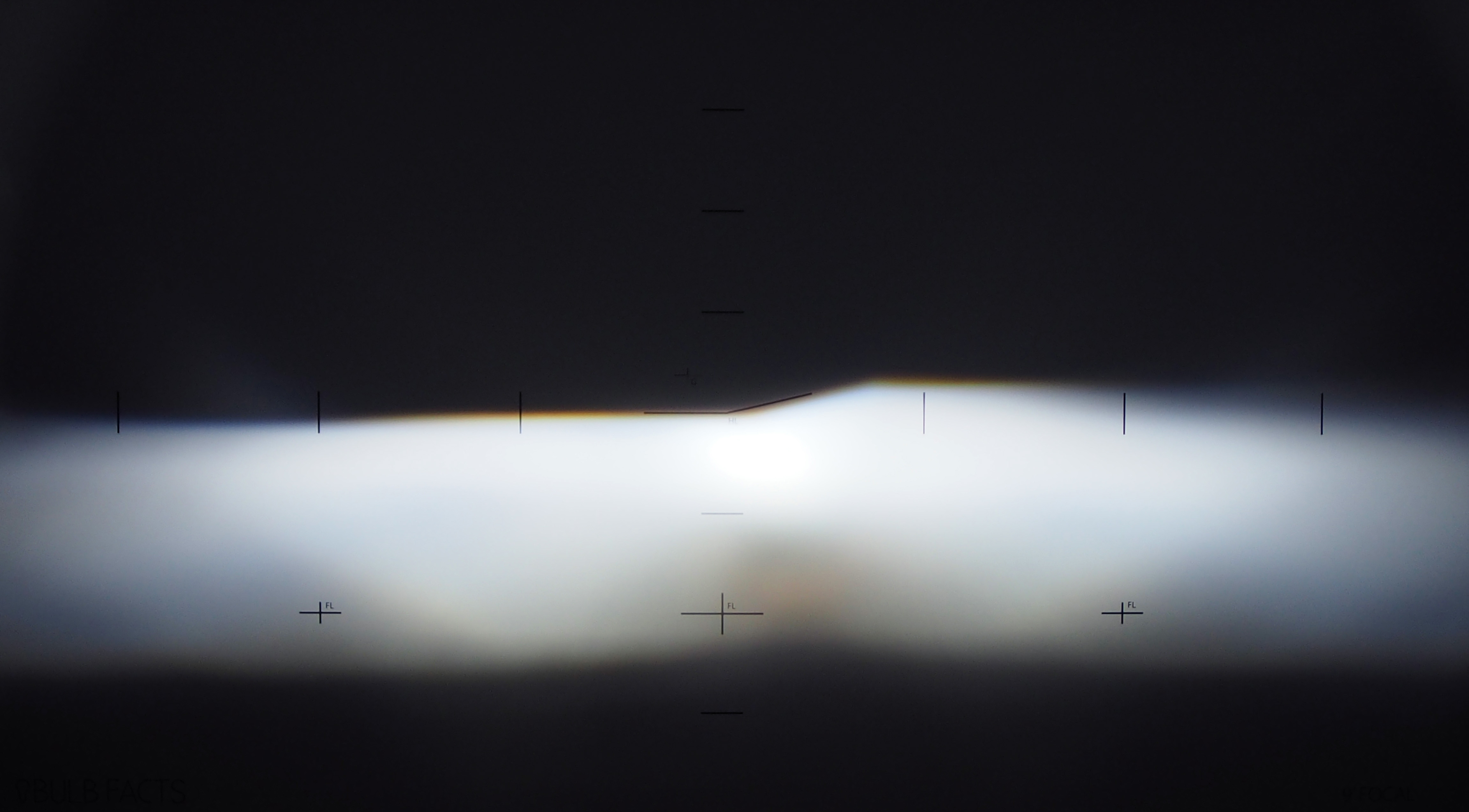
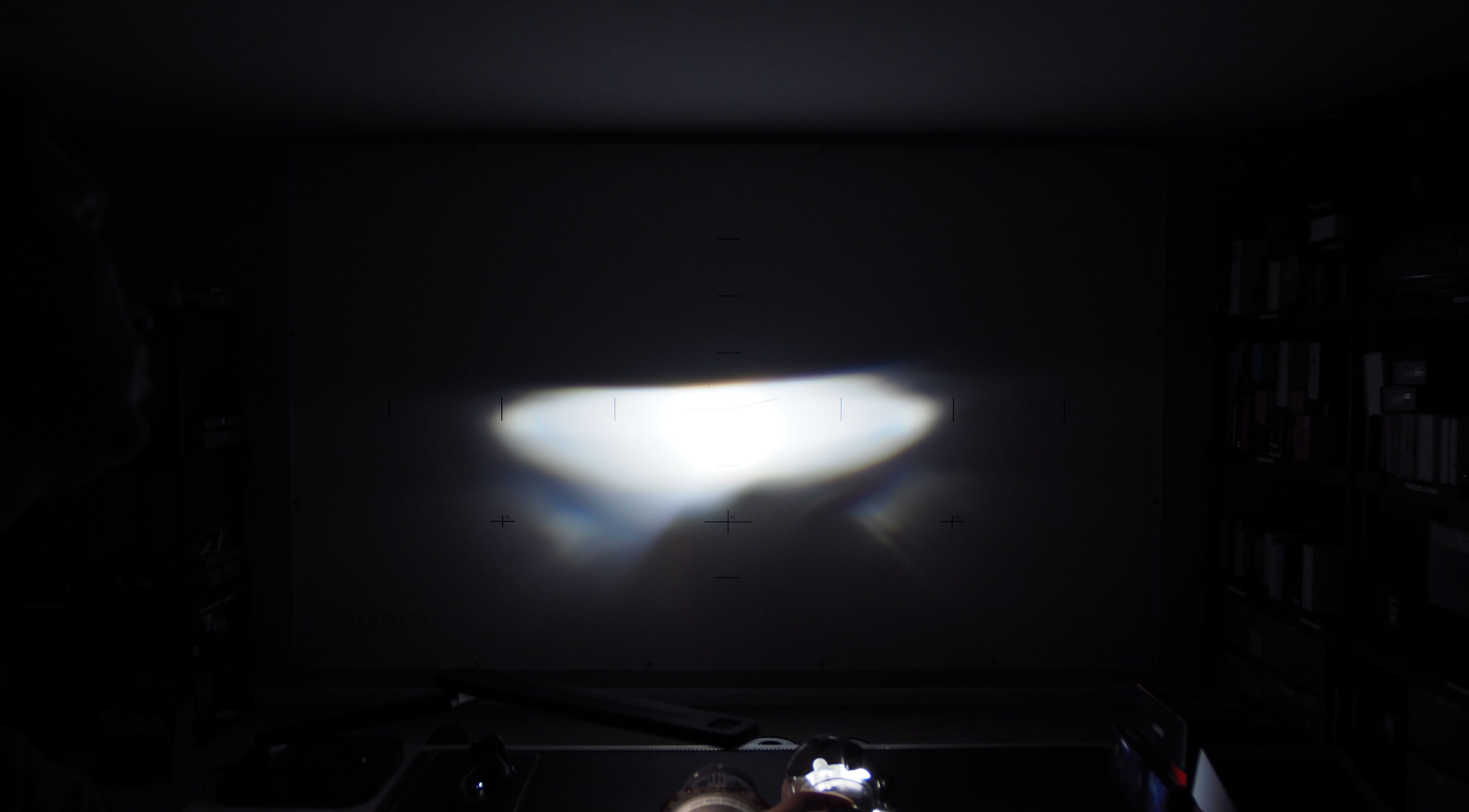
Projector low beam measured 762 lux per bulb, about a 231% improvement over the recorded halogen projector reference. High beam measured 810 lux per bulb, about 83% above its reference.
The beam produced a strong central hotspot, useful width, even foreground light, and a crisp cutoff in the reference fixture. The separate 5 / 5 pattern rating describes that beam shape; it does not replace the 7.0 performance score or stand in for a missing projector glare measurement.
The Saber Max 75W remains the more aggressive maximum-output projector recommendation. The Wings / Future is the value-oriented choice for buyers who want strong projector performance, stable warmed-up output, and documented lifespan without moving to the highest price tier.
Output, color, and stability
The measured output supports the strong beam results, while the 6850K color and 1.4% warmed-up drop define how the kit looks and behaves during longer use.
Hikari Wings / Future Kelvin
Hikari Wings / Future lumens
Color temperature measured 6,850K. That creates a distinctly cool, slightly blue-white appearance compared with a neutral 5000K LED. It may appeal to buyers who want a crisp modern look, but it is not the most neutral choice and cooler light can be less comfortable in rain, snow, fog, or wet-road reflections.
The current chart records 6,243 measured lumens per bulb, or about 12,486 lumens per pair when doubled. The archived review also recorded an 11,600-lumen-per-kit manufacturer rating, equivalent to 5,800 rated lumens per bulb. The measured result and manufacturer specification are kept separate.
From two to 30 minutes, output dropped only 1.4%. That is excellent warmed-up stability and shows the kit maintained nearly all of its early output after reaching operating temperature. A separate cold-start-to-30-minute percentage was not recorded.
Installation and cooling
The external drivers and active rear fans support the output, but the 60.4-watt-per-bulb draw, driver dimensions, fan noise, and vehicle-electronics behavior all need checking before ordering.
Per-bulb draw
30-min temp
Fan noise
Physical size and fit
The external driver is recorded at 61 × 40 × 14 mm. The complete installation needs room for the bulb body, cooling fan, driver, braided wiring, connector, and dust cover without pinching or blocking airflow.
The H7 collar is recorded as adjustable in one-degree increments. That makes orientation easier to tune, but it does not replace proper seating and headlight aiming. Recorded sizes are H1, H4, H7, H11/H8/H9, H13, 9003, 9004, 9005, 9006, 9007, 9008, and 9012. A matching size alone does not confirm exact-vehicle fitment.
Power draw and cooling
Electrical draw measured 60.4 watts per bulb. The 120.8-watt pair total is derived from that per-bulb result, not recorded independently as a complete kit.
After 30 minutes, temperature measured approximately 116°F / 47°C. The rear fan and finned body managed the heat while output dropped only 1.4% from two to 30 minutes. Those are useful bench results, but installation airflow and vehicle voltage can affect thermal behavior.
Noise, electronics, and DRL behavior
Fan noise measured 68 dB on the bench, placing it near the louder end of the current LED chart. The archive does not preserve a controlled in-cabin sound measurement, so the review does not claim the fan will be inaudible after installation.
The current chart records the product as CANBUS-friendly. That is a useful reference-test result, not a universal guarantee against bulb-out warnings, flicker, or decoder needs in every vehicle. Radio-frequency interference and DRL/high-beam dimming behavior remain N/A.
Warranty and long-term testing
Coverage
The current chart lists a one-year warranty. That is manufacturer or seller coverage, not evidence of service life, and current terms should be confirmed before ordering.
Unlike many reviews with unfinished durability testing, this product has a completed 5,800-hour lifespan result. The recorded failure occurred at the external driver while the LEDs and fans were still operating. It is strong evidence from the tested sample, but it does not guarantee an identical lifetime in every vehicle.
Should you buy it?
The Hikari Wings / Future suits projector owners who want strong measured output and documented stability without moving into the most expensive tier. Its 7.0 projector score, 5/5 pattern rating, 1.4% warmed-up drop, and 5,800-hour lifespan result make a convincing value case around the recorded $125–149 estimated price.
Reflector owners need to weigh the tradeoff more carefully. The hotspot output is excellent, but 382 lux of glare and a 2/5 pattern rating mean it is not the cleanest reflector choice. The distinctly cool 6850K color, high per-bulb draw, external drivers, loud bench fan result, and short warranty also matter.
Choose it for a projector application when its physical and electrical requirements work for the vehicle. Consider a lower-glare reflector recommendation, a quieter or lower-draw kit, or a longer-warranty premium option when those ownership priorities matter more.
If those tradeoffs fit your vehicle, check the current price or compare the complete chart before deciding.
Full measurements and specifications
Open this reference for every recorded measurement, specification, unknown, and test-version detail. The main reflector and projector evidence remains visible above.
Show all recorded measurements and specificationsFive groups · version 2.1 bench record
Measured output
- Reflector performance score
- 7.0; 5.0 is a reference baseline, not a maximum
- Reflector low-beam hotspot
- 1,506 lux per bulb
- Reflector low-beam improvement
- 304% over the recorded halogen reference
- Reflector high-beam output
- 2,266 lux per bulb
- Reflector high-beam improvement
- 159% over the recorded halogen reference
- Projector performance score
- 7.0; 5.0 is a reference baseline, not a maximum
- Projector low-beam hotspot
- 762 lux per bulb
- Projector low-beam improvement
- 231% over the recorded halogen projector reference
- Projector high-beam output
- 810 lux per bulb
- Projector high-beam improvement
- 83% over the recorded halogen projector reference
- Measured lumens
- 6,243 lm per bulb; about 12,486 lm per pair derived. The archived review separately recorded an 11,600-lm-per-kit manufacturer rating
- Lumen improvement
- Not recorded
Beam quality
- Reflector beam-pattern rating
- 2 / 5; separate from the 7.0 performance score
- Projector beam-pattern rating
- 5 / 5; separate from the 7.0 performance score
- Reflector glare measurement
- 382 lux in the reference housing
- Projector glare measurement
- N/A; not recorded
Power, color, and thermal behavior
- Measured color temperature
- 6,850 K
- Measured electrical draw
- 60.4 watts per bulb
- Derived pair draw
- 120.8 watts per pair
- 30-minute running temperature
- 116°F / 47°C on the bench
- Cold-start to 30-minute output drop
- Not recorded
- 2-minute to 30-minute output drop
- 1.4%
- Fan noise
- 68 dB on the bench; no controlled in-cabin result recorded
- Cooling method
- Active rear fan and finned bulb body
Dimensions, features, and recorded compatibility
- Maximum bulb width
- Not recorded
- Base-to-rear dimension
- Not recorded
- Diode-handle dimension
- Not recorded
- Rotatable H7 collar
- Yes; one-degree increments recorded. The standardized label does not imply every listed size uses identical hardware
- LED diodes
- CSP-style emitters; exact manufacturer and model not recorded
- Emitter layout
- Flat substrate intended to approximate halogen filament placement
- Driver configuration
- External; recorded driver dimensions 61 × 40 × 14 mm
- Recorded product sizes
- H1, H4, H7, H11/H8/H9, H13, 9003, 9004, 9005, 9006, 9007, 9008, and 9012
- CANBUS behavior
- CANBUS-friendly in the current reflector and projector chart records; not a universal compatibility guarantee
- Exact-vehicle fitment
- Unconfirmed; verify bulb type, seating, orientation, rear clearance, driver placement, wiring, dust-cover space, airflow, DRL behavior, and electronics
- Housing context
- Recommended for the BulbFacts projector reference result; reflector use requires careful glare and aim checks. Neither fixture guarantees performance in a selected vehicle
Warranty and test status
- Estimated price
- $125–149 in the current chart
- Recorded warranty
- 1 year
- Long-term lifespan
- 5,800 hours in the recorded sample; external driver failed while the LEDs and fans were still operating
- DRL / high-beam dimming
- N/A; unconfirmed
- Radio-frequency interference
- N/A; not recorded
- High-beam test photographs
- Available for both reflector and projector reference housings
- Publication date
- August 1, 2025
- Last updated
- May 31, 2026
- Test version
- Version 2.1 bench record
Headline facts use the current BulbFacts version 2.1 chart record. See how we test for current procedures and use the LED chart for live comparisons. General reference-housing results do not establish exact-vehicle fitment.